
Halton Region Commercial Solar
Halton is compact enough that its four markets often get treated as one, and different enough that they should not be. A new distribution roof in Milton, a stepped office building in Oakville, an older Burlington commercial property and a small industrial site near Georgetown all arrive at the same roof-first question from different directions. Timing is usually what separates them.
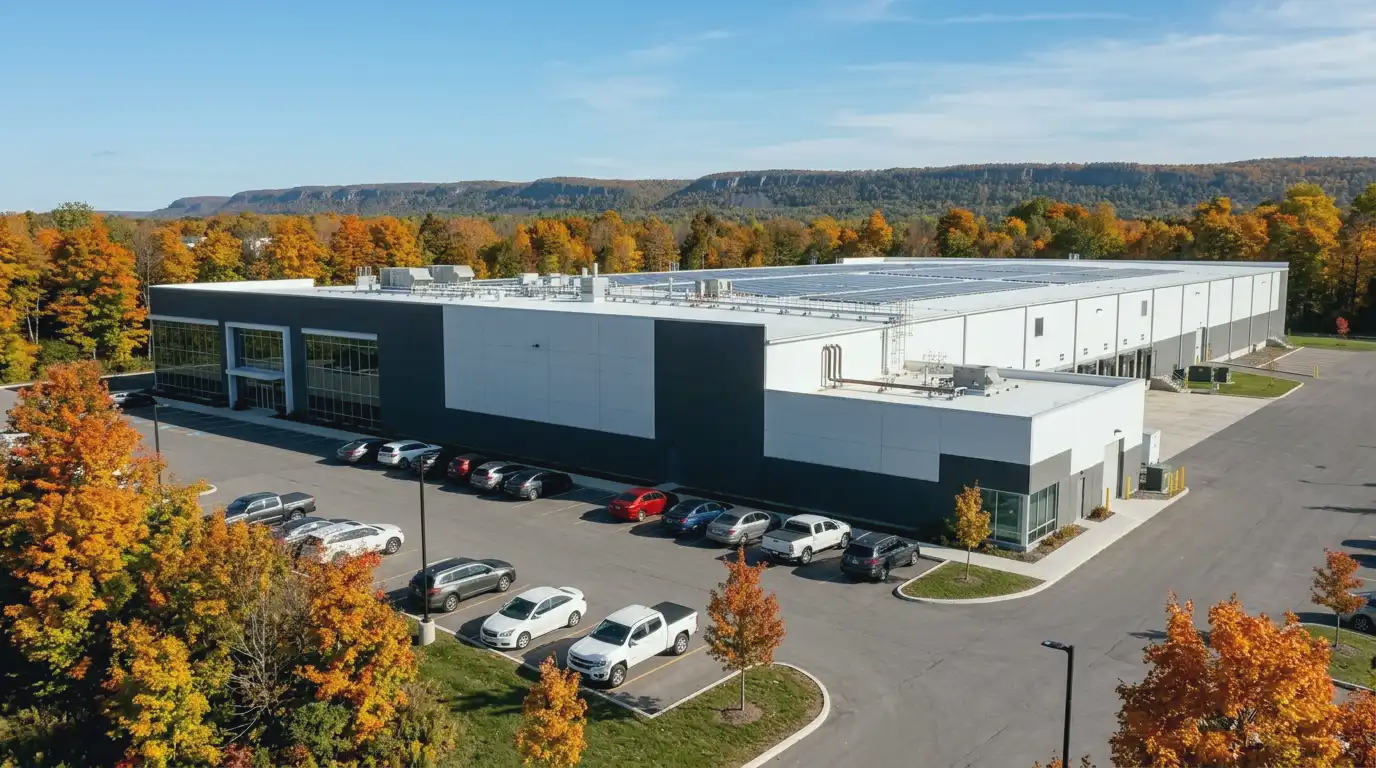
The Best Moment to Make a Roof Solar-Ready Is a Reroof You Were Already Doing
If a roof is within a few years of replacement, that reroof can be one of the cleanest opportunities to prepare the building for solar. Drainage can be corrected, dead penetrations and abandoned equipment can come off, and insulation or slope can be adjusted where the roofing scope calls for it. Those decisions can be handled as part of planned roofing work instead of being retrofitted later.
It also avoids an unnecessary lifecycle problem: putting a long-lived array above a membrane that is likely to need major work well before the array does. On a building with areas at different points in their life, the practical move may be to renew the section that is due and begin the solar plan there, rather than stall the whole project or build over a roof already approaching major work.
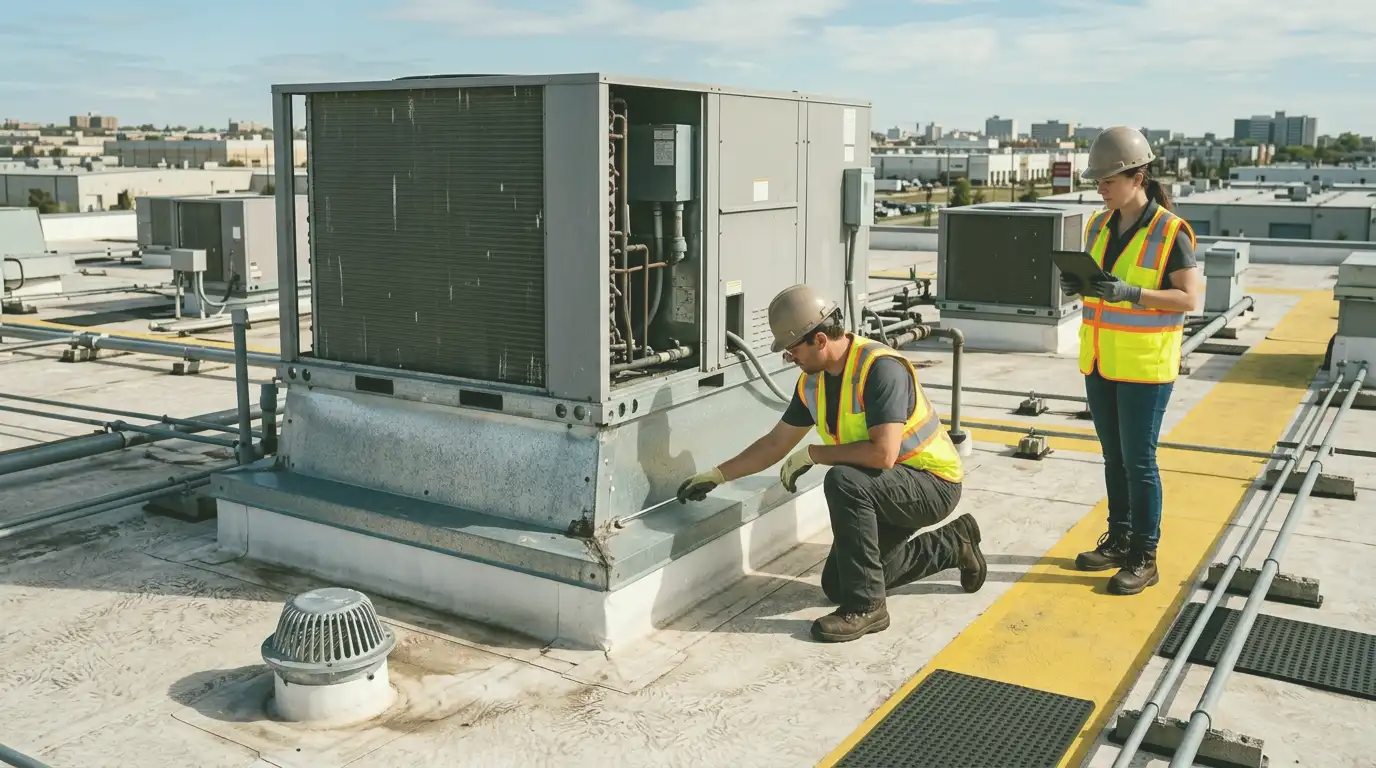
A New Roof Is Not an Unconstrained Roof
Recent warehouse roofs in Milton and along the corridor look like the easy case, and in some ways they are. But drainage on a new building was designed around a specific layout, the mechanical zone was positioned without solar in mind, and the roof is young enough that manufacturer and installer requirements around penetrations and attachments still carry weight. Those requirements should be identified with the roof's manufacturer and the contractor who installed it before anything is fixed to the membrane.
A construction date is also not a condition assessment. New roofs can carry installation defects, ponding at an awkwardly placed drain, or damage left by trades who came after the roofer. Documenting the roof as it actually is gives the owner a baseline and avoids inheriting somebody else's problem alongside a solar project.
Stepped and Split-Level Roofs Change the Arithmetic
A good deal of Burlington and Oakville commercial stock is not one flat plane. Roofs step between levels, wrap around courtyards, sit at different heights over different parts of the building and sometimes use a different membrane on each level. Every level then brings its own drainage, its own access route and its own condition.
Height differences also cast shade. A taller section can shadow a lower one for part of the day and part of the year, and parapets or screen walls do the same along the edges. Those effects are worth establishing early, because on buildings shaped like this they can move the usable area more than the mechanical equipment does.
Georgetown and the Edges of the Region
Buildings around Georgetown run from small industrial units to retail and service properties, and the right review is proportionate to the site rather than a shrunken version of a large-project process. On a modest building the early effort belongs on roof condition, access and what electrical information genuinely exists.
The address also settles which utility applies and what connection requirements come with it, and both are worth nailing down before a procurement plan hardens. Utility territory and municipal territory are two different maps. The Ontario Energy Board keeps an address-searchable record of which distributor serves which property, and checking it beats assuming from the town name.
Who Needs to Be Involved, and in What Order
A rooftop project pulls in a roofer, a solar designer, a structural engineer, an electrical contractor and whoever manages the property day to day. The order matters. Roof condition and usable area come first because they constrain everything after them. Structural review follows once the proposed loads and layout are real enough to review. Electrical and utility work runs alongside rather than at the end.
Our part is the roof: condition, remaining life, drainage, details, access, and how roofing work sequences against everything else. Structural capacity, system design and electrical decisions sit with the qualified professionals who own them. The useful thing a roof review does is hand those professionals accurate information instead of assumptions. Questions about tax treatment sit outside all of it and belong with the owner's accountant, since that turns on the taxpayer and the asset rather than on anything a roof review can see.
Planning references: Ontario Energy Board net-metering guidance
Leave a Roof That Can Still Be Maintained
Every conversation about module count should finish with a serviceability check. Can a crew reach each drain and overflow? Can a technician get to every rooftop unit with a part in hand? Can a section of membrane be opened and repaired without dismantling a row? If any answer is no, the layout is not finished yet.
To start, send the address, the roof's age and system if you know them, any reports or drawings you still have, and a line on what goes on inside. Where records are thin, and on properties that have changed hands they usually are, a condition walk fills in what the paperwork cannot.
Halton Solar Planning When Roof Age Varies Block by Block
This page covers Halton's four markets, Burlington, Oakville, Milton and Halton Hills, where new roofs and older buildings sit side by side.
Halton Questions About New Roofs, Timing and Split-Level Buildings
Halton owners often need to decide whether a newer roof is truly ready, whether an older one should be reroofed first and how level changes affect layout.
Do you handle commercial properties in Burlington, Oakville, Milton and Georgetown?
Yes. Across Halton, commercial and industrial properties can start with a roof-first review, and the work follows the individual building, not the town it happens to sit in.
Our warehouse roof is only three years old. Is it automatically ready?
Not automatically. Drainage was designed around the original layout, the mechanical zone was placed without solar in mind, and manufacturer and installer requirements still apply to penetrations and attachments. A young roof can also carry installation defects nobody has looked for.
Our roof needs replacing in about two years. Should we hold off on solar?
Often the better move is to plan both together. A reroof you were going to do anyway is a clean opportunity to correct drainage, remove dead penetrations where appropriate and specify the assembly knowing an array is coming.
Our building has roofs at three different levels. Does that complicate the layout?
It does, and it is common on Burlington and Oakville commercial buildings. Each level has its own drainage, access and condition, and a taller section can shade a lower one seasonally. Usable area has to be worked out level by level.
Which utility rules apply to our property?
That follows the address rather than the town name, because utility territory and municipal territory are different maps. Identify the serving distributor early, then confirm its current connection requirements with it and with the qualified professionals on the project.
When is it cheapest to make a Halton roof solar-ready?
At construction or reroofing, because layout, structure, conduit paths and access can be planned at low cost. Retrofitting those provisions later usually costs more.
What should a Halton owner ask about warranties when adding solar to a new roof?
Ask the warrantor what rooftop work is permitted, who may perform it and what documentation is required. Get answers in writing before signing.
Use the Reroof Window to Make a Halton Building Solar-Ready
Bring warranty terms, roof age, level changes and future capital plans so solar timing can be matched to the roof.
Halton Roof and Warranty Details Worth Gathering
- The Best Moment to Make a Roof Solar-Ready Is a Reroof You Were Already DoingIf a roof is within a few years of replacement, that reroof can be one of the cleanest opportunities to prepare the…
- A New Roof Is Not an Unconstrained RoofRecent warehouse roofs in Milton and along the corridor look like the easy case, and in some ways they are. But drainage…
- Stepped and Split-Level Roofs Change the ArithmeticA good deal of Burlington and Oakville commercial stock is not one flat plane. Roofs step between levels, wrap around courtyards, sit…