Serving Toronto, the GTA & Our Ontario Service Areas
Commercial Flat Roofing Experts Commercial Solar & Energy 647-933-ROOF (7663)
Commercial Roofing Ontario

Commercial Roofing Systems

Compare commercial roofing systems against the building, including the deck, insulation, drainage, rooftop equipment, repair history, access and the condition of the complete roof assembly. No single membrane is the right fit for every property. We look at maintainability, service traffic and future rooftop plans alongside the roof construction before discussing an appropriate system.

Commercial & industrialGovernment & institutionalPlazas & managed properties
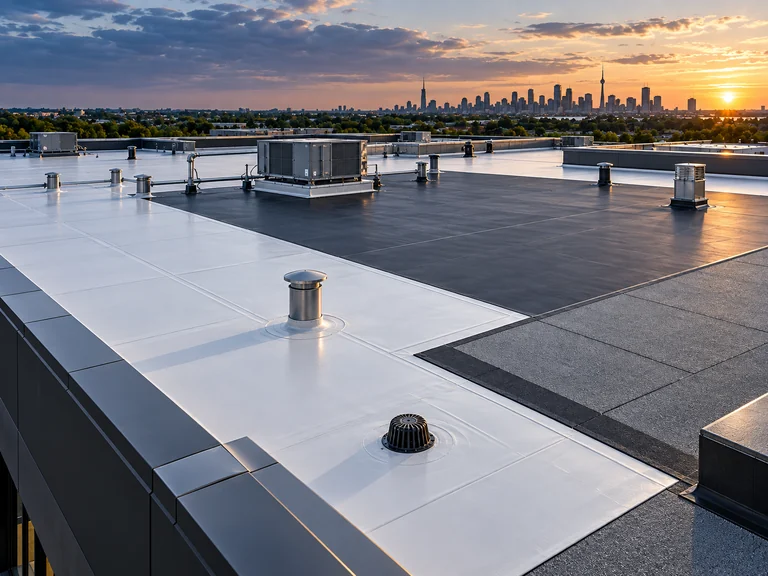
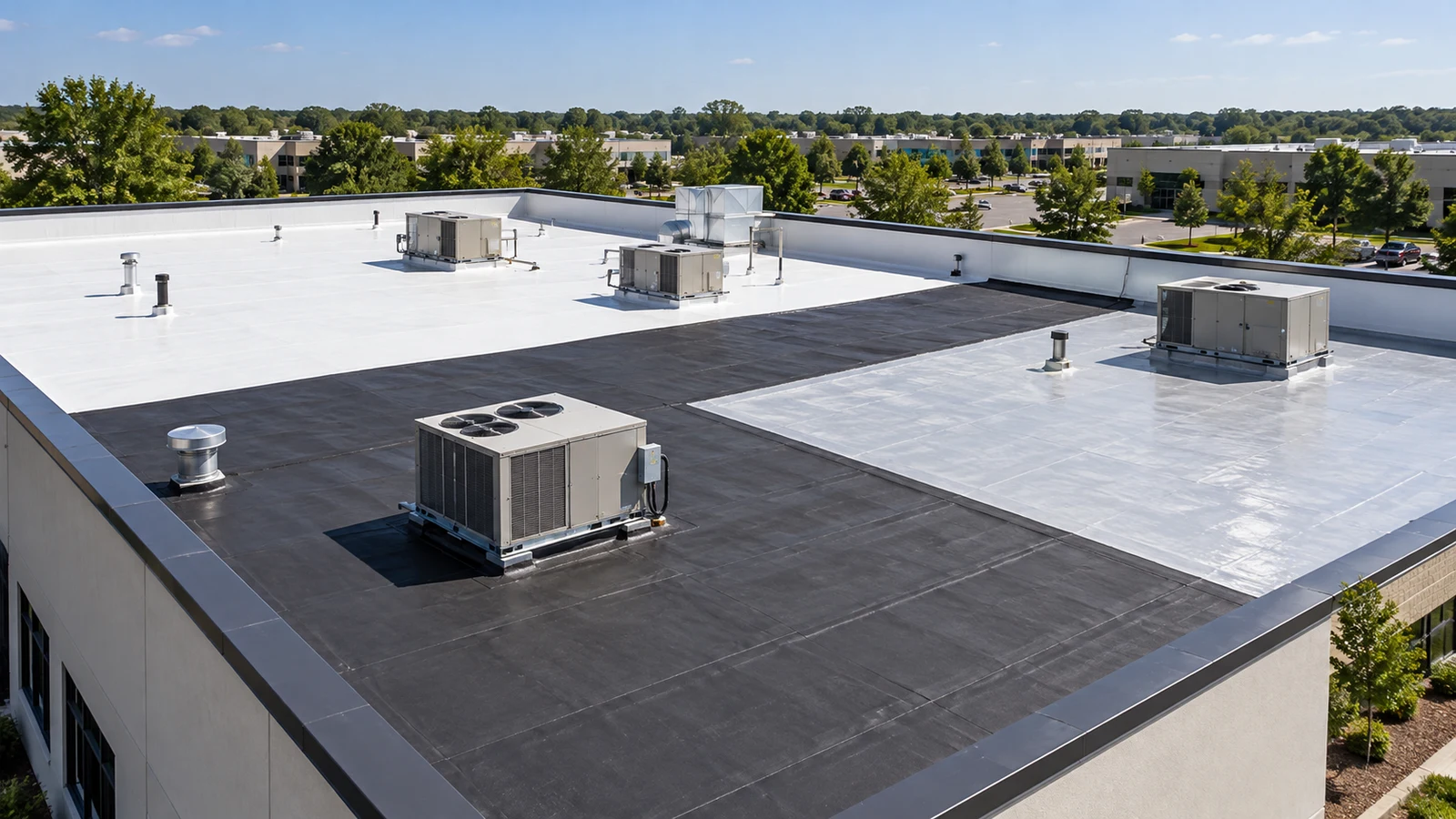
Commercial flat roof with contrasting roofing systems and rooftop equipment viewed from above
Start With the Roof Assembly

Compare Commercial Roofing Systems by the Whole Assembly

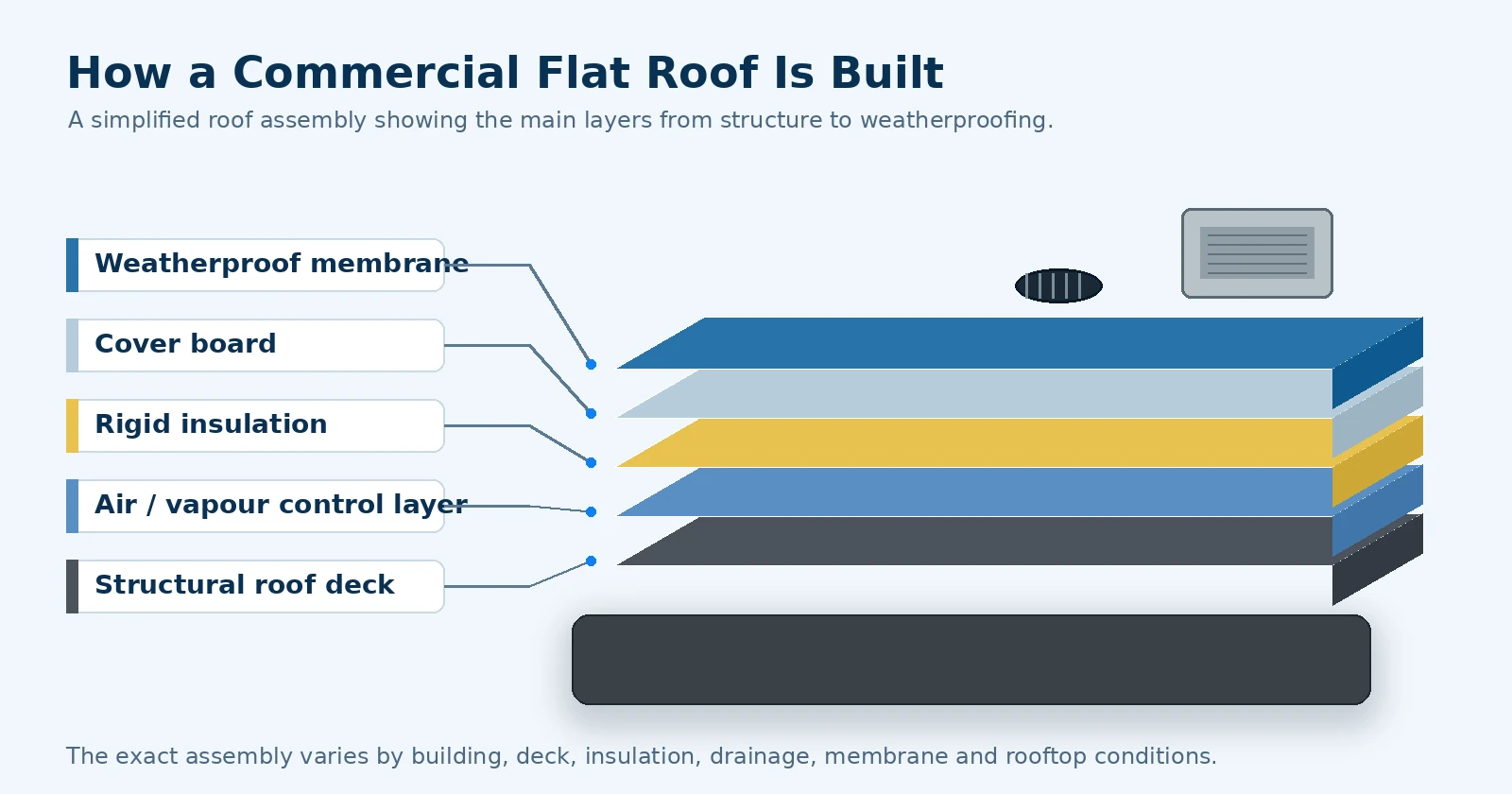
Commercial roofing systems such as TPO, PVC, EPDM, SBS modified bitumen and built-up roofing are only part of a complete commercial roof assembly. The deck, insulation and vapour control, cover board, attachment method, drainage, parapets, penetrations, rooftop equipment and service traffic all affect which system makes sense for the building.

Owners often compare TPO roofing, EPDM roofing, PVC roofing, SBS roofing and modified bitumen roofing as if the membrane name alone decides the project. Each system has different seam, attachment, exposure, repair and detailing considerations, and the complete assembly still has to fit the building.

For industrial roofing and warehouse roofing, large roof areas, repeated drainage zones, rooftop equipment, service traffic and operating constraints can become just as important as membrane selection.

Diagram showing the main layers of a commercial flat roof assembly
A simplified commercial flat-roof assembly. The exact layers and details depend on the building and roof design.
Building-First Assessment

Start With the Existing Roof and Building

System selection should follow the conditions that already exist on the property. Confirm the deck type, insulation condition, drainage layout, roof levels, parapets, penetrations, equipment curbs and access routes before treating a membrane name as the answer.

Deck & AttachmentSteel, concrete, wood and other decks affect fastening, adhesion, loading and what can remain in place.
DrainageInternal drains, scuppers, overflows, slope and low areas determine how water leaves each roof section.
DetailsParapets, coping, curbs, penetrations and transitions often decide how practical a system is to install and maintain.
Rooftop TrafficHVAC service, electrical work, solar access and routine maintenance affect protection and walkway planning.
Roofing System Options

Single-Ply Systems: TPO, PVC and EPDM

TPO is a thermoplastic single-ply membrane whose seams are normally hot-air welded. The assembly can be mechanically attached, adhered or otherwise designed to suit the approved system. On an existing building, deck condition, attachment, drainage, penetrations and service traffic matter as much as the membrane itself.

PVC is also a thermoplastic single-ply membrane with hot-air welded seams. It may be considered where building use or rooftop exposure makes its material properties useful. Grease, chemical or other unusual exposure should be reviewed against the actual membrane and manufacturer requirements rather than assumed from the system name alone.

EPDM is a synthetic rubber single-ply membrane that can be adhered, mechanically attached or ballasted depending on the system. Seam and repair materials need to be compatible with EPDM, and ballast, perimeter details, drains and older repairs all affect inspection and repair planning.

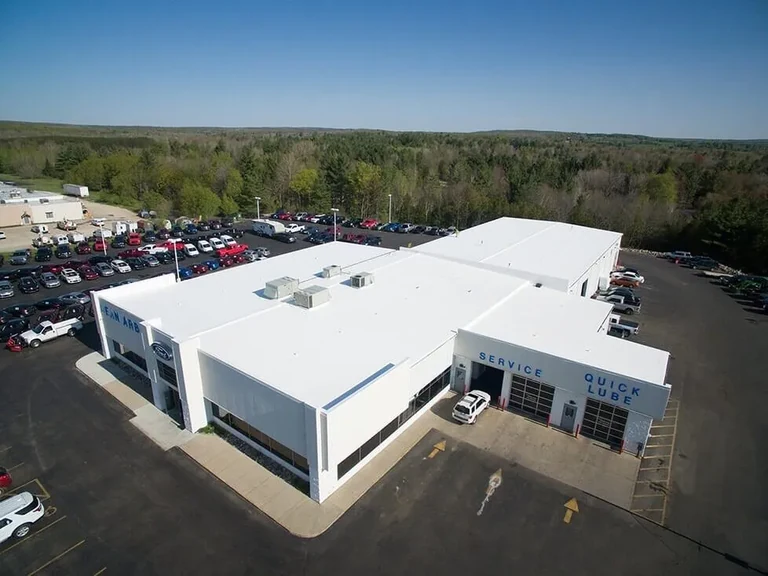
Commercial flat-roof installation on a large building
Multi-Ply Systems

Asphaltic Systems: SBS Modified Bitumen and Built-Up Roofing

SBS modified bitumen uses reinforced asphalt-based sheets installed as a layered system. Application methods vary by specification. Existing layer count, deck condition, flashing heights, drainage and occupied-building constraints should be understood before repair or replacement work is selected.

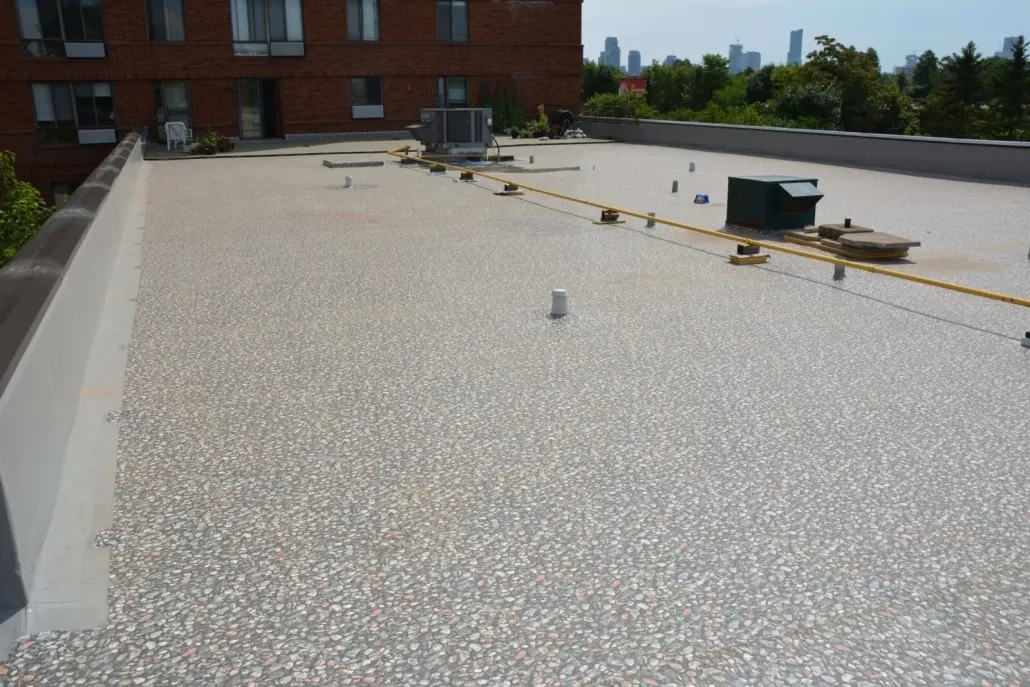
Built-up roofing (BUR) uses multiple plies with asphalt or bitumen and may be gravel surfaced. Older BUR roofs can include repairs, coatings or previous overlays that are not obvious from the surface. Existing layers, moisture condition and deck condition should be established before deciding between localized repair, restoration or replacement.

Commercial roof replacement work on an industrial building
Restoration Considerations

Roof Coatings and Restoration

Coatings can be appropriate on some existing roofs when the substrate is compatible, the assembly is sufficiently dry and the details can be repaired first. A coating does not correct trapped moisture, failed drainage or unsound perimeter details. When moisture is a concern, the condition of the existing assembly should be investigated before a restoration scope is finalized.

Compare Your Options

Roofing Systems Side by Side

This table describes general characteristics. Actual performance depends on the product, thickness, installation method, building and maintenance, so confirm details with the manufacturer and your roofer.

General commercial roofing system characteristics to compare before specifying a roof.
SystemHow seams or laps are madeCommon attachmentTypically considered whenPoints to confirm
TPOHeat-welded seamsMechanically fastened, adhered or ballastedA reflective single-ply membrane suits the buildingProduct formulation, seam quality, flashing details
PVCHeat-welded seamsMechanically fastened or adheredExposure to fats, oils or exhaust may be a concernCompatibility with exposures, plasticiser and warranty terms
EPDMAdhesive or tape seamsAdhered, mechanically fastened or ballastedA rubber membrane with simple field repairs suits the roofSeam method, flashing approach, roof traffic
SBS modified bitumenTorch, cold-applied or self-adhered lapsAdhered, often in multiple layersA multi-layer asphaltic system suits traffic or detail needsApplication method, fire-safety plan, cap sheet choice
Built-up roofingMultiple pliesAdhered in layersA traditional layered system is preferred or existingPly count, surfacing, installer experience
Coating or restorationApplied over existing membraneApplied in liquid formThe existing roof is sound and dryMoisture survey, substrate compatibility, warranty

Printable owner tool: Commercial Roofing System Selection Worksheet (fillable PDF). Open the blank worksheet, type or print your notes, and retain a copy with the property records.

Every Building Is Different

Use Building Conditions to Narrow the System Choice

Before a membrane is treated as the answer, compare the options against the conditions that can change installation, repairability and long-term service. Current product data, approved attachment methods and warranty requirements should be confirmed for the exact manufacturer system selected for the project.

Check the selected roof assembly's wind-uplift documentation, including CSA A123.21 where applicable, and its fire classification. Confirm membrane thickness, attachment and warranty terms against the exact manufacturer system. Reflectivity or SRI values and any incentive eligibility also need current product and program verification.

If the proposed method uses an open flame, review the fire-safety plan and monitoring arrangements before work starts. PVC and TPO seams are normally joined with hot air; the fire classification and installation requirements of the complete assembly still need to be checked.

Manufacturer reference library: Carlisle SynTec's TPO membrane details and product data and EPDM membrane details and product data are examples of the documents to request for a proposed assembly. Review the specification, attachment, flashing details and repair compatibility for your building before selecting a product.

Existing AssemblyConfirm current layers, moisture evidence, deck condition and whether a recover or full removal is technically appropriate.
Drainage and Roof LevelsReview slope, drain locations, overflows, low areas and transitions before a new assembly locks existing drainage problems in place.
Exposure and CompatibilityVerify any grease, chemical, exhaust or unusual exposure and match repair or replacement materials to the actual condition.
Service TrafficPlan walkways, equipment access and protection around HVAC, electrical, communications and future rooftop work.
Occupied-Building ConstraintsAttachment, odour, noise, open-roof limits and phasing can affect which assembly is practical while the building stays in use.
Future Roof and Solar WorkCoordinate remaining roof life, drainage, service routes and future rooftop equipment or solar so one project does not create avoidable work for the next.

Choose the Next Step for Your Commercial Roof

Use this page to compare commercial roofing systems and the conditions that affect selection. If the immediate question is a leak or damaged detail, continue to commercial roof repair. If the roof is broadly deteriorated or the owner is planning a capital project, use commercial roof replacement. For documented condition evidence, use commercial roof inspections. For recurring records, drains, service routes and earlier repairs, use commercial roof maintenance.

Building Context

The Building Decides More Than the Product Name

When comparing commercial roofing systems, two buildings in the same city can still need different assemblies because their decks, insulation, vapour conditions, drainage, rooftop equipment and service traffic are different. A large warehouse, an occupied school and an industrial process building do not put the same demands on a roof. The specification should follow the building and the verified roof condition.

For a leaking or damaged roof, see commercial roof repair. For an aging roof that may need replacement, see commercial roof replacement. You can also browse our commercial roofing guides for practical answers to common roofing questions.

Representative commercial roof surfaces, roof edges and drainage conditions
Roof condition, drainage, rooftop equipment and access all affect the right roofing recommendation.
Commercial Roofing Questions

Questions Building Owners Ask

There is no universally best flat-roof membrane. Use these answers to understand the building-specific checks behind a sound roofing recommendation.

Representative commercial rooftop inspection and equipment context
Is TPO better than EPDM for every commercial building?

No. TPO and EPDM use different membrane and seam technologies, and either can be appropriate when the complete assembly matches the building. Deck type, attachment, drainage, rooftop traffic, existing details and repair requirements all matter.

Can an existing commercial roof be coated instead of replaced?

Sometimes. The existing roof has to be suitable for the coating system, and damaged or wet areas need to be addressed first. Coating should not be used to cover unresolved moisture, drainage or detail failures.

What should be confirmed before selecting a commercial roofing system?

Confirm the existing assembly, deck, insulation condition, drainage, roof levels, perimeter details, penetrations, rooftop equipment, access and building use. Those conditions narrow the practical system options before a product is selected.

Should the roof system be selected before an inspection?

Usually not on an existing building. The roof should be assessed first so the specification is based on verified deck, insulation, drainage, existing layers and rooftop conditions rather than assumptions.

Is PVC or TPO better for a restaurant or kitchen-exhaust roof?

Roofs exposed to cooking fats and oils are often reviewed for PVC because of how the material behaves with those exposures, but products differ. Ask the manufacturer to confirm suitability for your specific exhaust conditions and what maintenance is expected.

What is the difference between mechanically fastened, adhered and ballasted systems?

They describe how the membrane is held to the roof. Fastened systems use fasteners and plates, adhered systems bond the membrane to the substrate and ballasted systems use stone or pavers to hold it down. Each has structural, wind and cost implications that should be reviewed with the designer.

Does adding more insulation during a reroof change the project?

It can. Insulation affects thermal performance, drainage slope, flashing heights and cost, and may be influenced by code and energy goals. Ask the designer to explain the insulation assembly and the details that change as a result.

How do I compare two roofing system proposals fairly?

Compare scope first: removal or recover, insulation, deck repairs, flashings, accessories and warranty terms. Then compare price. Check whether both proposals use the same roof area, insulation performance assumptions, tapered-drainage approach, edge detailing, equipment-curb treatment, access plan and allowance for concealed conditions. Ask each bidder to list exclusions and clarify who will verify the deck, handle unexpected wet areas and deliver the final roof documentation. Proposals that name different products but ignore differences in scope cannot be compared fairly on price alone.

Commercial Roofing Services

Compare Roofing Systems for Your Building

Start with the roof condition, drainage and equipment requirements. We can discuss practical next steps for your property. A clear comparison should also consider roof access, the remaining service life of the existing assembly and how the building will operate during construction. Reviewing insulation, flashing heights and future rooftop equipment together helps avoid conflicting decisions later. The goal is a roof system that fits the property and remains practical to inspect and maintain.

Discuss Roofing Systems
Helpful Resources

Commercial Roofing Systems Guides

Practical articles for making informed roofing decisions.