
Performance visibility
Review the monitoring setup, alert handling and who owns operating follow-up.
Commercial solar does not eliminate the need for roof maintenance. The most practical long-term plan considers both the photovoltaic installation and the building assembly beneath it, including access, drainage, equipment service and ongoing performance review.
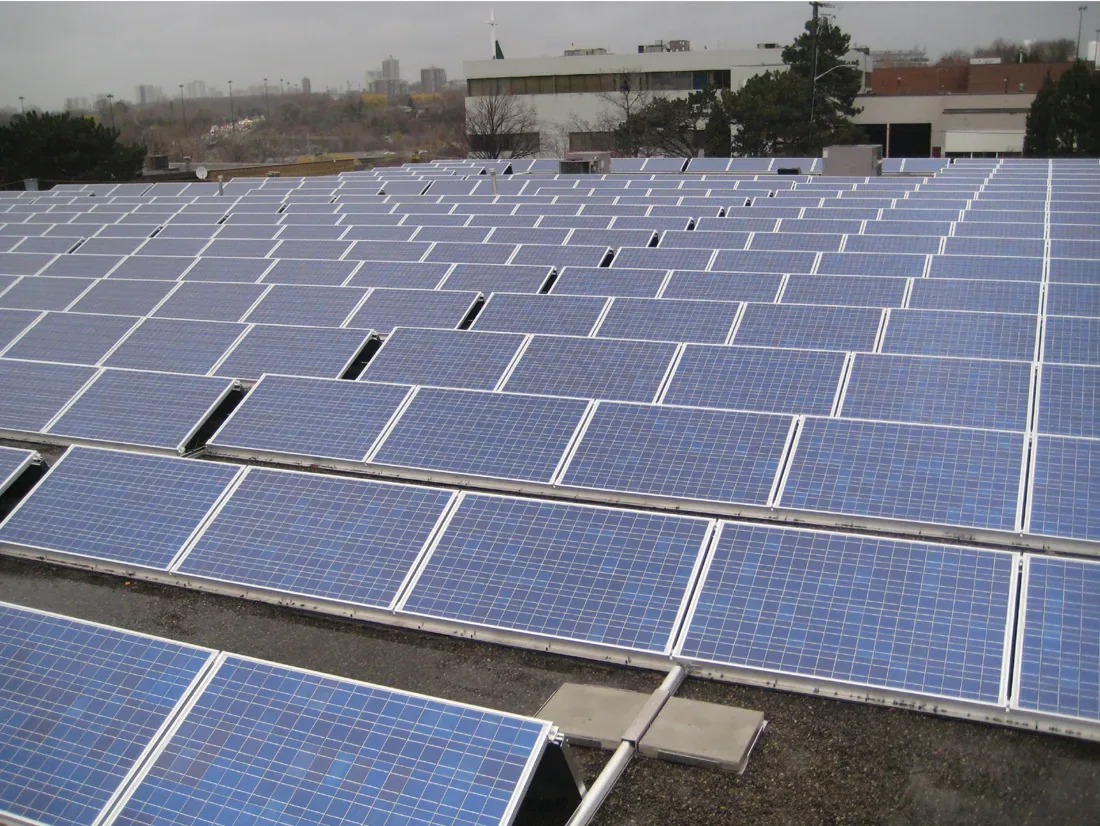
Solar performance and the roof beneath the array both need a workable inspection and maintenance plan.
Roof hatches, drains, overflows, HVAC units, flashings and protected walkways still need attention once panels are in place. Clear access routes and appropriate service zones reduce conflicts between normal roof work and solar equipment.
Commercial solar maintenance and monitoring answer different questions. Monitoring can flag production changes or inverter alerts; it generally cannot establish the condition of a roof drain, flashing or membrane beneath equipment. Owners benefit from assigning separate responsibilities for electrical performance, physical array condition and roof inspection, and identifying how those teams will share observations.
Review My Maintenance Program
Monitoring helps identify possible operating issues, but it does not replace safe physical review or roof maintenance.
Review the monitoring setup, alert handling and who owns operating follow-up.
Coordinate electrical equipment checks, visual module reviews and safe service routes.
Keep drains, rooftop equipment, penetrations and warranty-sensitive areas accessible.
Document inspection intervals and response responsibilities suited to the property.
Monitoring data, physical inspection and roof access answer different questions. A useful operating plan gives each one a defined role.
System monitoring can help identify performance changes that deserve technical investigation. Physical inspection remains important for equipment condition, roof interfaces and maintenance-related damage. The appropriate checks and intervals depend on system design, manufacturer guidance and qualified service requirements.
Mechanical and communications contractors may need regular rooftop access. A documented maintenance approach helps reduce accidental damage and clarifies when specialist coordination is necessary before moving near electrical equipment or array attachments.
The maintenance record should state who receives fault notices, how a potential leak near an array is investigated, who can temporarily move equipment, and how the roofing warranty or service arrangement will be protected. Keep equipment maps, shutdown instructions, as-built layouts and access paths with the roof history. Without that documentation, even a small repair can become a coordination problem.

Commercial Flat Roofs can help start the review and coordinate suitable roofing and solar specialists. Share existing system documentation, the building's location and the concerns that prompted the enquiry.
Drain cleaning, inverter replacement, roof repairs and work by other trades still have to happen after the array is operating.
Performance portals may show energy trends, inverter alerts, communications interruptions or unexpected generation changes. A useful operating plan explains who checks the information, how alerts are triaged and what baseline is used for comparison. Weather and seasonal conditions affect output, so a single low day is not by itself proof of equipment failure.
Remote data does not reveal every mechanical, electrical or roof condition. Qualified service personnel may review visible damage, connections, wiring supports, corrosion, debris accumulation and safe access. Rooftop inspections also need to preserve the roof drains, membrane, parapets and service space around rooftop equipment.
Owners benefit from an accessible equipment inventory, operating documentation, warranty contacts, recommended inspection schedule and a process for recording service history. Responsibilities should account for roof work and solar equipment together, particularly when modules must be temporarily moved to reach the membrane.
Alarms, repair records, leak history and equipment service notes help separate electrical performance questions from physical roof conditions.
Start a Solar Operations ReviewOperating systems raise questions about roof access, service responsibility, trade damage, alarms and future component replacement.
These answers focus on the work that keeps the array and the roof serviceable over the long term.
Monitoring can show electrical production, alarms and equipment performance, while a roof inspection looks at membrane condition, drainage, flashings, access and physical damage. Both perspectives are needed because one cannot reliably substitute for the other.
The service process should identify whether the issue is electrical, communications-related, environmental or physical and route it to the qualified party responsible for that equipment or condition.
The original layout should preserve enough access to reach and clean drains safely. If access is poor, the maintenance plan may require a defined route or temporary module coordination rather than ignoring the drain.
Yes, when other trades work around modules, wiring or supports it is useful to verify that the solar equipment, roof protection and service paths were not disturbed. The roofing area should also be checked for trade damage.
Photos, array layout, roof inspection history, previous leak locations, module-removal records, service tickets and documentation of recent rooftop work can help separate a roof issue from a solar-equipment issue.
Keep equipment access, lifting routes, isolation procedures, spare-parts strategy and roof protection in the long-term maintenance plan. Replacement work should be possible without improvising access across the membrane.
Budget for periodic inspection, cleaning where needed, monitoring service, and a reserve for component replacement. Ask the provider to list what is included and what is billed separately.
Schedule roof inspections and array checks together so access is shared and findings are compared. Keep one record that shows both so leaks and performance issues can be traced.
Share the monitoring setup, service history and roofing concerns. A useful review should show who responds to which issue and how the roof stays accessible.