
Commercial Roof Inspections Turn Roof Condition Into a Plan
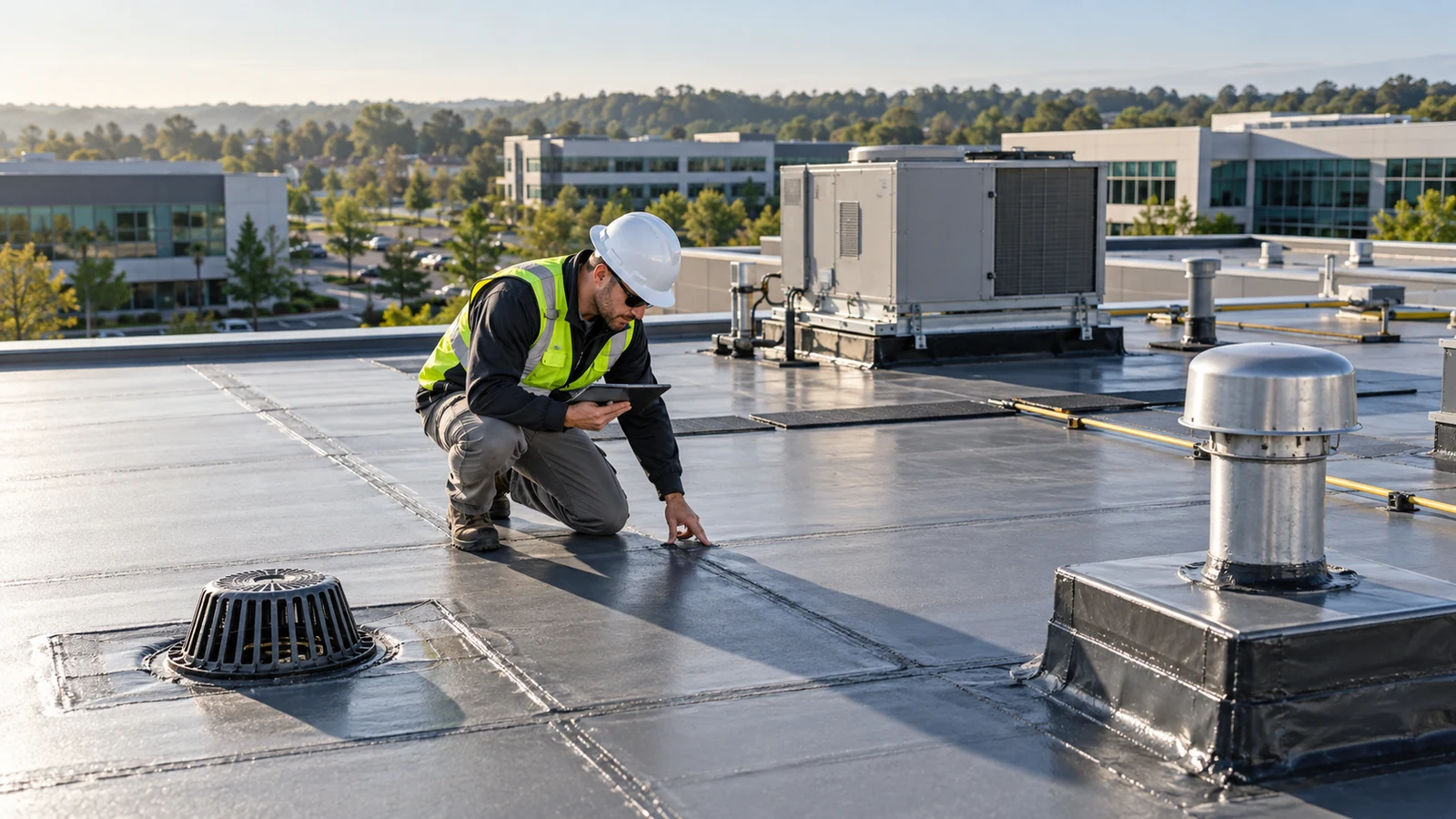
A useful commercial roof inspection does more than list visible defects. It reviews membrane condition, perimeter details, drainage, penetrations, rooftop traffic and repair history, then identifies what needs attention now, what should be monitored and what may need repair, maintenance or replacement later.
What a Commercial Roof Inspection Can Review
Leak Investigation vs. Full Roof Inspection
A leak investigation starts with a specific symptom and works toward likely water-entry pathways. A full roof inspection looks more broadly at the roof and how much useful life may remain. The two can overlap, but they answer different questions. A building can have one localized leak on a roof that is otherwise in good condition, or no active interior leak while still having defects that should be addressed before they become larger problems.
If you already have an active leak or known damage, see commercial roof repair.
When Commercial Properties Commonly Need an Inspection
- After a reported leak, severe weather event or unexpected interior moisture.
- Before planning a major repair, replacement or restoration project.
- Before acquiring a property or scheduling future roofing work.
- Before or after significant rooftop mechanical, electrical or solar work.
- As part of a recurring maintenance and roof-history program.
- When repeated repairs make it difficult to understand the condition of the larger roof area.
Useful Roof Inspection Records
Roof records become more useful over time. Photos, roof notes, drainage observations, repair locations and records of rooftop changes make it easier to see what is new, what has stayed stable and which buildings or roof areas need attention first.
Inspection Findings Should Support Repair, Maintenance or Replacement Decisions
An inspection should help you choose the right next step. Local damage may need commercial roof repair, recurring drainage or access problems may fit commercial roof maintenance, and widespread deterioration or moisture may point to commercial roof replacement.
What an Inspection Report Should Look Like
A useful inspection report is organised so an owner can act on it. It typically opens with a roof plan that divides the roof into sections, then records the membrane type and condition, seams, flashings, drains, penetrations and rooftop equipment for each section.
Findings are best ranked by urgency: items that need prompt attention, items to monitor and items for the capital plan. Photographs are tied to locations on the plan so changes can be compared at the next inspection. The report should be candid about limits: what could not be seen, what a visual inspection cannot detect and which follow-up methods, such as a moisture survey, would answer the open questions.
Finally, it should end with recommended next steps in plain language, so the owner can decide among repair, maintenance or replacement planning.
Blank Commercial Roof Inspection Report Framework
A blank framework helps owners compare inspection deliverables without pretending that every building needs the same test or report. The actual scope should state what was reviewed and what remains outside the inspection.
| Report field | What to record |
|---|---|
| Property and review details | Building, date, roof access, reviewer and known roof records supplied before the visit |
| Roof-zone map | Section names, drainage areas, roof levels, equipment and photograph locations |
| Method and limitations | What was visually reviewed, what was inaccessible and any testing that was not part of the scope |
| Observed conditions | Membrane, seams, flashings, drains, penetrations, edges, traffic areas and previous repairs |
| Evidence | Photo IDs, roof-zone references and notes that distinguish observation from interpretation |
| Priority | Prompt action, monitor, routine maintenance or capital-planning item, with the reason stated |
| Next step | Repair, maintenance, replacement planning or further investigation, including unresolved questions |
Printable owner tool: Blank Commercial Roof Inspection Record (fillable PDF). Open the blank worksheet, type or print your notes, and retain a copy with the property records.
Commercial Roof Inspection FAQs
How often should a commercial flat roof be inspected?
There is no single interval for every building. Roof age, system type, warranty or maintenance requirements, rooftop traffic, known defects, severe weather and other-trade activity should shape the schedule. Many facilities use a regular seasonal rhythm plus additional checks after events that may have changed the roof.
Can a roof inspection determine whether repair or replacement is needed?
Yes. An inspection can show the defects, repair history, moisture concerns, drainage issues and how much of the roof is affected. That information helps determine whether repair or replacement is the better next step.
Does a visual inspection find every hidden roof problem?
No. A visual review can document accessible seams, drains, flashings, membrane conditions and visible damage, but it cannot prove that all insulation is dry or that the deck is sound. If the leak history or surface findings suggest concealed moisture, ask whether a targeted moisture investigation, infrared survey under suitable conditions or selective test opening is warranted. The written report should distinguish what was observed, what was inferred and what remains unverified.
What should a pre-solar roof inspection document for the solar design team?
It should document roof system and age where known, leak and repair history, drainage, wet or suspect areas, roof levels, curbs, penetrations, access routes and conditions that could affect future maintenance. The purpose is to give the solar team a current roof baseline rather than an assumption.
Should a commercial roof be inspected after a severe storm?
Yes, when the building is safe to access. Storms can lift edges, move flashing, block drains or damage rooftop equipment. A prompt look can catch problems before the next rain and documents conditions for insurance purposes.
What is a moisture survey and when is it useful?
A moisture survey uses methods such as infrared imaging, electronic scanning or core sampling to locate wet insulation. It is useful when leaks recur, when replacement is being considered or when a repair needs to be scoped accurately.
Is a roof inspection useful when buying a commercial building?
Yes. An inspection records condition, estimates remaining life and flags near-term costs, all of which can inform price and negotiation. Ask the inspector to state their limits and to separate urgent items from long-term planning.
Should someone from the building attend the inspection?
It helps. Facility staff can point out known leaks, past repairs and sensitive areas, and can arrange access. Sharing records beforehand makes the visit more productive.
Schedule a Commercial Roof Assessment
A useful inspection produces a record you can act on: condition notes, photographs and priorities, not just a pass-or-fail impression.
Share the building location, what you have noticed on the roof and any available photos or records. These details help start a useful conversation about the scope.
Request a Roof Inspection