
Roof Readiness for Commercial Solar
Roof readiness is a roofing question asked on solar's schedule. Before a long-lived array is fixed above a commercial roof, the owner needs to know whether the membrane, the insulation under it, the drainage and the details around every penetration can carry that decision for as long as the panels are meant to stay up there. The answer comes from evidence on the roof rather than the year on the file.
Water Behaviour Tells You Most of What You Need
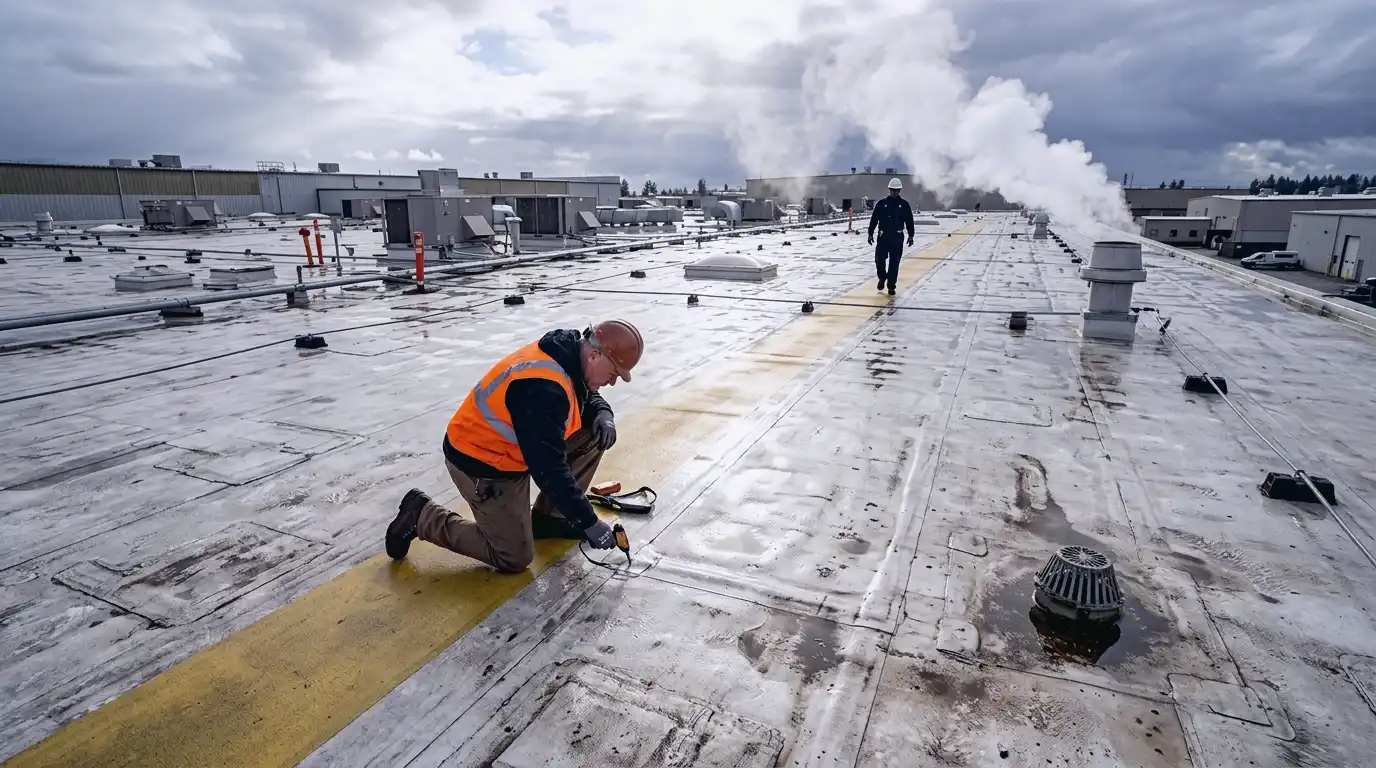
Start with where the water goes. Drains, scuppers, overflows, tapered slope and the low spots still holding water two days after a storm say more about a roof than the membrane type does. Ponding that lingers, a drain sitting proud of the field, an overflow nobody has looked at since the last tenant: each of those is a readiness problem before it is ever a solar problem.
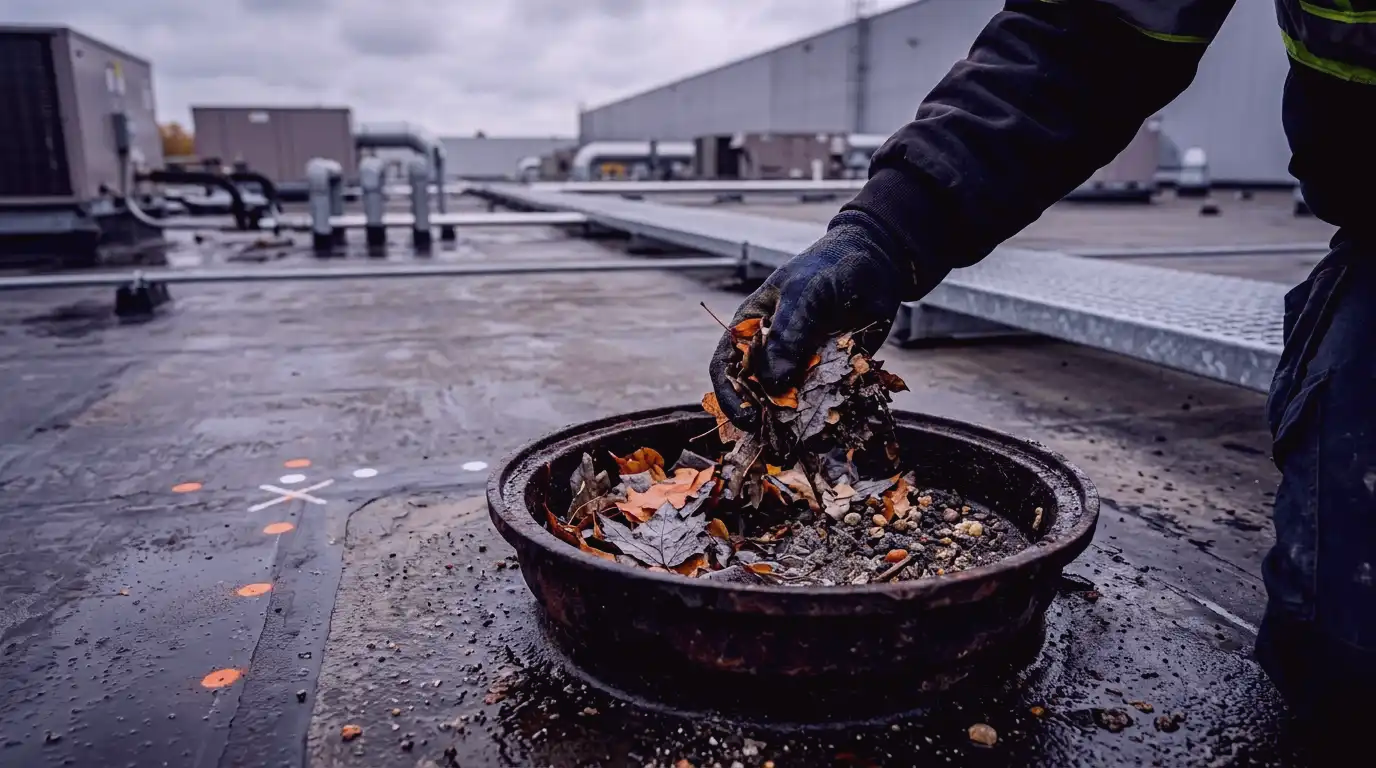
Drainage also has to keep working once modules are overhead. Drains and overflows still need clearing, still need inspecting, and still back up when the leaves come down. Putting those points under racking or behind a row makes routine service harder and easier to defer. A small drainage fault can then become a larger roof problem before anyone notices it.
Remaining Service Life, Not the Year on the File
Two roofs installed the same season can be in completely different shape. Repair history, foot traffic, workmanship at the details, moisture held in the insulation and every change made on the roof since it went down all move the real number. So the readiness call is made on current condition evidence, including moisture investigation where the roof warrants it, rather than on an age rule.
Active leaks belong in that conversation, not after it. Water travels inside a roof assembly and the stain on the ceiling is often nowhere near the defect. Where wet insulation is suspected, the extent needs to be understood while the roof is still open to inspection. Tracing it later, through an installed array, is slower and more disruptive.
The Details Deserve the Closest Look
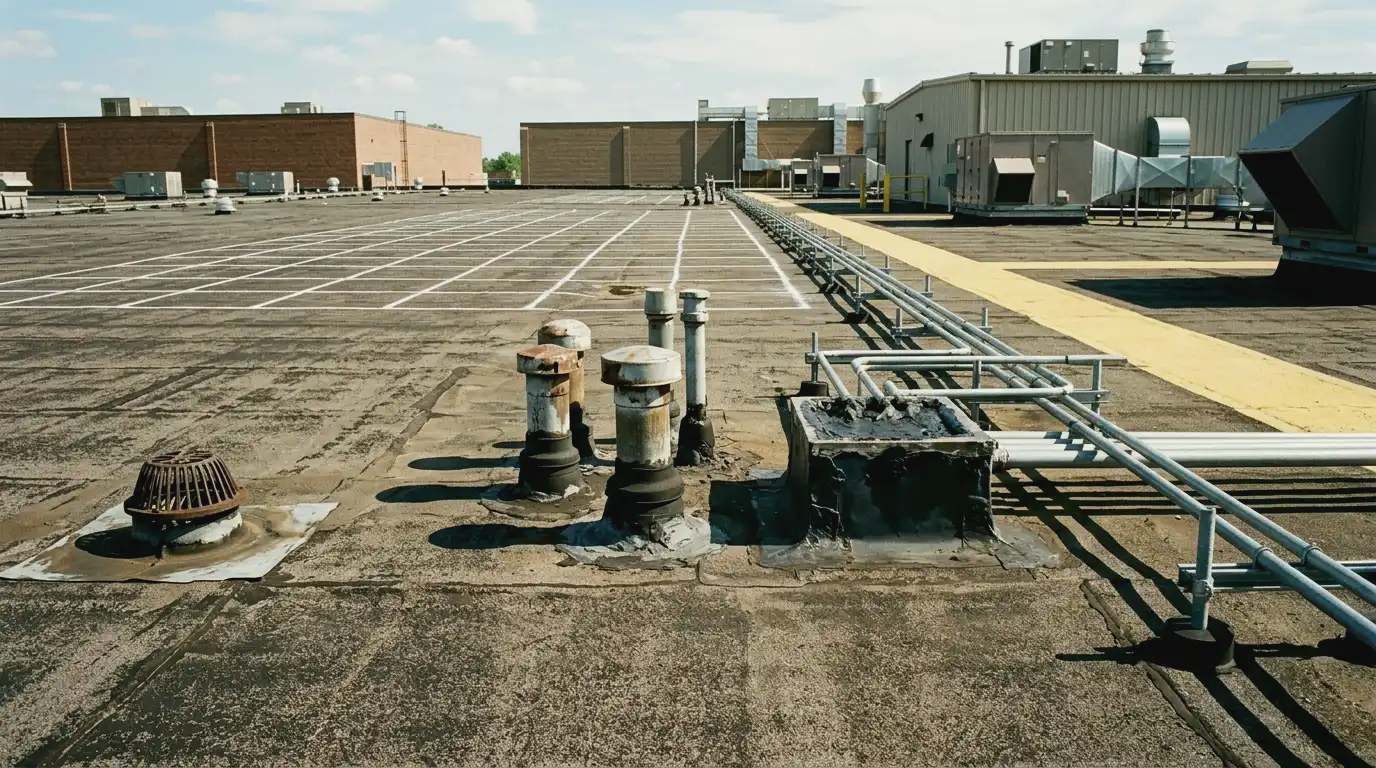
Many roof problems show up at transitions and details rather than in the middle of a clean membrane field. Curbs, pipe penetrations, flashings, expansion joints, hatch details and the patchwork around equipment added over the years are where a readiness review spends much of its time. Those same areas carry much of the future maintenance load, which is why they need to stay reachable and workable after solar equipment arrives.
A readiness review maps them, separates what needs attention now from what is sound but should not be buried, and notes where obsolete equipment or dead penetrations could come off during roofing work. Removing them first leaves a simpler roof to plan around and one less detail to maintain over the years ahead.
Planning references: Ontario solar photovoltaic systems guidance
What Readiness Settles, and What It Hands to Someone Else
Readiness answers roofing questions: condition, remaining life, moisture, drainage, detail quality, access and sequence. It does not certify structural capacity, size an array, design an electrical path or determine attachment engineering. Those belong to the qualified professionals who carry that responsibility, and a readiness report should name them plainly instead of leaving an owner to assume they have been handled.
The same honesty applies to what is already installed up there. Existing guardrails, ladders, hatches, walkways and any snow or ice retention on the building are conditions to record and plan around during a readiness review. We do not supply, design or install those systems. If you want any of that added or changed, it belongs with the specialists who design and install it.
Sequencing the Roof Against the Solar Schedule
There are only a few honest versions of the answer. The roof supports the project as it stands. The roof needs targeted work first, measured in weeks rather than seasons. Or the roof should be renewed before a long-lived asset is fixed above it. Saying which one applies, and why, is the point of the exercise.
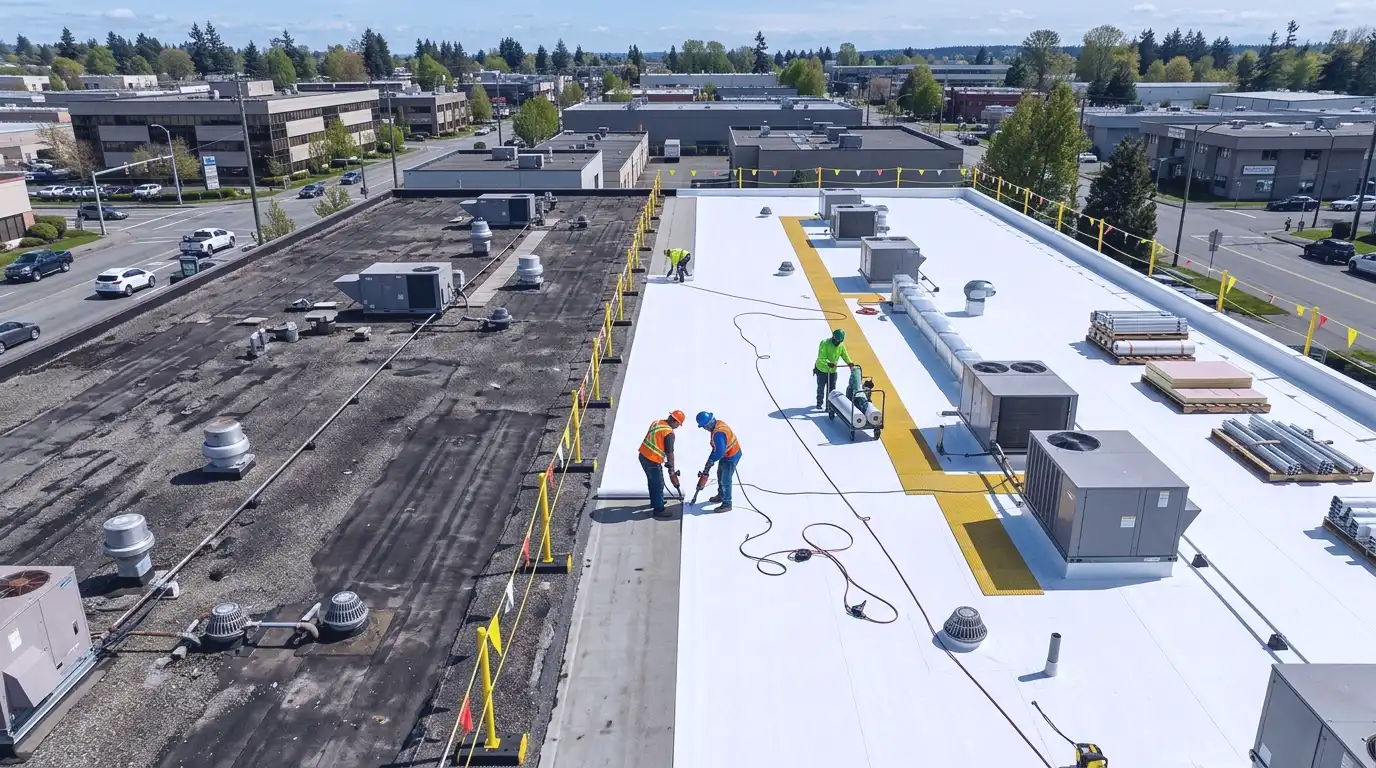
Phased buildings make that more interesting than a single verdict. Commercial roofs are often a set of areas from different decades, and one section can be due while another has years left. Separating them lets an owner renew what needs renewing and still advance on the area that is ready, instead of holding an entire project hostage to the worst roof on the property.
The Record You Are Left Holding
A dated condition record before any other trade mobilizes is the quiet value in all of this. Photographs, drain conditions, known repair locations, membrane defects and any damage already present are captured with a date attached. If an issue surfaces later, that record helps distinguish pre-existing conditions from later maintenance or construction damage.
A follow-up review once solar work is finished closes it out. It confirms service routes are still open, can identify membrane damage while it is still limited, and gives the building envelope its own check alongside whatever the solar contractor commissions.
Read more: Commercial roof inspections Commercial roof maintenance
Compare Roof Readiness With Feasibility and Rooftop Solar
What Owners Ask When the Roof Condition Could Change the Solar Schedule
These questions focus on remaining roof life, isolated failures, documentation, drainage and the access decisions that should be settled before solar work begins.
Does a roof have to be new to be ready for solar?
No. Plenty of mid-life roofs are ready. What matters is current condition, moisture, drainage, the state of the details and how much service life remains against how long the array is expected to stay up there.
One section of our roof is failing and the rest is sound. Does that hold up the whole project?
It usually should not. Sections can be assessed and treated separately, so the failing area can be renewed while planning continues on the part that is ready. Treating a phased building as one uniform roof is what hides the problem in the first place.
Can you document the roof before another solar contractor starts work?
Yes. A roof condition assessment before solar records the membrane, drainage, details and existing repair areas with a date attached, so the owner holds a baseline before rooftop work begins.
Should drains be relocated to make room for a better layout?
Not as a starting assumption. Effective drainage and service access come first, and any change to drainage is a design decision for qualified professionals based on the actual roof rather than a way to free up module space.
Do you supply guardrails, roof access ladders or snow retention as part of this work?
No. Those are not services we offer. A readiness review records what is already installed and plans around it, and anything you want added or altered goes to the trades who supply and engineer those systems.
What does a roof readiness review cost compared with the risk it addresses?
It is a small step compared with the cost of removing and reinstalling an array to repair a roof. The review studies condition, drainage and remaining life so the sequence can be chosen sensibly.
Who should receive the roof readiness report?
Share it with the owner, the solar bidders and any lender or insurer involved. A single shared baseline keeps everyone working from the same facts.
Start With the Roof Record, Not the Panel Layout
Roof age, known repairs, leak history, drainage and planned replacement work help establish whether solar should proceed now or follow roofing work.
Roof Details That Make the Readiness Review Useful
- Water Behaviour Tells You Most of What You NeedStart with where the water goes. Drains, scuppers, overflows, tapered slope and the low spots still holding water two days after a…
- Remaining Service Life, Not the Year on the FileTwo roofs installed the same season can be in completely different shape. Repair history, foot traffic, workmanship at the details, moisture held…
- The Details Deserve the Closest LookMany roof problems show up at transitions and details rather than in the middle of a clean membrane field. Curbs, pipe penetrations,…