
Commercial Roof Maintenance Protects the Roof Between Major Projects
Preventive roof maintenance is the work that happens between leak calls, repairs and eventual replacement. On a commercial flat roof, small changes in drainage, roof edges, seams, rooftop traffic or work by other trades can become more expensive when they are not recorded and addressed. A useful maintenance program focuses on the conditions that matter for the specific building rather than applying the same checklist to every roof.
Maintenance Priorities on Commercial Flat Roofs
Drainage Maintenance Is Part of Roof Maintenance
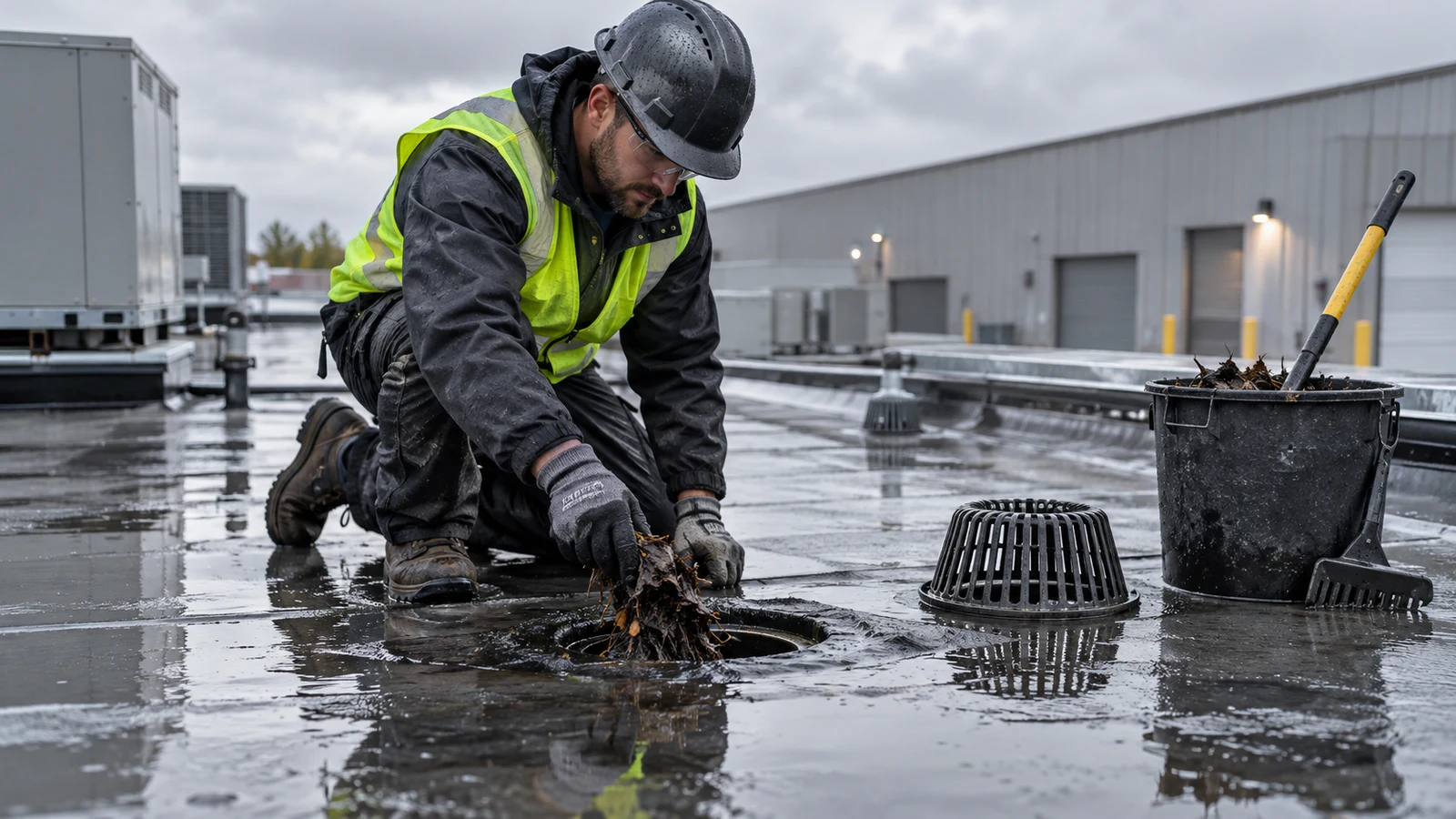
Flat roofs rely on deliberate drainage. Debris at a drain, a blocked overflow, displaced strainer or a change to the membrane surface can alter how water leaves the roof. Persistent standing water deserves investigation because the cause may be an obstructed or undersized outlet, roof slope, tapered insulation or settlement. The goal is to keep water moving to the drains and overflows as designed.
Maintenance After Other Trades Work on the Roof
HVAC replacement, electrical work, piping, controls, communications and solar projects can introduce new supports, penetrations and service routes. Roof maintenance should record those changes and check the affected membrane, flashings and seals. A roof that was performing well can develop a local problem after another trade changes a detail or repeatedly crosses an unprotected area.
Use Maintenance Records to Build a Roof History
Photos, drain observations, repair notes and records of rooftop work create a useful roof history. They make it easier to see whether one area keeps failing, whether a repair has held and which roof sections may need attention during future maintenance or replacement work.
Maintenance Does Not Replace Repair or Replacement
Maintenance can reduce avoidable problems, but it cannot make a failing roof last forever. Active damage belongs in commercial roof repair. Widespread deterioration, moisture or repeated failures may call for commercial roof replacement. A commercial roof inspection can help when the right next step is unclear.
A Practical Seasonal Maintenance Rhythm
Many owners find a spring and fall routine easy to keep. Your warranty or roofer may specify a different schedule, so treat this as a starting framework.
Spring. Look for winter damage at edges, flashings and seams. Clear drains and scuppers of debris that gathered over winter. Check for ponding that persists after rain and record any new stains inside the building.
Fall. Clear leaves and debris before they block drains. Check sealants and flashings, confirm that rooftop equipment access has not damaged the membrane and repair small defects while temperatures still allow it.
After any trade visit. Walk the roof, photograph the area and note any damage or loose components. Add the visit to the roof log.
Keep a single log of dates, findings and actions. A consistent record makes patterns visible and supports warranty and capital-planning conversations.
Commercial Roof Maintenance Log Template
A maintenance log is most useful when the same fields are used after routine visits, leak calls and work by other rooftop trades. Keep unresolved items visible until they are closed.
| Log field | What to record |
|---|---|
| Date and event | Routine visit, storm follow-up, leak call, trade visit or completed repair |
| Roof zone | Section, drain basin, equipment area or other repeatable location reference |
| Observation | What was found, including drainage, membrane, edge, penetration or traffic-related conditions |
| Action taken | Cleaning, repair, monitoring, photograph, work-order reference or other completed step |
| Evidence | Photo IDs, contractor note, invoice, warranty notice or related project record |
| Owner and due date | Who is responsible for the next action and when it should be reviewed |
| Status and closure | Open, monitoring or closed, with the closure date and supporting evidence |
Printable owner tool: Commercial Roof Maintenance Log (fillable PDF). Open the blank worksheet, type or print your notes, and retain a copy with the property records.
Managing multiple buildings? Use the Multi-Property Roof Asset Register (fillable PDF) to connect roof-section condition, evidence, unresolved work, priorities and follow-up owners across a portfolio.
Commercial Roof Maintenance FAQs
What should be checked during commercial roof maintenance?
The exact checklist depends on the roof, but common priorities include drainage, seams, roof edges, openings and walking paths, rooftop equipment and changes made by other trades.
Can maintenance prevent every commercial roof leak?
No. Maintenance cannot prevent every failure or weather event, but it can catch developing problems, keep drains and access areas clear and create a better record for future repair or replacement decisions.
Should a commercial roof be checked after HVAC or solar work?
Yes. New penetrations, supports, equipment and service traffic can affect the membrane and nearby flashings. The affected area should be checked and photographed after the work.
Is commercial roof maintenance the same as a warranty inspection?
Not necessarily. Warranty requirements depend on the roof system and warranty terms. Building owners should follow the actual manufacturer instructions or project records that apply to their roof rather than assume a generic maintenance visit satisfies every requirement.
How often should roof drains and scuppers be cleaned?
Often enough that they never hold debris, which usually means at least twice a year and again after storms or when nearby trees shed. Buildings near trees, construction or exhaust sources may need more frequent checks.
What should we do about snow on a commercial flat roof?
Follow guidance from a structural professional about loads and from your roofer about how snow may be removed without damaging the membrane. Avoid sharp tools and heavy equipment on the roof, and keep drains clear for meltwater.
What should go in a roof maintenance log?
Record dates, who visited, what was observed, what was done, photographs and any rooftop work by other trades. Include new interior stains and weather events, since these help trace future leaks. Organize notes by roof section or drain basin, and keep the contractor’s repair description with before-and-after photographs. Record any recommendation that was deferred, who is responsible for following up and the date it should be reviewed. That makes the log useful for budget decisions, warranty questions and recurring-leak investigations.
Is vegetation on a flat roof a problem?
It can be. Roots and growth can lift edges, block drains and trap moisture. Remove it carefully, check for membrane damage beneath and address the debris or standing water that encouraged it.
Build a Preventive Roof Maintenance Plan
Preventive maintenance works when it is tied to a consistent record. We build that record around your building's actual drainage, access and rooftop-equipment layout.
Share the building location, what you have noticed on the roof and any available photos or records. These details help start a useful conversation about the scope.
Discuss Roof Maintenance