
Facility schedules
Plan around public access, education schedules, events and essential services.
Schools, recreation centres, public facilities and other institutional properties have operational and access requirements that differ from those of a vacant commercial roof. Solar planning should account for facility schedules, roof condition, technical reviews and long-term stewardship.

Schools, arenas, municipal facilities and public-sector buildings benefit from early coordination with facility operators and project procurement teams.
Institutional buildings often have occupied areas, mechanical systems, public access patterns and multiple stakeholders. Roof suitability, remaining life and service access should be evaluated before a proposed array is advanced.
Institutional and public-sector solar planning should match the decision trail required by the facility. Schools, municipal buildings and community centres often have scheduled occupancy, procurement requirements and public-access rules that affect what can be reviewed and when. The earliest project record should distinguish the energy objective from the roof-life, capital-budget and operational approvals needed to pursue it.
Review My Public Facility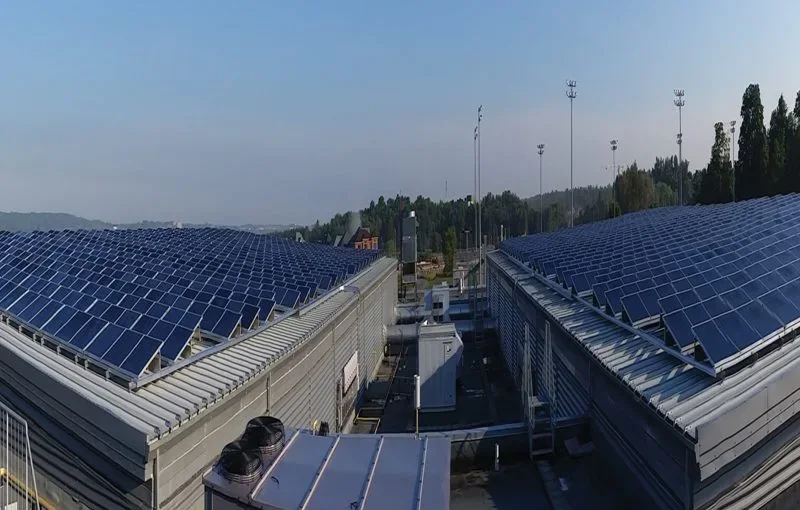
Public facilities may have procurement, documentation, accessibility and operating constraints beyond a typical private building.
Plan around public access, education schedules, events and essential services.
Check the existing roof life, structural information, drainage and rooftop equipment.
Coordinate approvals, safety access, asset records and facility handover needs.
Preserve future maintenance and roof replacement options while planning the array.
Public and institutional projects benefit when roof condition, engineering roles, operating constraints and procurement assumptions are documented before bids are compared.
Structural and electrical requirements, utility coordination, on-site safety and construction scheduling may involve several departments or external specialists. Clear project responsibilities help avoid gaps at the interfaces between teams.
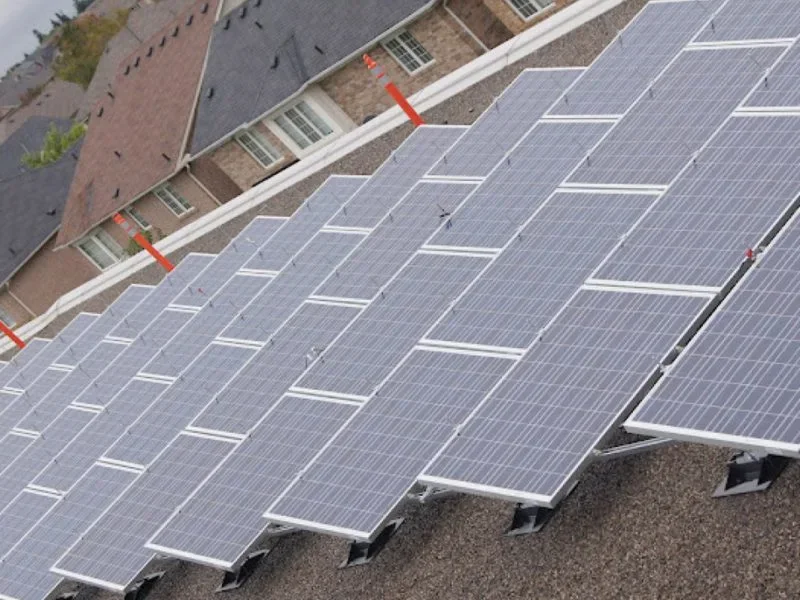
Drains, hatches, equipment and roof service routes must remain practical. An institutional installation should be considered not only for initial construction but also for years of building maintenance.
A defensible early scope records roof history, technical assessments still outstanding, electrical information, safe public separation, required maintenance access, acceptance criteria and documentation expected at handover. Where multiple departments must approve the project, define who is accountable for building-envelope condition after the solar work. Avoid promising grant eligibility or a payback until the current rules and property inputs are verified.
An institutional owner or authorized property representative can start with the site location, building use, general roof condition and intended scope. We can help coordinate the next appropriate solar and roofing review.
Clear baselines for roof condition, safety, procurement roles and long-term service make approvals and later accountability easier.
Schools, arenas, municipal offices and other institutional properties may operate on different calendars and have strict public-access requirements. A practical solar proposal should respect facility schedules, security boundaries, public safety and essential services while ensuring that roof inspections and maintenance remain possible.
Public-sector projects can require defined procurement pathways, detailed scope documents, technical submissions, safety planning and clear handover requirements. These administrative steps should be considered early rather than added after a preliminary layout. Technical teams need an agreed record of who approves design changes and who maintains the completed system.
A rooftop system and the underlying roof often have different maintenance cycles. Planning should address roof age, repairs, expected renewals, equipment replacement and how the facility will continue to operate during service. Utility requirements, energy usage and operational priorities must be evaluated for the specific property.
Condition reports, operating windows, public-access limitations and existing engineering records help define a scope that can survive formal procurement.
Start an Institutional Solar ReviewSchools, municipalities and public facilities often need more than a technical concept; they need a scope that can be approved, procured, operated and audited.
These questions focus on occupancy, documentation, roof warranties, proposal comparison and responsibility after turnover.
These facilities often have formal procurement, public access, critical operations, documented safety procedures and fixed budget cycles. The technical design must fit those operational and governance requirements.
Often that is the objective, but access, noise, lifting, shutdowns, emergency routes and work over occupied areas need a property-specific construction plan and appropriate safety controls.
Useful records can include roof drawings and condition reports, known repairs, electrical information, structural documents, site constraints, operating schedules and clearly assigned design responsibilities.
Compare the assumptions behind usable area, roof life, structural and electrical scope, utility work, production modelling, access, maintenance, warranties, exclusions and lifecycle responsibilities, not just the headline system size.
Yes. Existing warranty requirements, approved materials, penetration details and inspection obligations should be reviewed before construction so the solar scope does not create avoidable roofing disputes.
The owner should define responsibility for monitoring, electrical service, roof access, cleaning or vegetation issues where relevant, warranty claims and coordination with future roofing or mechanical work.
Budget for condition reports, structural and electrical review, procurement documentation, roof preparation, commissioning and ongoing maintenance. Early technical review reduces change orders after award.
Commonly internal governance approvals, procurement rules, building and electrical permits and the utility process. Confirm the current requirements with each body.
Share the facility type, roof documentation, operating constraints and procurement stage. The next review should identify what must be confirmed before the project is tendered or advanced.