
Eastern Ontario Commercial Solar
Eastern Ontario combines a long winter, a broad service area and commercial roofs that range from dense mechanical layouts to older industrial properties. A solar plan has to work in January as well as July: drains still need to be reached, equipment still needs service, and winter access cannot become an afterthought once rows are in place.
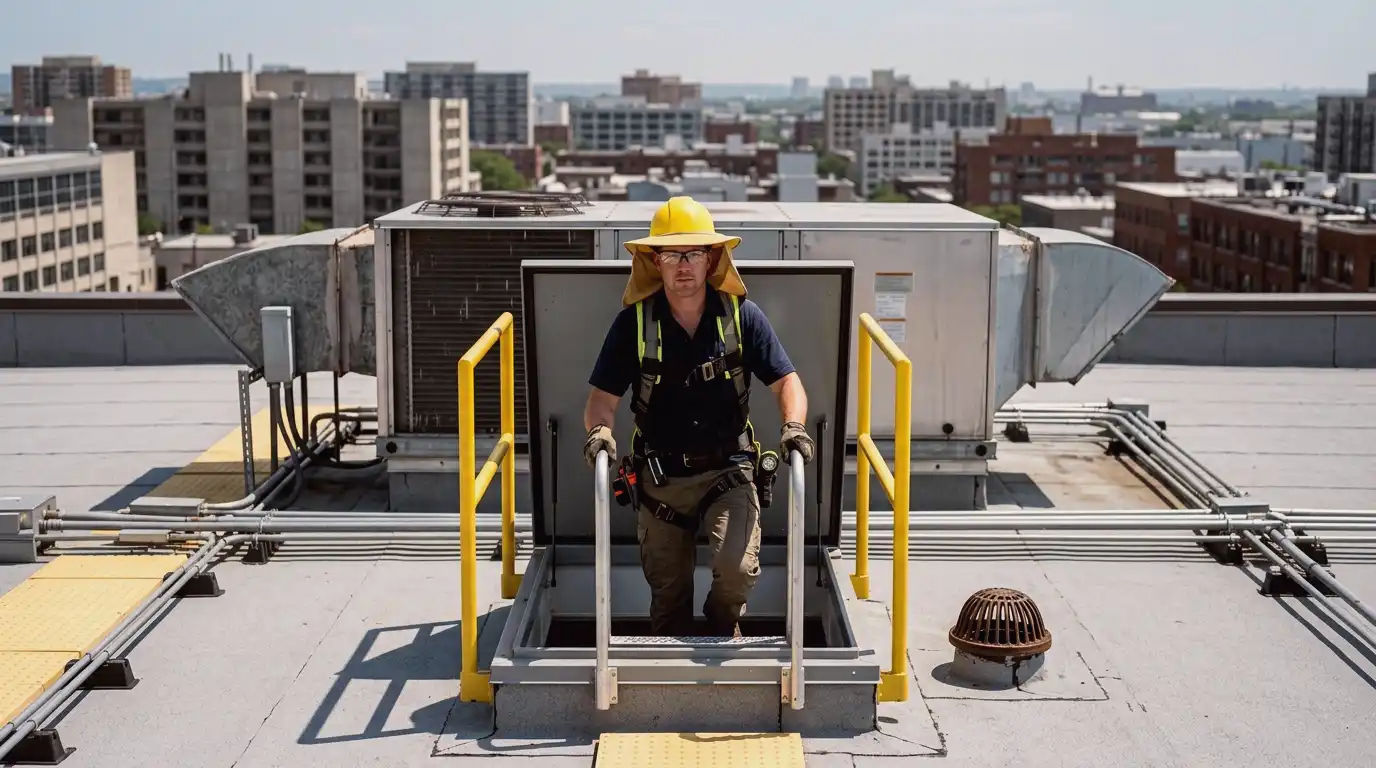
Winter Changes the Roof Routine, Not Just the Roof
Ask who actually goes up there after a January thaw. It may be a maintenance person checking drains or a contractor responding to a rooftop unit, with limited daylight and slippery conditions. On an open roof, the route is usually obvious.
An array changes the shape of that job. The route is now between rows, the drain may sit beyond a new obstruction, and the person making the trip may not be the person who knew where everything was. A layout that keeps winter routes obvious, keeps drains and overflows easy to reach, and leaves room to work beside equipment rather than over it helps preserve the roof's serviceability.
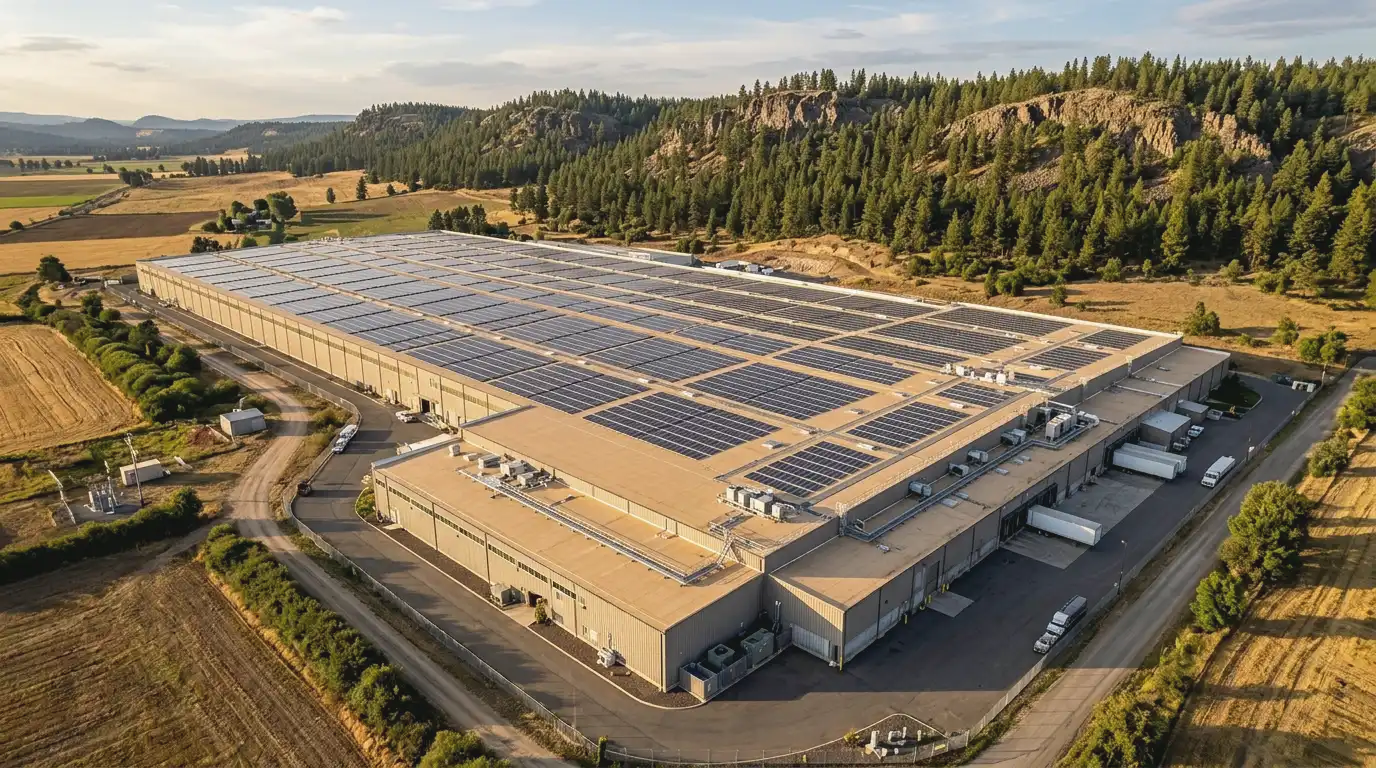
A December Sun Sits Very Low
Shading is a winter problem more than a summer one. At this latitude the December sun stays low, so rows shade each other at a spacing that works perfectly well in June, and parapets, screen walls, stair bulkheads and the building next door all throw far longer shadows than a summer site visit suggests.
Row spacing is the solar designer's decision, not a roofing one, but it has a roofing consequence worth knowing early. Spacing set for winter performance consumes more roof per module, which changes how much of the field is used, how the rows sit relative to drainage and how much walking space is left. An owner working from a summer estimate of module count is often working from the wrong number.
Very Little Transfers From One Site to the Next
Owners with buildings at different points across Eastern Ontario cannot assume the same utility process applies at every address. The region crosses several electricity distributor territories, and service boundaries do not always align neatly with municipality names. An address-searchable service-area map from the Ontario Energy Board helps identify the serving distributor for the actual property before connection requirements are assumed.
The buildings themselves can differ just as much. A downtown commercial property, a rural industrial park and a business-park office building may present unrelated roof assemblies, electrical arrangements and access conditions. Each property needs its own review even when an owner has already completed a similar project elsewhere.
Dense Mechanical Roofs Can See Heavy Service Traffic
Office and technical buildings with dense rooftop equipment can see frequent foot traffic from several trades. Over time that may show up as wear along informal paths, damage near equipment, or details that have been opened and closed repeatedly.
That is worth documenting before an array arrives, because solar adds another long-term system that will also need service. Establishing where people already walk, then preserving practical access to equipment, drains and membrane details, protects the roof better than relying on a route that is difficult to use.
The Corridor Markets Get the Same Review at a Different Scale
Kingston, Belleville, Brockville, Cornwall, Cobourg, Brighton, Lindsay and Port Hope include a mix of industrial, retail and service properties. Some buildings have been expanded in stages, and roof records can become incomplete as ownership and maintenance teams change. A property with several additions may contain different assemblies under what looks like one continuous surface.
The review is sized to the building instead of being a cut-down version of something built for a bigger property. On a smaller site the early work is condition, drainage, access and the electrical picture, and the answer that matters is whether the roof will support taking the project further or whether roofing comes first.
Starting Point, and Which Pages Cover What
Ottawa and Peterborough have pages of their own here, so begin from whichever of those applies. Across the rest of the region, Kingston included, this is the page.
Bring the address, plus anything you can say about the roof's age and how it was built, anything in the file from past inspections or roofing work, and a sense of what happens in the building through the winter. Structural questions, including snow and added load, and anything to do with electrical capacity or connection go to the engineers and the utility rather than being answered from a roof review. Photos of drainage areas, rooftop equipment and known repair zones also make that first review more useful when records are incomplete.
Planning references: Ontario Energy Board net-metering guidance
Eastern Ontario Solar Planning Across Long Winters and Mixed Building Stock
This page covers Eastern Ontario's long-winter roofs, from dense mechanical layouts to older industrial properties.
Eastern Ontario Questions About Winter, Utilities and Older Buildings
Long winters, lower winter sun and very different building histories mean the review has to stay tied to the exact property.
Do you cover Kingston and the smaller Eastern Ontario markets?
Yes. Kingston, Belleville, Brockville, Cornwall, Cobourg, Brighton, Lindsay, Port Hope and the smaller industrial and retail properties across the corridor all start here. Ottawa and Peterborough are handled separately.
Why does the utility question keep coming back to the address?
Because Eastern Ontario crosses several distributor territories and service boundaries do not always align neatly with municipality names. The Ontario Energy Board maintains an address-searchable service-area map, and the serving distributor sets the connection process and requirements for the specific property.
How much does winter really affect a rooftop solar plan here?
It affects the layout and the maintenance routine more than the decision. Keeping the winter route across the roof obvious, keeping drains reachable, and allowing for low-angle shading in the design all matter. Loading itself is a structural engineering question.
Our roof gets a lot of contractor traffic. Is that a problem?
It is a condition worth documenting. Repeated foot traffic wears paths into a membrane and damages details near equipment, and solar makes the traffic pattern permanent. Planning service routes around where people already walk usually works better than trying to redirect them.
We have buildings in three different towns. Can we assume the same approach?
Not safely. The serving utility, the roof assembly, the building use and the site access can all differ, so each property needs its own review even when the buildings look similar from above.
How does winter sun angle affect solar planning in Eastern Ontario?
A low winter sun and snow cover change expected winter output and layout choices. Ask the designer to explain assumptions and seasonal performance.
What should an Eastern Ontario owner ask about service access to rooftop equipment?
Ask how technicians will reach units across and around the array, and how snow will be managed. Clear paths protect the roof and the equipment.
Start With the Address, Roof History and Winter Behaviour
Bring the roof record, winter maintenance issues and utility information for the address rather than relying on a regional assumption.
Eastern Ontario Property Details for the First Review
- Winter Changes the Roof Routine, Not Just the RoofAsk who actually goes up there after a January thaw. It may be a maintenance person checking drains or a contractor responding…
- A December Sun Sits Very LowShading is a winter problem more than a summer one. At this latitude the December sun stays low, so rows shade each…
- Very Little Transfers From One Site to the NextOwners with buildings at different points across Eastern Ontario cannot assume the same utility process applies at every address. The region crosses…