
Muskoka Georgian Bay Commercial Solar
Commercial solar in Muskoka and Georgian Bay is a business-park, highway and service-property story more than a cottage one. Hotels, restaurants, retail plazas, service shops, light industrial and distribution buildings are spread across a wide region, so winter conditions, travel logistics and roof access all deserve attention before layout begins. The plan therefore needs to be practical for the building on day one and still straightforward to inspect several winters later.
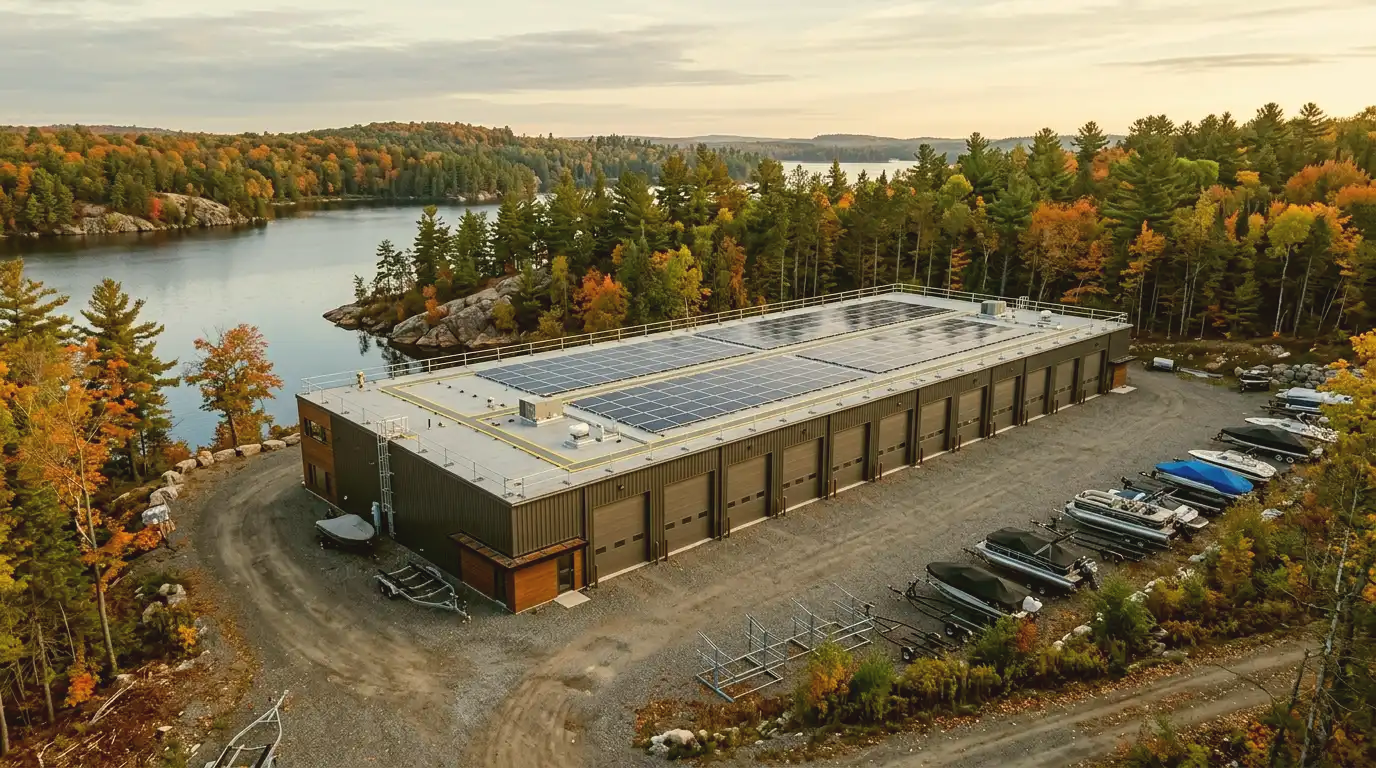
Solar Changes How Snow Drifts and Melts
Wind-driven snow does not settle evenly. Adding solar introduces new obstructions and shaded areas, so drift and melt patterns can change around rows, racking, parapets and rooftop equipment. The actual effect depends on the layout, exposure and building geometry, which is why it belongs in structural review rather than a generic rule.
That creates two planning questions. The structural effect of redistributed snow plus the added solar system belongs with qualified engineers working from the actual layout. On the roofing side, shaded snow may melt differently from snow on the open field, so drains, overflows and maintenance routes still need to remain practical through winter conditions. A roof plan should leave those areas visible enough that a technician can understand what is happening without moving equipment.
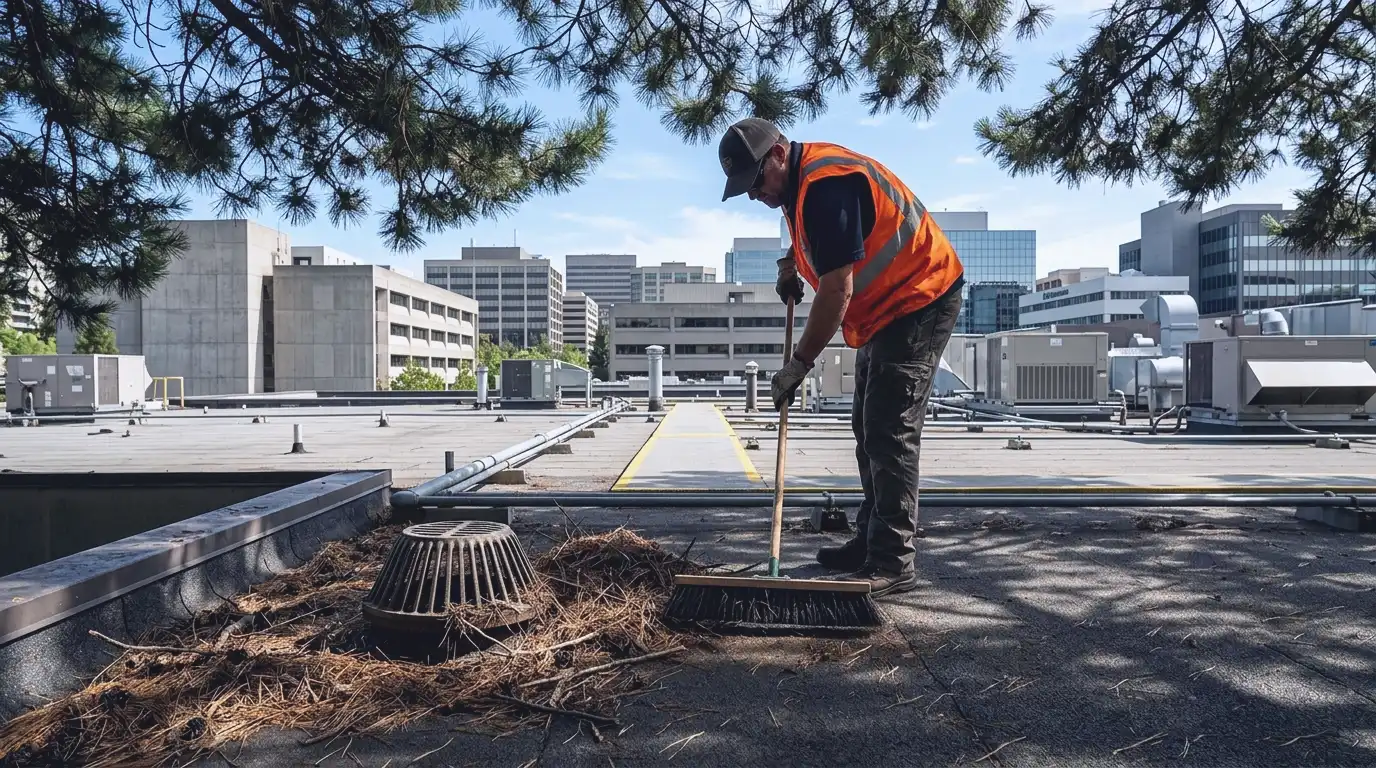
The Work Window Has to Fit the Operating Calendar
For hospitality, retail and seasonal properties, the operating calendar can be just as important as weather. A busy resort or restaurant may have periods when parking, deliveries or guest access cannot be disrupted, while another property may have a completely different no-work window.
Identifying workable periods early, and deciding whether roofing work needs to come first, reduces the chance that design reaches completion with no sensible construction window. The sequence should follow the actual property, its operating calendar and the roofing work it needs. Crane or lift access, delivery staging and public circulation belong in that same conversation.
Longer Travel Makes the First Visit More Valuable
Some properties sit well outside dense service markets. Longer travel can make routine follow-up less convenient, so it is useful to gather roof history, known defects, access constraints and available drawings before site work begins. Photos of roof access, mechanical areas and known leak locations can also prevent obvious questions from being deferred to a second trip.
That also makes good roof condition and service access more valuable. Known roofing problems should be dealt with before solar equipment makes future work more complicated, and the layout should keep drains and equipment practical to inspect. It does not change maintenance requirements; it makes efficient access and documentation more important.
Rooftop Work Above Paying Guests
Hospitality and retail buildings add a different operational constraint. Work may happen over occupied rooms or customer areas, and roof access may pass through space the public or staff use. Noise, working hours, hoisting routes and material staging therefore belong in the project plan rather than being left for the construction day.
These roofs also tend to be busy in their own right, with kitchen exhaust, numerous small units and screens carved into a modest area. Clear roof usually comes out as several pockets rather than one field, and each pocket has to leave the equipment beside it reachable. Service clearances need to remain usable after installation, especially where kitchen exhaust or multiple small rooftop units already divide the roof into tight working zones.
Light Industrial Around Owen Sound and the Inland Towns
Service, distribution and light manufacturing buildings around Owen Sound, Bracebridge, Huntsville and Parry Sound can offer broader roof fields than many hospitality properties. That may simplify layout, but it does not make the roof automatically ready for solar.
Older assemblies, additions from different years and drainage that has been altered along the way all still need establishing, and a roof that reads as one open surface from above regularly turns out to be two or three. Knowing which part is which is what decides whether solar can go ahead on the existing roof or whether a section needs work first. A broad roof can still hide transitions in deck type, membrane age or slope that only become obvious during a roof walk or when old records are compared.
Make the First Visit Count
Longer travel makes repeat visits less efficient, so the first review should be organized to gather as much as practical. Roof drawings, replacement dates, repair invoices, inspection reports and available electrical information are all worth pulling together beforehand so obvious document gaps can be identified before the site visit.
One page covers the whole region, from Bracebridge and Huntsville through to Owen Sound and Parry Sound. The questions stay consistent: is the roof suitable for a long-term installation, how much genuinely usable area is available, and which structural, electrical or utility questions need specialist input before a production estimate becomes useful.
Planning references: Ontario Energy Board net-metering guidance
Muskoka and Georgian Bay Solar Planning for Seasonal and Snow-Heavy Sites
This page speaks to business-park, highway and hospitality properties across Muskoka and Georgian Bay.
Muskoka-Georgian Bay Questions About Snow, Travel and Operating Seasons
Snow behaviour, seasonal occupancy and longer travel distances make complete first-visit information especially valuable in this region.
Is the whole Muskoka and Georgian Bay area covered by one page?
Yes. Buildings in Bracebridge, Huntsville, Owen Sound, Parry Sound and the surrounding communities are reviewed through this single regional page rather than through separate city pages.
Will solar make the snow situation on our roof worse?
It can change where snow drifts and how shaded areas melt. What that means structurally is for the project engineers to determine from the actual layout, exposure and building geometry. The roof plan still needs practical drainage and winter service access.
Can a hotel or a restaurant use rooftop solar?
Potentially. Usable roof area may be broken into pockets by kitchen exhaust, rooftop units and screens, and work above occupied space affects hours, access routes and material staging. A site-specific review is needed before layout.
Our property is a long way from the main towns. Does that matter?
It changes the planning rather than the technical requirements. Longer travel can make each visit more valuable, so good records, a sound roof and practical access to drains and equipment deserve extra attention before design begins.
We cannot find our roof records. Is that a dead end?
No, it just shifts the work to the roof itself. A condition review, with investigation where the assembly is unclear, establishes what the paperwork cannot, which is worth doing in one visit given the distances involved.
How does rooftop work above paying guests change cost in Muskoka?
Noise limits, staging restrictions and schedule constraints can raise cost. Ask bidders to describe guest-protection measures and work windows.
What should a Muskoka owner prepare before a first site visit?
Gather roof drawings, repair history, electrical information and operating calendar. A complete package makes a long visit count.
Make the First Site Visit Count
Bring roof records, snow and drainage observations, access limits and the operating calendar so the review can answer more in one visit.
Muskoka-Georgian Bay Information to Gather Before the Visit
- Solar Changes How Snow Drifts and MeltsWind-driven snow does not settle evenly. Adding solar introduces new obstructions and shaded areas, so drift and melt patterns can change around…
- The Work Window Has to Fit the Operating CalendarFor hospitality, retail and seasonal properties, the operating calendar can be just as important as weather. A busy resort or restaurant may…
- Longer Travel Makes the First Visit More ValuableSome properties sit well outside dense service markets. Longer travel can make routine follow-up less convenient, so it is useful to gather…