
Central Ontario Commercial Solar
Central Ontario commercial roofs have to be planned for winter as well as summer. Repeated freeze-thaw, iced drainage points, snow cover and a shorter comfortable window for some roofing work can all affect how a rooftop solar project is sequenced. Those conditions belong in the roof review before anyone counts modules.
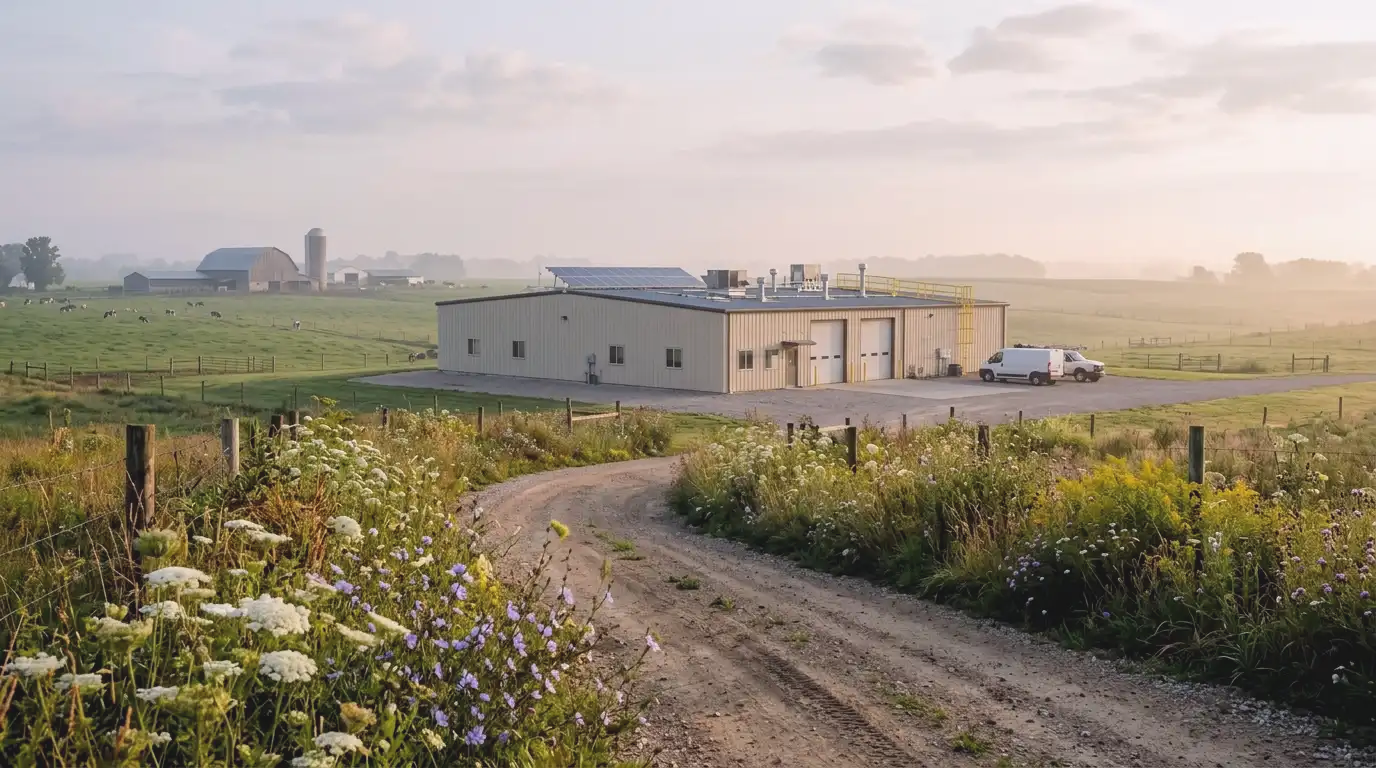
Freeze-Thaw Changes How the Roof Behaves
Repeated freezing and thawing can expose weak points in drainage. Meltwater may reach a drain during a warm period and then refreeze at the bowl, scupper or nearby low area. When flow is restricted, water can back up and spread into places that stayed dry in better conditions, putting more attention on seams, curbs and parapet details.
Adding an array can change that pattern rather than sitting outside it. Modules shade parts of the field and can shed meltwater into different areas, so drains, overflows and known low spots need to remain visible and reachable through winter, not only when the roof is dry. A practical layout also leaves room to inspect the membrane beside those drainage points instead of turning every winter service call into a reach-under-the-racking exercise.
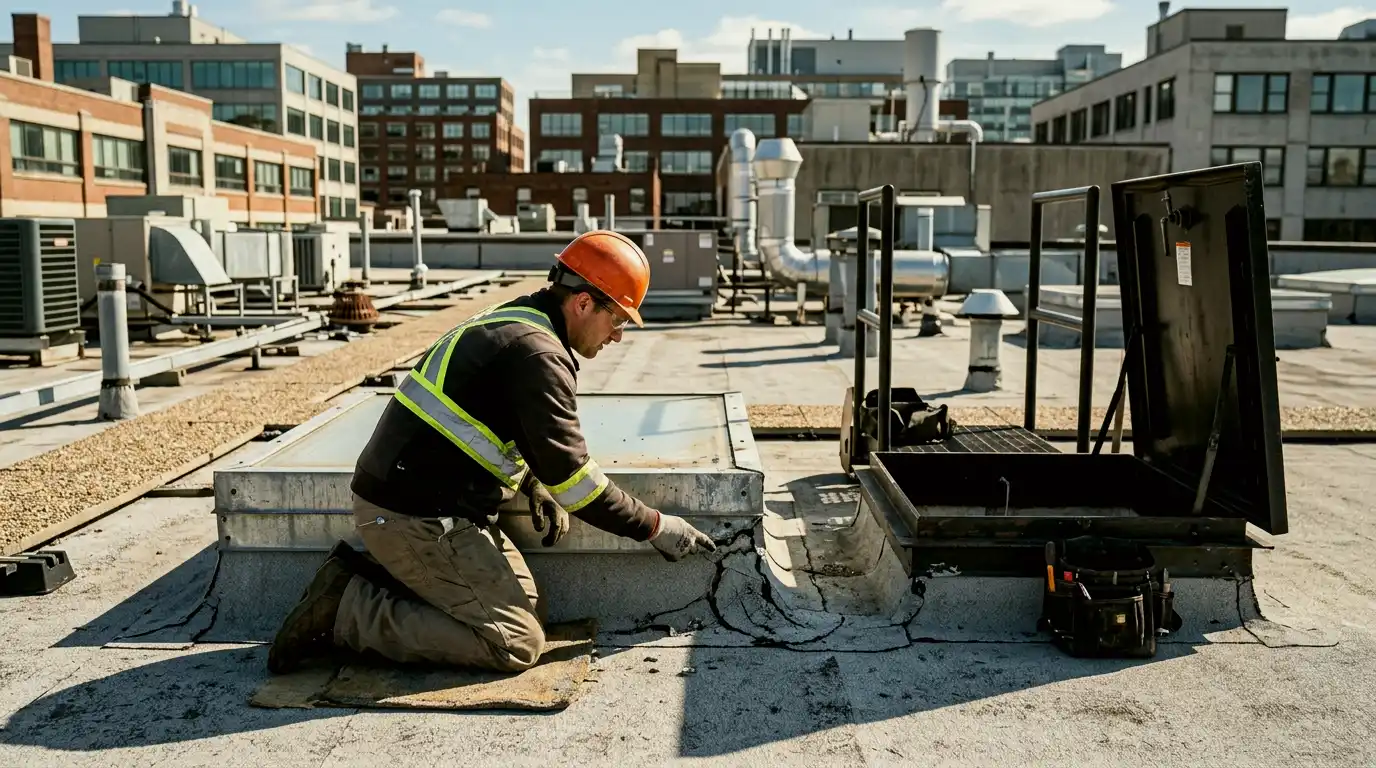
A Summer Roof Can Still Show Winter Clues
A roof reviewed in dry weather can still show evidence of winter behaviour. Silt rings and debris lines can mark where water has stood. Staining or corrosion around a drain can point to repeated wetting. Wear near a hatch or along a travel route can show where crews move when the field is covered.
Reading those clues helps turn a fair-weather visit into a more useful year-round assessment. It can also identify areas where an array would make cold-weather inspection or service more difficult, which belongs in the layout discussion from the beginning. Photos from previous leak calls, drain cleaning or winter maintenance can add useful context when they exist, especially where the roof looks normal by the time the review happens.
Roof Work Has a Seasonal Window
Membrane products, adhesives and detail work can carry temperature and weather limits, so some commercial roofing work is easier to schedule in stable conditions. In Central Ontario, late-season weather can narrow that window. If required roof work slips too far, the solar schedule may have to move with it. Small repairs and a full reroof do not carry the same lead time, so identifying the likely scope early gives the project team a more realistic calendar.
That makes the roofing decision part of the scheduling decision. Knowing early whether a section needs renewal, targeted repair or no immediate work gives the owner more room to sequence roofing and solar deliberately instead of discovering a conflict after design has advanced.
Manufacturing and Distribution Along the Corridors
Bradford, Alliston and the Tecumseth area include manufacturing and distribution properties where process equipment, make-up air and later additions can complicate the roof. When records are incomplete, what can be seen on the roof now matters as much as the last drawing in the file. Added roof sections, changed curbs and abandoned penetrations are worth mapping because they can divide what looks like one large field into several different roofing conditions.
Ground-level facts matter too. Which part of the yard can support staging or lifting equipment, what has to keep moving while work happens, and when the site can tolerate an interruption belong in planning before construction begins.
Smaller and Mixed Commercial Roofs Need a Different Test
Across Collingwood, Orillia, Orangeville and nearby markets, smaller retail, hospitality and service properties can have roof fields broken up by mechanical equipment, additions, parapets or changes in elevation. Usable area may come out as several workable zones rather than one clean rectangle.
On buildings like these, the early question is whether enough clear, serviceable roof exists to justify advancing the project. Answering that before detailed design keeps the next step tied to the building rather than to gross roof area. If the clear zones are too fragmented, that conclusion is useful by itself because it prevents the owner from advancing a layout that will be difficult to build or maintain.
Where to Start
Barrie is covered by its own page here and is the right opening move for a property in that city. Across the rest of Simcoe and Central Ontario this is the entry point, and the first conversation covers the address, how old the roof is and what system it is if that is known, what winter has been doing to it, and what goes on in the building.
The answer you should get is an order of operations: whether the roof supports design work now, whether a section needs renewal inside the coming building season, or whether something needs verifying before either. Structural questions, including anything involving snow and added load, go to the project's structural engineer rather than being settled from a roof review.
Planning references: Ontario Energy Board net-metering guidance
Central Ontario Solar Planning Through Snow, Drift and Freeze-Thaw
This page covers Simcoe and Central Ontario commercial roofs, where freeze-thaw, drift and a shorter work season shape solar planning.
Central Ontario Questions About Snow Loads, Drainage and Work Windows
Winter behaviour is central here: owners need to understand drift areas, meltwater routes and how much of the construction season is realistically available.
Does snow rule out commercial rooftop solar in this region?
No, though it shapes the design. Drainage behaviour through freeze and thaw, reaching drains and equipment in cold weather, and how loading is affected all need looking at, and the loading question specifically belongs with qualified engineers.
Do you work outside Barrie?
Yes. Properties across Bradford, Alliston, Orillia, Collingwood, Orangeville, the Tecumseth area and the nearby markets start here. Barrie properties are better served by that city's own page.
Why does drainage come up before anything else?
Because it is what winter exposes. An array changes where meltwater lands and when it arrives, and a drain or overflow that ends up under racking gets inspected less often, which is how a minor drainage fault turns into wet insulation.
Our roof has a few years left. Do we have to replace it first?
Not necessarily. It depends on condition, moisture, drainage and how the remaining life lines up with the array's expected service. Where renewal is close, the shorter building season here is a practical reason to decide early rather than late.
When is the best time of year to have the roof looked at?
Early in planning is useful. A review with enough lead time leaves room to schedule any required roofing work before solar design or construction depends on it, rather than discovering a roof issue late in the season.
How does a short work season affect solar cost in Central Ontario?
Compressed schedules can raise labour and equipment costs and increase weather risk. Early design and procurement help owners secure a better window.
What winter information should a Central Ontario owner give a solar bidder?
Share drift locations, drain behaviour, past ice problems and snow-removal practices. Bidders can then design around known winter issues.
Bring Winter Evidence to the Solar Review
Photographs of drift zones, drain problems, snow-removal practices and roof condition help turn winter behaviour into design inputs.
Central Ontario Winter Details That Affect Feasibility
- Freeze-Thaw Changes How the Roof BehavesRepeated freezing and thawing can expose weak points in drainage. Meltwater may reach a drain during a warm period and then refreeze…
- A Summer Roof Can Still Show Winter CluesA roof reviewed in dry weather can still show evidence of winter behaviour. Silt rings and debris lines can mark where water…
- Roof Work Has a Seasonal WindowMembrane products, adhesives and detail work can carry temperature and weather limits, so some commercial roofing work is easier to schedule in…