Commercial Flat Roof Materials: TPO, EPDM, PVC, SBS and BUR Compared
Compare the five mainstream commercial flat roof materials on seams, repairs, redundancy and fit, and see which building conditions favour each. Owners usually arrive at this decision asking which of the flat roof materials is best. That question has no answer, and chasing it is how buildings end up with a system that was excellent somewhere else.
Owners usually arrive at this decision asking which of the flat roof materials is best. That question has no answer, and chasing it is how buildings end up with a system that was excellent somewhere else. The useful question is narrower: which of the five mainstream commercial systems suits this building, this deck, this rooftop activity and this maintenance reality.
This guide puts all five families on one page so you can see the shape of the field before you start comparing two of them in detail. It covers what each system is, how they genuinely differ, which building conditions push a decision one way or another, and what the published specifications do and do not promise.
The five systems you will actually be quoted
Commercial low-slope roofing in Ontario comes down to five families. Everything else is a variation, a coating or a niche.
For a related next step, read Commercial Roof Replacement.
TPO
A thermoplastic single-ply sheet, usually reinforced with a scrim, installed in wide rolls and joined by hot-air welding. The welded seam is the defining feature: done properly it fuses the sheets into continuous material rather than bonding them with an adhesive. TPO is typically light in colour, which matters for rooftop surface temperature. It is widely specified for commercial single-ply roofing, and its formulations have changed considerably over the years the product has been on the market.
EPDM
A synthetic rubber sheet, thermoset rather than thermoplastic, traditionally black and available in wide sheets that reduce the number of field seams. Because it is thermoset it cannot be heat welded, so seams are made with adhesives or factory-applied seam tapes. EPDM has the longest continuous field record of the single-ply systems and stays flexible at low temperatures, which is a real consideration on Ontario buildings.
PVC
A thermoplastic sheet like TPO, also heat welded, but chemically different. PVC contains plasticizers that keep it flexible, and it carries genuine resistance to greases, oils, fats and many chemicals. That resistance is why it appears on restaurants, food processing plants and buildings with kitchen exhaust or industrial discharge on the roof. It is generally the most expensive of the single-ply family to buy.
SBS modified bitumen
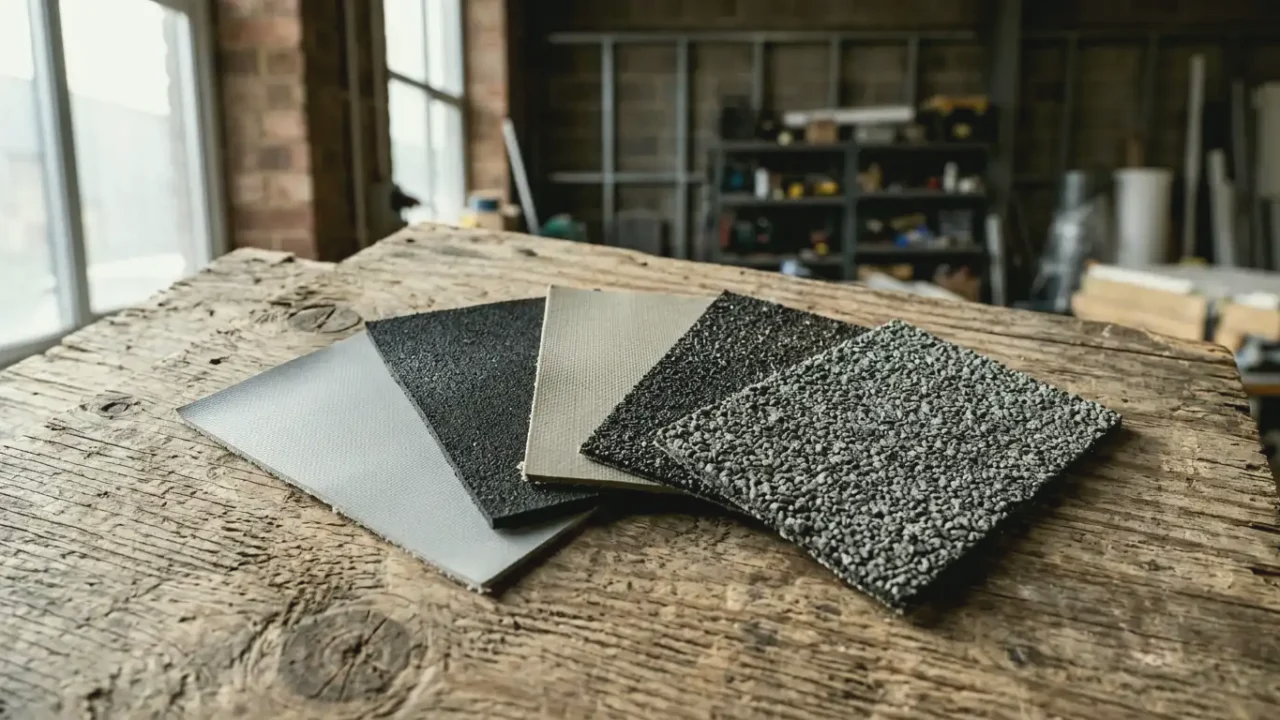
An asphalt-based membrane modified with styrene butadiene styrene rubber, supplied in rolls and installed in two plies: a base sheet and a cap sheet, usually granule surfaced. The two-ply construction is the point. It builds redundancy into the field of the roof, and the granulated surface takes foot traffic better than a bare thermoplastic sheet. It is the system most people mean when they say torch-on or two-ply.
Built-up roofing
The original low-slope assembly: multiple plies of reinforcing felt alternated with bitumen, usually finished with gravel or a cap sheet. BUR is a multi-ply, labour-intensive system that remains in service on many Ontario commercial buildings, which makes understanding it a maintenance question as much as a selection question.
Where the real differences are
The differences that matter on a roof are not the ones in marketing material. Four of them decide how a system behaves over its life.
How the seams are made. This is the single largest practical distinction. Heat-welded thermoplastics create a seam that is effectively the same material as the sheet. Adhered and taped seams depend on a bond between two materials, which means surface preparation and workmanship carry more of the risk. Torch and mop applied bitumen seams depend on the application temperature and the installer’s consistency. None of these is inherently better. They fail differently and they are repaired differently.
How repairs are made years later. A thermoplastic sheet can usually be welded to, so a patch becomes continuous with the roof, provided the surface can be cleaned back to weldable material. That gets harder as the sheet weathers. EPDM repairs use primers and tapes. Bituminous systems are patched with compatible bitumen and reinforcement, which is a well-understood process most Ontario roofers can carry out. If your building will be repaired rather than replaced for the next decade, ask how each candidate system is repaired, not just how it is installed.
Redundancy in the field. Single-ply systems are one layer of waterproofing. Two-ply and built-up systems are several. A single-ply roof is not inferior for that reason, but the failure consequence of a puncture differs, and that matters more on roofs with regular foot traffic or rooftop service activity.
Surface behaviour. Colour and surface texture change rooftop temperature, how visible dirt and ponding become, how the surface handles traffic, and how the membrane interacts with snow and ice. A granulated cap sheet and a smooth white thermoplastic behave differently underfoot in February.
| System | Seam method | Plies in the field | Typical surface | Common decision driver |
|---|---|---|---|---|
| TPO | Hot-air welded | Single | Smooth, usually light coloured | Reflectivity and welded seam continuity |
| EPDM | Adhesive or seam tape | Single | Smooth, traditionally black | Cold flexibility and fewer field seams on large areas |
| PVC | Hot-air welded | Single | Smooth, often light coloured | Grease, oil and chemical exposure |
| SBS modified bitumen | Torch, hot mop or self-adhered | Two | Granulated cap | Redundancy and traffic tolerance |
| Built-up | Bitumen between plies | Multiple | Gravel or cap sheet | Existing assembly continuity and mass |
What published service life figures are actually telling you
Almost every comparison of flat roof materials online leads with a lifespan range for each system. Treat those numbers carefully. They describe a population of roofs, most of them in other climates, installed to unknown standards, drained to unknown quality and maintained on unknown schedules.
Membrane chemistry is rarely what ends a commercial roof’s service life. Four other things usually get there first:
- Detailing. Field membrane very seldom fails on its own. Flashings, terminations, curbs and penetrations do.
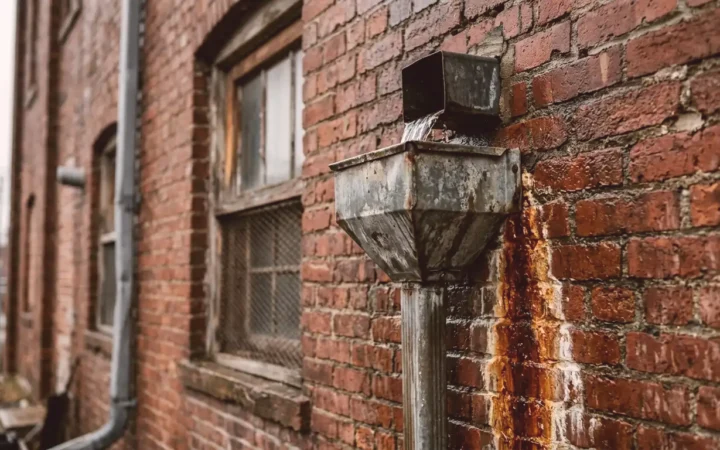
- Drainage. Standing water accelerates nearly every deterioration mechanism a membrane has, regardless of which of the five families it belongs to.
- Traffic. Roofs with mechanical equipment get walked on, and unprotected membrane under a service route wears out on a schedule set by the maintenance contractor, not the manufacturer.
- Maintenance. A roof that is inspected and repaired reaches a different age than an identical roof that is visited only after a complaint.
A more useful way to read a lifespan claim is as a statement about the system’s best case under good conditions. The gap between that number and what a specific building achieves is mostly determined by the four items above, all of which are within an owner’s control and none of which are properties of the membrane.
What the specifications actually require
Each system is manufactured to a published consensus standard, and the standards are more informative than most marketing claims.
EPDM sheet is specified under ASTM D4637. PVC sheet is specified under ASTM D4434, which requires a minimum of 16 mils of material over the reinforcing scrim. TPO sheet is specified under ASTM D6878. The TPO standard is worth understanding in a little more detail because it has moved significantly: reporting in the National Roofing Contractors Association’s Professional Roofing documents that the heat ageing requirement was raised from 28 days at 240 degrees Fahrenheit to 224 days at the same temperature, and that a later revision added a requirement for the coating over the scrim on the weathering side to be at least 30 percent of the sheet’s nominal thickness, which puts a 60 mil sheet at a minimum of 18 mils over the scrim.
That detail is practically useful. Two sheets sold at the same nominal thickness are not equivalent if one carries more weathering-side material over the scrim than the other, because the weathering side is what the sun, the ponding water and the foot traffic reach first. When a quotation lists a membrane by thickness alone, thickness alone is not the specification.
Assembly performance is separate again. Wind uplift resistance in Canada is evaluated on the complete assembly rather than on the membrane, and Canadian technical practice is documented in association references such as the Roofing Contractors Association of British Columbia technical updates and Roofing Practices Manual, which maintains standards for SBS, EPDM, TPO, PVC and other systems and revises its accepted materials on a rolling basis. The relevant point for an owner is that these references change, so a specification written from a five-year-old document is not necessarily current.
Warranties describe different things depending on the system
Warranty language can make comparison shopping misleading because two documents can carry the same headline number and cover entirely different risks.
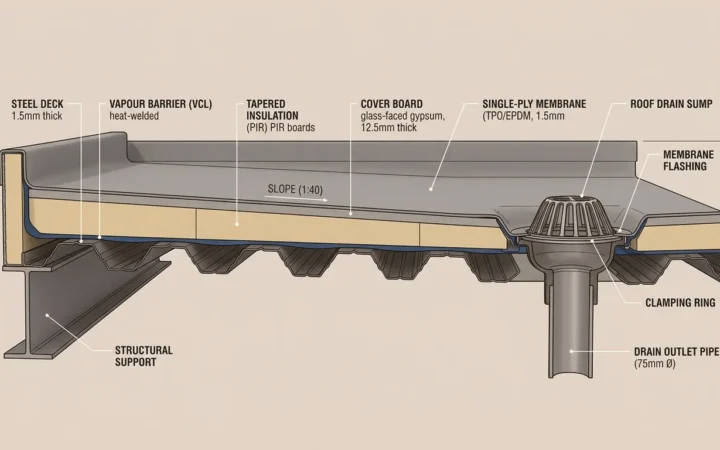
A material warranty covers the membrane itself against manufacturing defect. It says nothing about installation, and on a roof where the membrane is sound but a flashing has failed, it does not respond. A system warranty covers a defined assembly, usually installed by a contractor the manufacturer has approved, and typically requires that specified components be used throughout rather than substituted on site. The scope of what counts as the system varies, and whether flashings, edge metal, insulation and cover board are inside or outside that scope is the detail that matters.
Two things apply across all five families. First, warranties are generally conditional on maintenance and on documented inspection, so an owner who cannot produce records may find a claim harder to advance. Second, ponding water is treated differently by different manufacturers, and some address it explicitly as a limitation. If your roof already holds water, read that clause before selecting anything.
None of this is legal advice, and warranty documents are contracts. The terms that will actually govern your building are the ones in the document you are offered, so the sensible sequence is to read the specific warranty alongside the specification, and to take contract questions to your own legal counsel rather than to a product brochure or to a contractor’s summary of it.
Which conditions push toward which family
This is where a choice between flat roof materials actually gets made. Read these as pressures rather than rules, because a real building usually has several of them at once.
Kitchen exhaust, grease, oils or chemical discharge on the roof. This pushes strongly toward PVC. Grease attacks some membranes and PVC is formulated to resist it. Restaurants, food processing, and buildings with significant cooking or industrial exhaust are the clearest case in the whole comparison.
Heavy and frequent rooftop foot traffic. This pushes toward multi-ply construction or toward a single-ply protected by walkway pads along service routes. The decision is less about which membrane and more about whether the traffic is designed for.
Large uninterrupted roof area. Wide sheets reduce seam length, which is an argument for EPDM on big, simple roofs. Roofs broken up by many curbs and penetrations shift that advantage, because the detailing work dominates and seam length in the field matters less.
Cold-weather behaviour and winter work. Ontario roofs cycle through freeze and thaw and are sometimes worked on in the cold. EPDM’s low-temperature flexibility is a genuine attribute. Conversely, adhesives, self-adhered products and welding all have temperature thresholds, so the practical question is whether the specification anticipates the season the work will happen in.
Rooftop surface temperature and energy performance. Lighter surfaces reflect more solar energy, which reduces rooftop heat gain. In a heating-dominated climate the benefit is real but smaller than the same choice would deliver in a cooling-dominated one, and it interacts with insulation levels rather than replacing them.
What is already on the building. Compatibility with the existing assembly, the deck type, whether a recover is possible, and whether the existing insulation is dry all constrain the field before preference enters. This is usually the largest constraint and the one owners consider last.
Fire and insurance requirements. Assembly fire classification and any requirements set by an insurer apply to the complete system, not to the membrane, and should be confirmed with the insurer or the designer rather than assumed from a product brochure.
Straight answers to the questions that come up next
Is one of these systems clearly better than the others?
No. Each of the five has buildings where it is the obvious choice and buildings where it is a poor fit. A contractor who recommends the same system on every roof is telling you about their purchasing and their crew’s habits, which is useful information, but it is not an assessment of your building.
Does a thicker membrane always last longer?
Thickness helps, particularly against punctures and traffic, but it is not the whole specification. What sits over the reinforcing scrim on the weathering side, how the seams are made, how the assembly is attached and how well the roof drains all influence outcome, and a thicker sheet over a badly drained roof still sits in water.
Can systems be mixed on one building?
Different roof areas on the same building can carry different systems, and that is sometimes the right answer where one section has grease exposure or heavy traffic and another does not. Within a single roof area, mixing is a compatibility question that has to be resolved before anything is specified, because some membranes and bitumens should not contact one another.
How do I compare quotations across different systems?
Compare the whole assembly rather than the membrane line. Ask what deck preparation is included, what insulation and cover board are specified, how the assembly is attached in the field, perimeter and corner zones, what the flashing and termination details are, and what happens to the drainage. Two quotations naming the same membrane can describe very different roofs.
Narrowing the field on your building
Everything above is a map of the territory. It does not tell you which of the flat roof materials belongs on your roof, because that answer lives in facts about the building: what the deck is, what the existing assembly contains and whether it is dry, what the roof drains like, what happens on the roof day to day, and what the structure can carry.
A site-specific commercial roof assessment produces those facts and narrows five options to the two or three that genuinely apply, which is the point at which a detailed comparison becomes worth doing. Our commercial roofing systems work starts with assessment and inspection, then moves into maintenance, repair or replacement where the system and condition support it. We recommend from the building outward rather than from a catalogue. Single system explanations and closer comparisons sit in our commercial roofing guides.
Commercial Roofing Systems
Read the related service page for practical details, then request a quote for your commercial or institutional property.