
Southwestern Ontario Commercial Solar
Across Southwestern Ontario, many of the largest commercial roofs sit over manufacturing, logistics and process-driven operations. That changes the conversation. A roof over a production hall is part of the plant, and the rooftop plan must respect what happens below it, not just how much open membrane appears on an aerial photo.
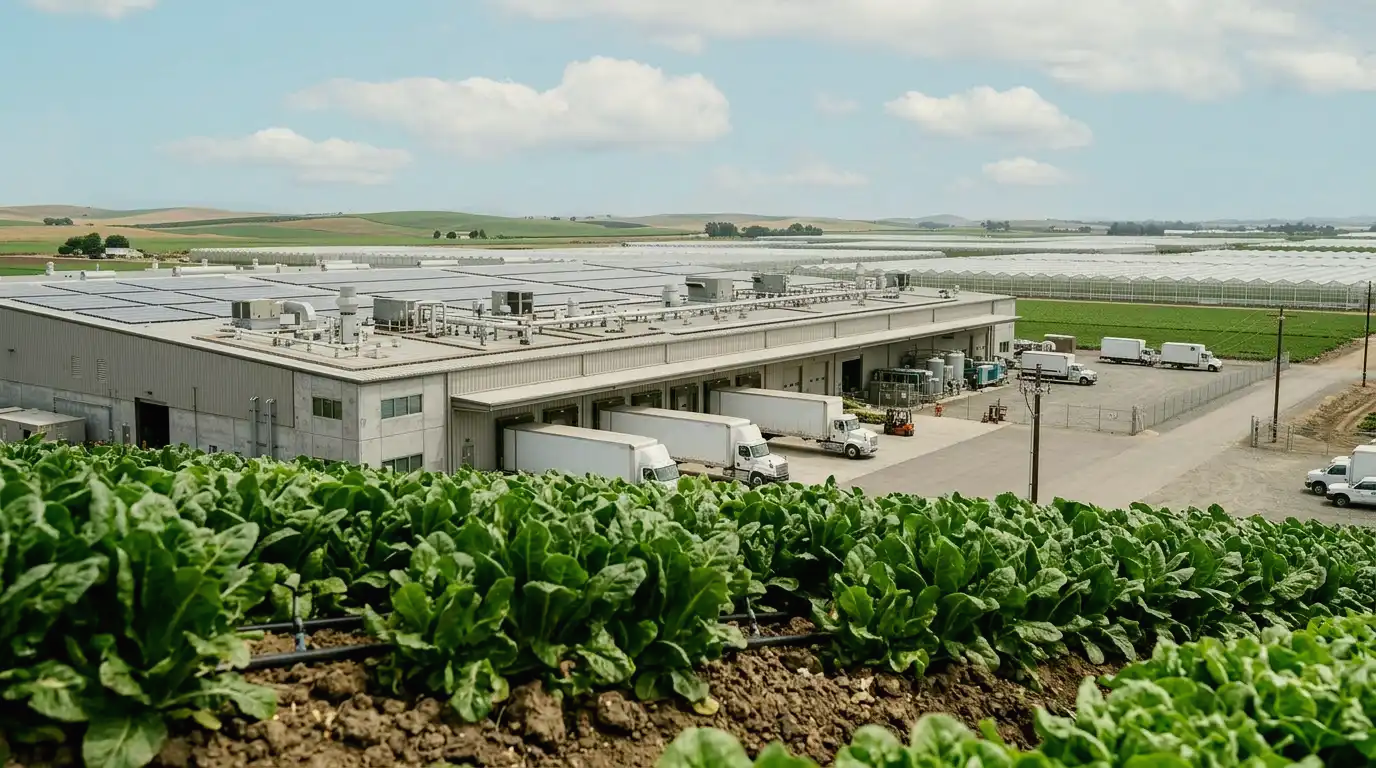
What Comes Out of the Stacks Also Lands on the Membrane
Process discharge is a roofing question before it becomes a solar layout question. Oils, solvent vapour, food-processing exhaust and fine particulate can settle downwind of stacks, and some contaminants can affect certain roofing materials. Softening, discolouration, premature cracking or persistent residue near a discharge point deserves investigation rather than being dismissed as staining.
That matters twice once modules are involved. The affected area may need different detailing, protection or material selection, which belongs with the roofing manufacturer and qualified project professionals, and the same discharge can reach equipment installed nearby. Mapping the actual discharge zone rather than just marking the stack location gives the layout team a realistic area to work around.
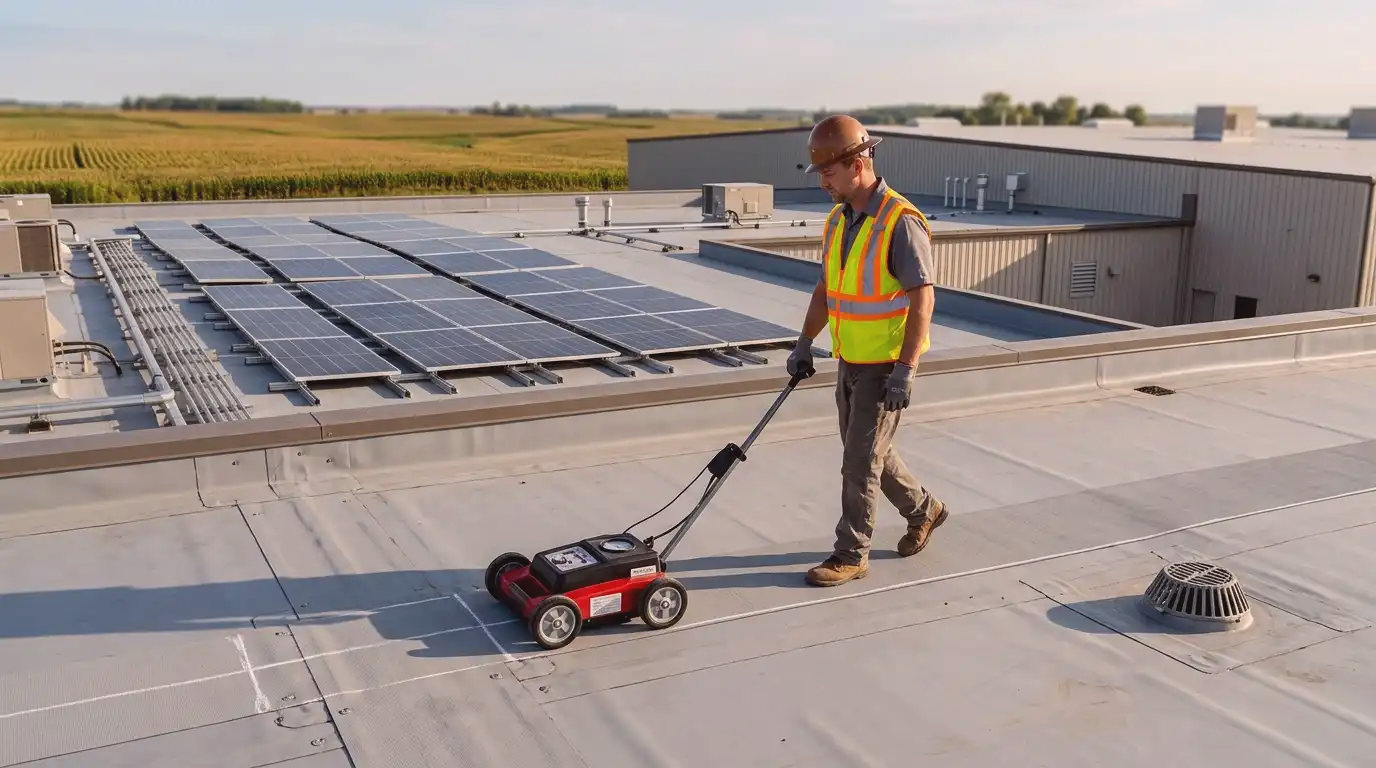
What Sits Under the Roof Sets the Tolerance for Risk
A leak is not one consequence, it is whatever sits beneath it. Water over stored goods may be a cleanup problem. Water over a production line, control room, electrical area or open food process can interrupt operations. Facility teams usually know which roof zones carry the highest consequence if water gets through.
That knowledge should shape the sequence. Two roof areas with similar membrane condition can deserve different treatment when the consequences below them are very different. Looking at both roof condition and what the roof protects helps decide where roofing work belongs before solar and where the existing assembly may be suitable to keep in service.
Smaller Manufacturing Markets Still Need Site-Specific Answers
Across Chatham, Ingersoll, Sarnia, St. Thomas, Stratford, Strathroy, Tillsonburg and Woodstock, the building stock includes significant manufacturing, logistics and service properties, often with large roofs tied closely to one operating site. On those buildings, roof condition can affect production planning, maintenance access and capital timing.
Records can be excellent, with reroof dates, repair invoices and inspection history all in one place. They can also be incomplete, particularly after ownership changes or phased expansions. Establishing what is known, what is missing and whether different roof sections were built at different times is the first useful step.
Some Buildings Need Specialists in the Room Early
Certain facilities carry rooftop conditions that a general roof review should flag rather than resolve. Chemical exposure, specialised process equipment, classified areas, refrigeration systems and unusual deck or structural arrangements all bring requirements that belong to the people qualified to speak to them.
The useful contribution at that point is an accurate description of the roof and an honest list of what has not been settled. Naming those items early, and getting the right technical professionals involved before a layout hardens, reduces the risk of specialist review forcing a redesign later.
Fit the Solar Plan Into the Capital Plan That Already Exists
Industrial properties here are often long-lived, and many larger facilities already track roofing through a capital plan or maintenance forecast. Sections may have been renewed at different times, maintenance work may already be scheduled, and the facility team may know which roof area is next in line.
A solar project fits better when it is reviewed against that plan. If roof renewal is expected early in the array's service life, shifting the solar to a different section or advancing the roofing can avoid avoidable removal and reinstallation later. Where fleet or staff charging is also being considered, commercial EV charging belongs in the same facility-planning conversation. Charging and rooftop solar affect site electrical planning in different ways, so reviewing both at the same time can identify infrastructure, utility and phasing questions earlier.
Planning references: Ontario Energy Board net-metering guidance
Getting Started, and Where the City Pages Take Over
London and Windsor carry their own pages here, so a property inside either city should begin from that one instead. Everything else in the Southwestern Ontario footprint runs through this page.
For a first conversation, useful material includes the address, what the building produces, which areas of the plant are sensitive to water, whatever roofing history survives in the file, and any capital planning already committed for the roof. From there the review can say whether design work can proceed on the roof as it stands, which areas need attention first, and which items belong with other professionals before the numbers mean anything. That keeps the first discussion focused on the roof, the operation and the unresolved technical questions rather than on a generic system size.
Southwestern Ontario Solar Planning Around Manufacturing Operations
This page reflects Southwestern Ontario's manufacturing, logistics and process-driven roofs.
Southwestern Ontario Questions About Process Roofs, Shutdowns and Future Loads
Process exhaust, production sensitivity and evolving electrical loads make operating constraints a first-order solar design input.
Our plant has heavy rooftop exhaust. Does that rule out solar?
Rarely on its own, though it shapes both the layout and the roofing scope. Discharge settles on the membrane downwind, some of it attacks certain materials, and the same plume reaches whatever is installed nearby. Both get mapped at the review stage, not once rows are drawn.
Can a working plant be assessed without disrupting production?
An initial roof review usually fits around operations without much trouble. Deeper investigation and any construction that follows need site-specific access, timing and safety arrangements, which is why those are worth discussing at the first conversation rather than later.
Our building has been added to several times. How is that handled?
Area by area. Each part gets looked at for condition, drainage, equipment and remaining service life, and the plan then responds to those differences instead of treating the building as one uniform surface.
We are also looking at charging for our fleet. Is that a separate project?
It does not have to be. Commercial EV charging is work we take on, and charging plus rooftop solar affect the site's electrical infrastructure in different ways. Scoping both at the same time can surface capacity, connection and phasing questions earlier. Final electrical-capacity and connection decisions belong with qualified electrical professionals and the serving distributor.
Do you work in London and Windsor?
Both cities are handled on their own pages, so start from whichever one applies. This page takes in Chatham, Ingersoll, Sarnia, St. Thomas, Stratford, Strathroy, Tillsonburg, Woodstock and the commercial and industrial properties around them.
What can raise cost on a process-driven Southwestern Ontario roof?
Emissions, heat, specialist access requirements and tight shutdown windows can all add cost. Ask bidders to state what they assumed.
How should an owner fit solar into an existing capital plan in Southwestern Ontario?
Align solar with planned roof and equipment work so the same disruption serves several goals. Ask for a combined schedule.
Fit the Solar Scope Around the Plant’s Capital Plan
Bring shutdown windows, process exhaust locations, planned equipment changes and future electrical loads before layout is finalized.
Manufacturing Constraints to Share Before Pricing
- What Comes Out of the Stacks Also Lands on the MembraneProcess discharge is a roofing question before it becomes a solar layout question. Oils, solvent vapour, food-processing exhaust and fine particulate can…
- What Sits Under the Roof Sets the Tolerance for RiskA leak is not one consequence, it is whatever sits beneath it. Water over stored goods may be a cleanup problem. Water…
- Smaller Manufacturing Markets Still Need Site-Specific AnswersAcross Chatham, Ingersoll, Sarnia, St. Thomas, Stratford, Strathroy, Tillsonburg and Woodstock, the building stock includes significant manufacturing, logistics and service properties, often…