
Ajax Commercial Solar
Ajax commercial solar planning is shaped by the town's east-GTA warehouse and distribution footprint. Newer mega-warehouses can offer broad roof fields, while older industrial properties may carry roof sections from different years, repairs and equipment changes. A useful assessment separates those conditions before a long-life rooftop solar layout is treated as a finished design.
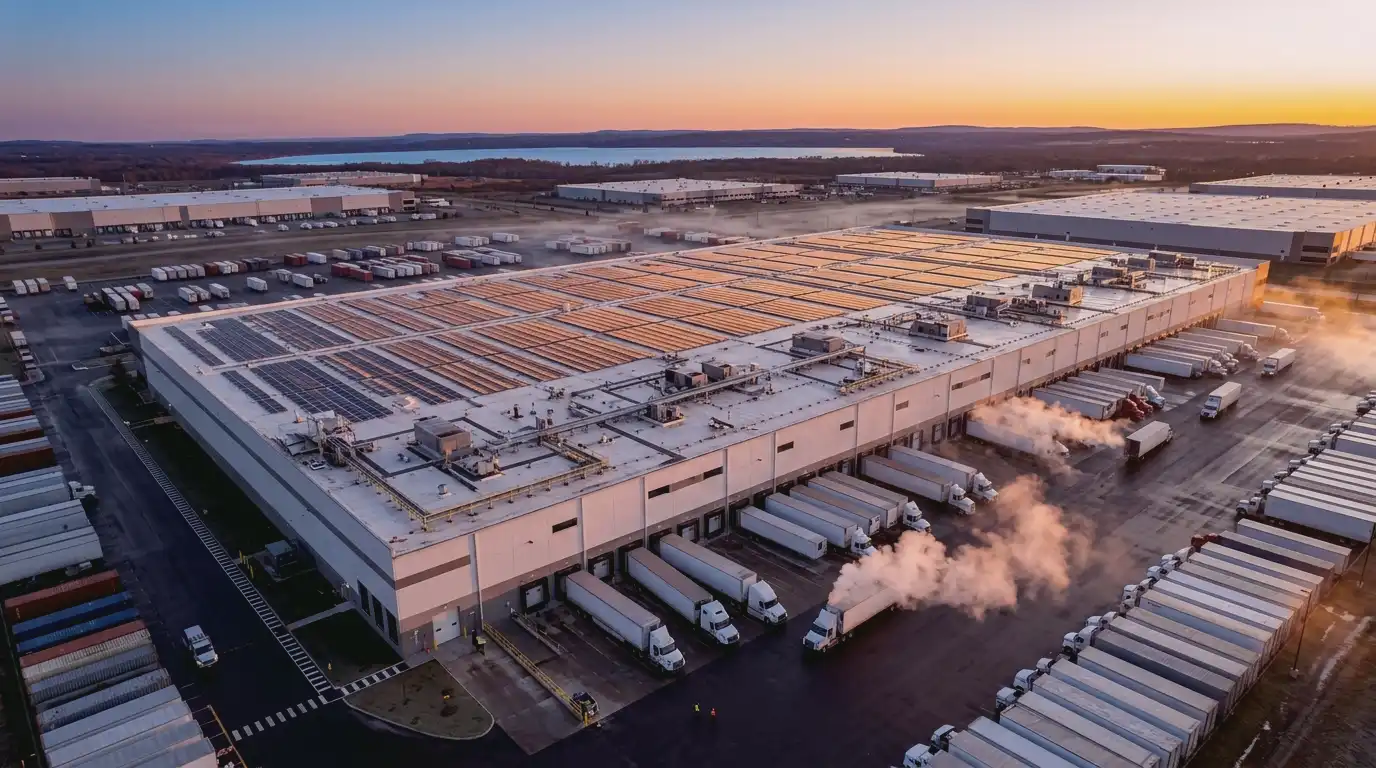
Ajax Logistics Roofs Can Be Large Without Being Simple
The scale of a modern distribution centre can make solar look straightforward from aerial imagery, yet the working roof may contain drainage basins, rooftop units, smoke vents, access hatches and service traffic that divide the usable area. Before layout, the roof should be mapped as an operating surface rather than a blank rectangle.
For owners near the Highway 401 employment areas, truck and dock activity also matters to project staging. Roof access, material movement and any crane or hoisting plan need to fit the facility's daily operation.
For an Ajax distribution property, have shipping staff review the proposed access and delivery plan before it becomes part of the construction schedule. Identify which dock approaches must remain open and where a delayed delivery could wait without obstructing vehicles. Carry those restrictions into the site brief so the solar team can assess a buildable layout alongside the roof-area calculation.
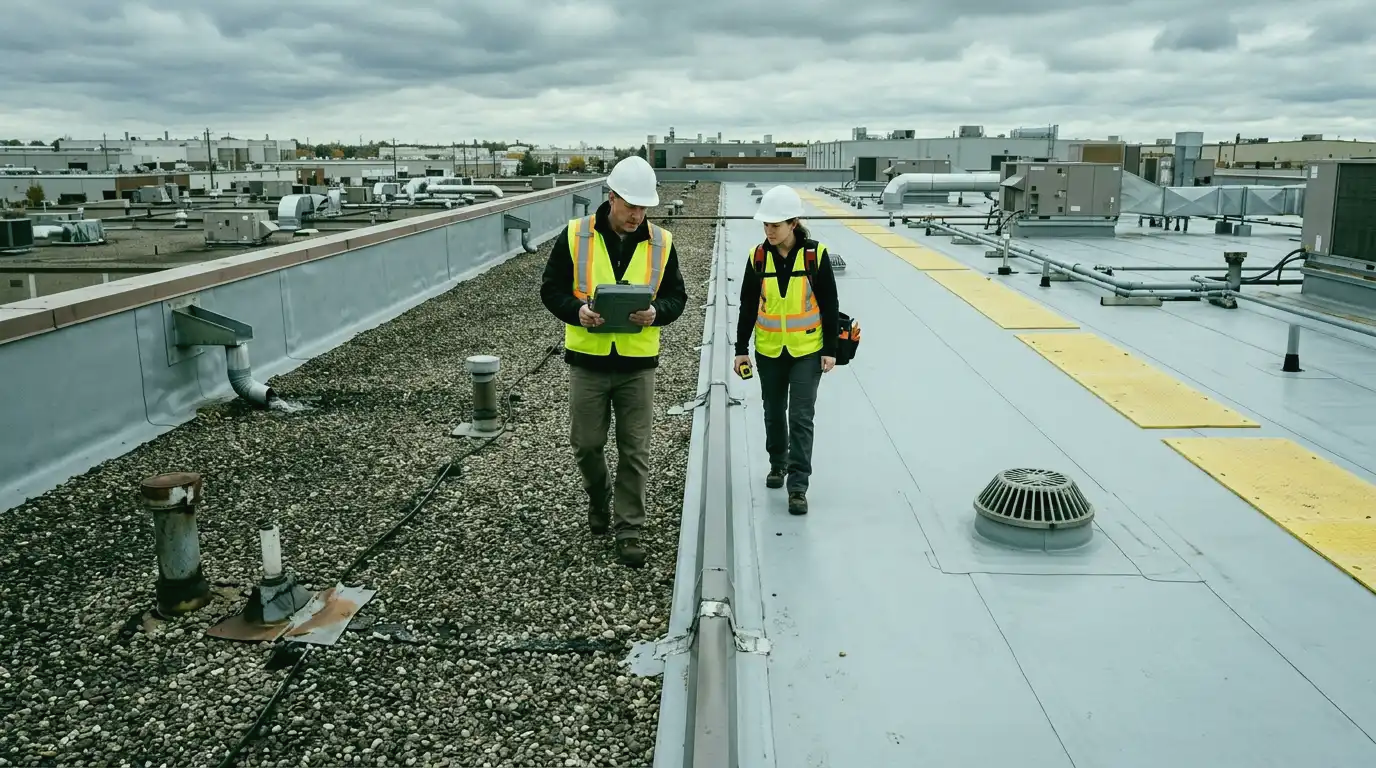
New Distribution Centres Need a Condition Baseline Too
A relatively young roof is not automatically ready just because the membrane is recent. Other trades may have crossed the roof, temporary protection may have been removed, and tenant improvements can add new penetrations. A dated condition record before solar work provides a clear baseline for the owner and roofing contractor.
That baseline should document drains, seams, curbs, roof edges and any existing repair areas before racking or repeated foot traffic is introduced.
Older Ajax Industrial Roofs May Contain Several Histories
Older buildings often expand in stages. One section can be newer and dry while another has a longer leak history or different membrane system. Treating the entire roof as one age can lead to the wrong sequence.
A roof-readiness review should identify those boundaries, compare remaining life by section and decide whether targeted replacement should happen before the solar field is finalized.
Give each Ajax roof section a consistent identifier on inspection photographs, repair invoices and the preliminary solar drawing. Where two assemblies meet, ask the roofing reviewer to identify any unresolved transition detail. An owner can then trace a proposed array area to the correct roof evidence without assuming that the most recent reroofing invoice covers the whole building.
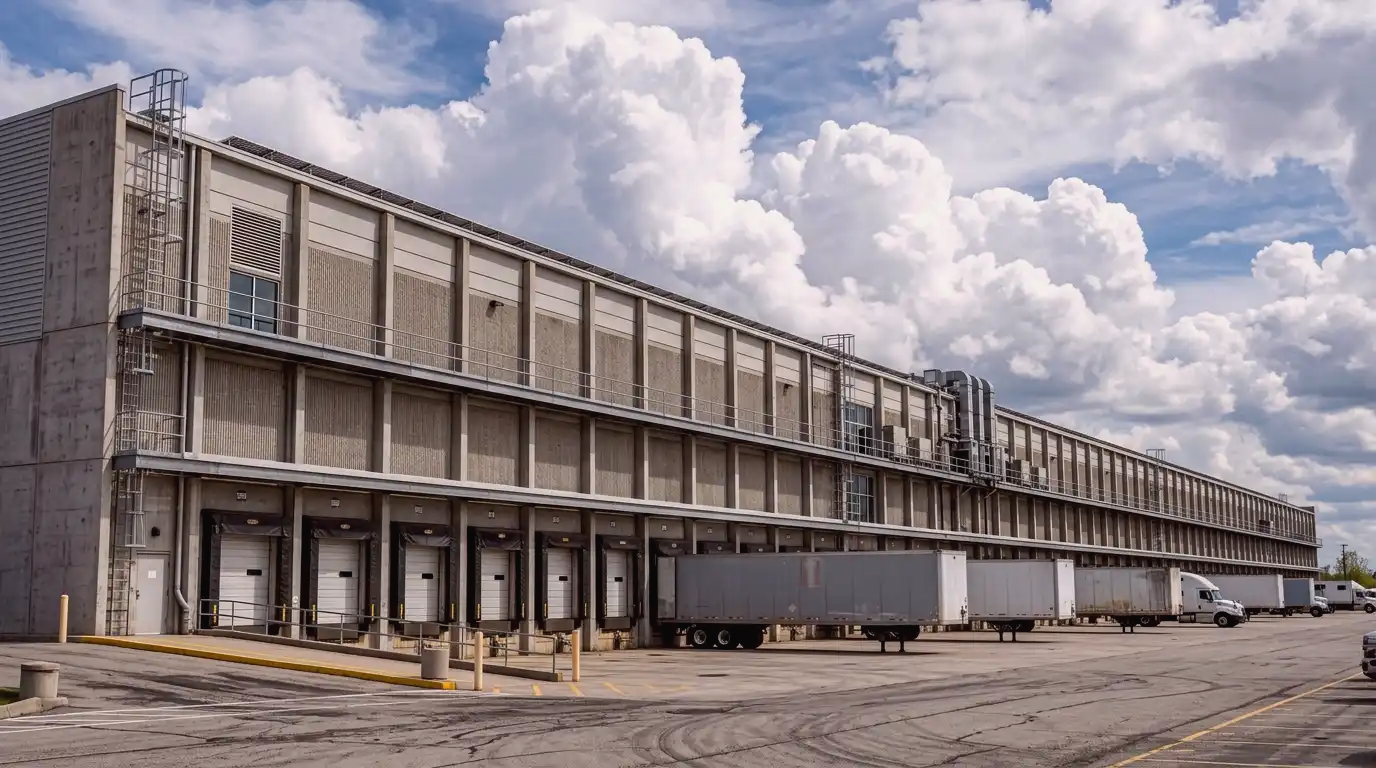
Drainage and Equipment Access Stay in the Plan for Decades
Ajax warehouse roofs can have long drainage runs and widely spaced equipment. Solar rows should preserve visible routes to drains, overflows and rooftop units so future service does not require moving through narrow or improvised paths.
The same access plan helps protect the membrane by concentrating normal service traffic on predictable routes instead of sending technicians across finished roof areas.
Plan Around Active Warehouse Operations
A solar project on an occupied distribution centre has to coexist with loading, inventory movement and tenant schedules. The feasibility stage should identify roof access, staging, interior-sensitive areas and the times when rooftop work can occur without blocking critical operations.
This operational review does not replace engineering or electrical design. It makes sure the eventual project can actually be built on the property that exists.
Turn the occupied-site review into a daily work agreement: who releases a staging area, how deliveries are booked and who receives notice when an access route changes. For a distribution centre with tenant-controlled loading areas, confirm those arrangements with the affected occupier. This gives the installation coordinator operating rules that can be checked against the proposed work sequence.
What an Ajax Buyer Should Know Before Procurement
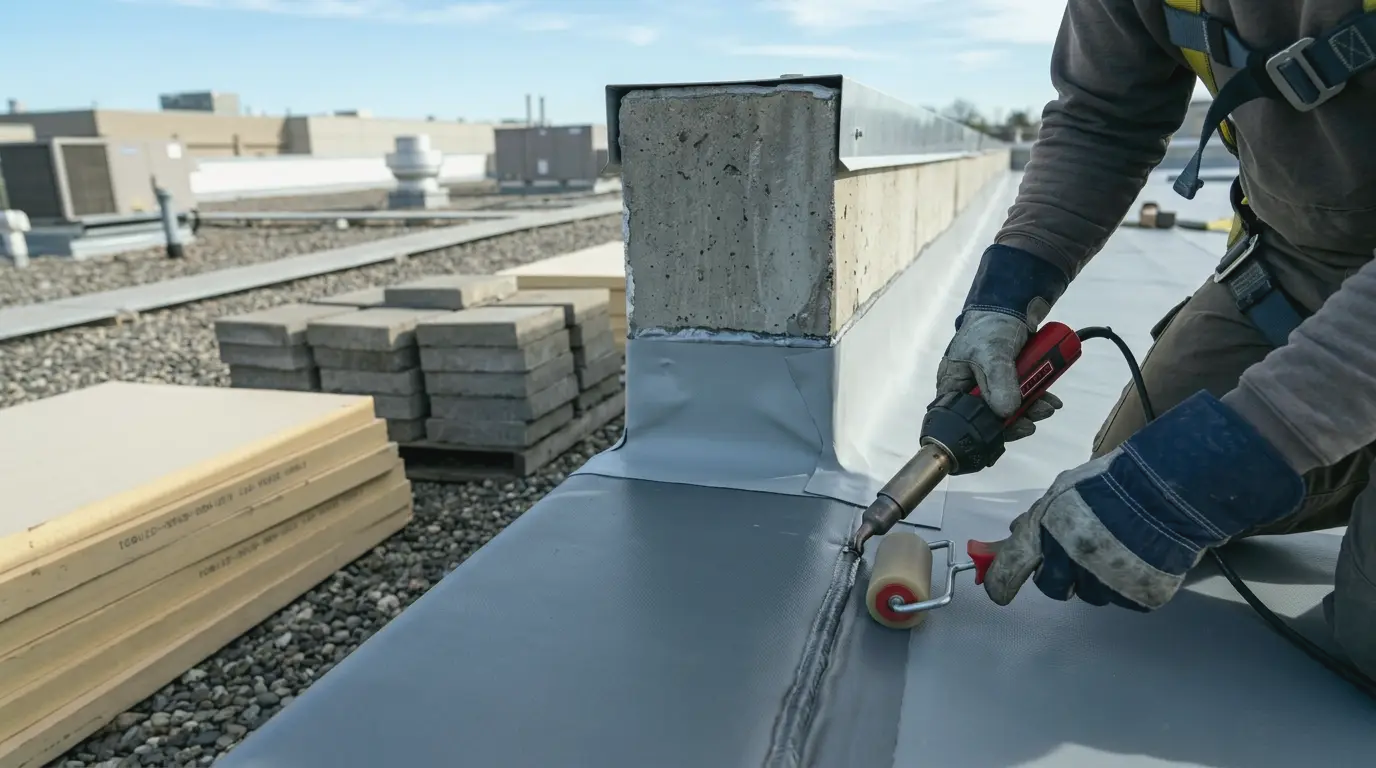
Before comparing proposals, ask whether the roof condition was inspected, whether different roof sections were identified, how drainage and equipment access are protected and what happens when the roof eventually needs major work. A proposal that answers only module count and projected production leaves important building questions unresolved.
The Ajax assessment path therefore starts with roof readiness, moves into feasibility and only then supports a detailed rooftop-solar scope.
Planning references: Ontario Energy Board net-metering guidance
Before the Layout, Reconcile the Roof File With the Roof You Actually Have
Ajax owners with newer logistics buildings often have good drawings, warranty files and closeout records, but those documents still need to match the roof that exists today. Tenant improvements, added vents, satellite equipment and service work can change the usable field after construction. A practical assessment compares the paperwork with current roof conditions so the solar plan is based on the building as operated, not only the original drawings.
For an older industrial property, the roof file can reveal something equally important: when different sections were replaced. That lets the owner separate areas that may support a long-term solar layout from sections that need repair or renewal first, instead of treating a mixed-history roof as one uniform asset.
Pricing a Solar Project Around the Roof You Actually Have
A useful Ajax solar quote starts from the roof file: membrane age, repair history, drain layout and the equipment already on the roof. Ask each bidder to list the roof preparation they assume, because a quote that quietly assumes a sound roof can move sharply once an inspection finds wet insulation or failing seams.
Request the price in layers: roof preparation, structural and electrical review, installation and the maintenance access that must remain. Layered pricing lets an owner compare bidders on the same scope and decide whether to reroof first.
Ajax Solar Planning for Logistics Roofs That Must Stay Operational
This page speaks to Ajax's warehouse and distribution roofs, where plate size is rarely the limit and drainage, equipment and operations are. The address and roof file still decide the final recommendation.
Ajax Questions About Warehouse Roof History, Pricing and Approvals
Ajax owners need practical answers about mixed-age roof sections, distribution operations, roof records and the approvals that affect pricing.
Is a newer Ajax warehouse automatically ready for solar?
No. A newer roof still needs a condition baseline, a drainage review and a check that later rooftop work has not introduced damage or access conflicts. Documenting the roof before another trade arrives also makes any later leak investigation easier.
What if an Ajax industrial roof has sections from different years?
Treat the sections separately. Their remaining life and repair history can change which areas should receive solar first, or whether roofing work should come before the layout. A simple map of sections by age is the best starting document.
Can solar work be planned around distribution operations?
Yes. Staging, roof access, truck movement and interior-sensitive operations should be reviewed during feasibility. Ask the installer how loading docks and truck courts will stay clear and how crews will reach the roof.
What roof records should an Ajax owner gather before asking for solar proposals?
Collect the roof plan, membrane type and age, repair history, drainage notes, recent inspection reports and any warranty documents. Add photographs of known problem areas. These let a reviewer judge usable roof area and decide whether roof work should come first.
What usually drives the cost of a solar project on a large Ajax warehouse roof?
Beyond module count, cost follows roof condition work that must come first, the electrical connection and any service-capacity upgrade, structural review, attachment method, crane access and the need to keep dock operations running. Ask for a scope that separates roofing preparation from the solar installation so the two can be compared and sequenced.
What approvals should an Ajax owner expect to confirm before solar work is priced?
Confirm the local electrical utility process for the address, any building or electrical permit requirements, the structural review your engineer will need and any landlord or insurer conditions. Requirements change, so ask each party for the current written position rather than relying on a general summary.
Price the Ajax Project From the Roof File, Not the Roof Area
Bring membrane age, repair history, drain layout, dock constraints and electrical information so each bidder starts from the same facts.
Ajax Warehouse Records to Share Before Solar Pricing
- Ajax Logistics Roofs Can Be Large Without Being SimpleThe scale of a modern distribution centre can make solar look straightforward from aerial imagery, yet the working roof may contain drainage…
- New Distribution Centres Need a Condition Baseline TooA relatively young roof is not automatically ready just because the membrane is recent. Other trades may have crossed the roof, temporary…
- Older Ajax Industrial Roofs May Contain Several HistoriesOlder buildings often expand in stages. One section can be newer and dry while another has a longer leak history or different…