
Durham Region Commercial Solar
Durham's commercial roof stock runs from new distribution buildings along the 401 to industrial properties that have been extended and patched for forty years, plus a quieter mix of commercial and flex buildings north and east of the highway. Those buildings raise different solar questions. What holds across all of them is the sequence. The roof decision comes before the array decision, not alongside it.
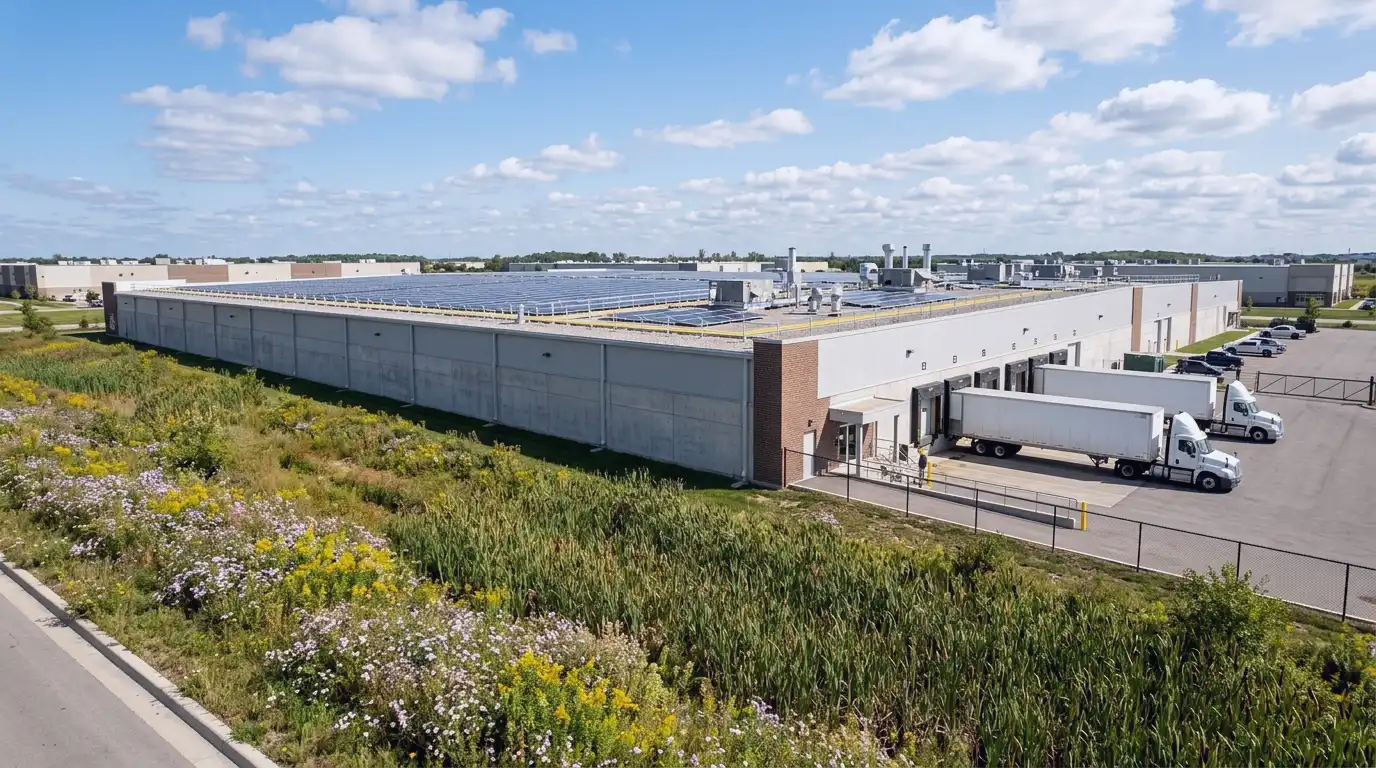
Two Generations of Roof Stock, Often on the Same Street
A recent distribution roof is usually a large single-ply field with a known assembly, a tidy mechanical zone and paperwork that still matches the building. An older manufacturing or warehouse property nearby may be three or four roof areas from different decades, joined at expansion joints, carrying patch history nobody wrote down. The second building is not a worse candidate. It simply needs more work before anyone can say what the usable roof really is.
On phased buildings the section that limits the project is often not the one people expect. A newer addition can turn out to be the constrained area because equipment was concentrated there, while the older field is sound and comparatively open. That only surfaces when a roof is assessed area by area instead of as one number on a site plan.
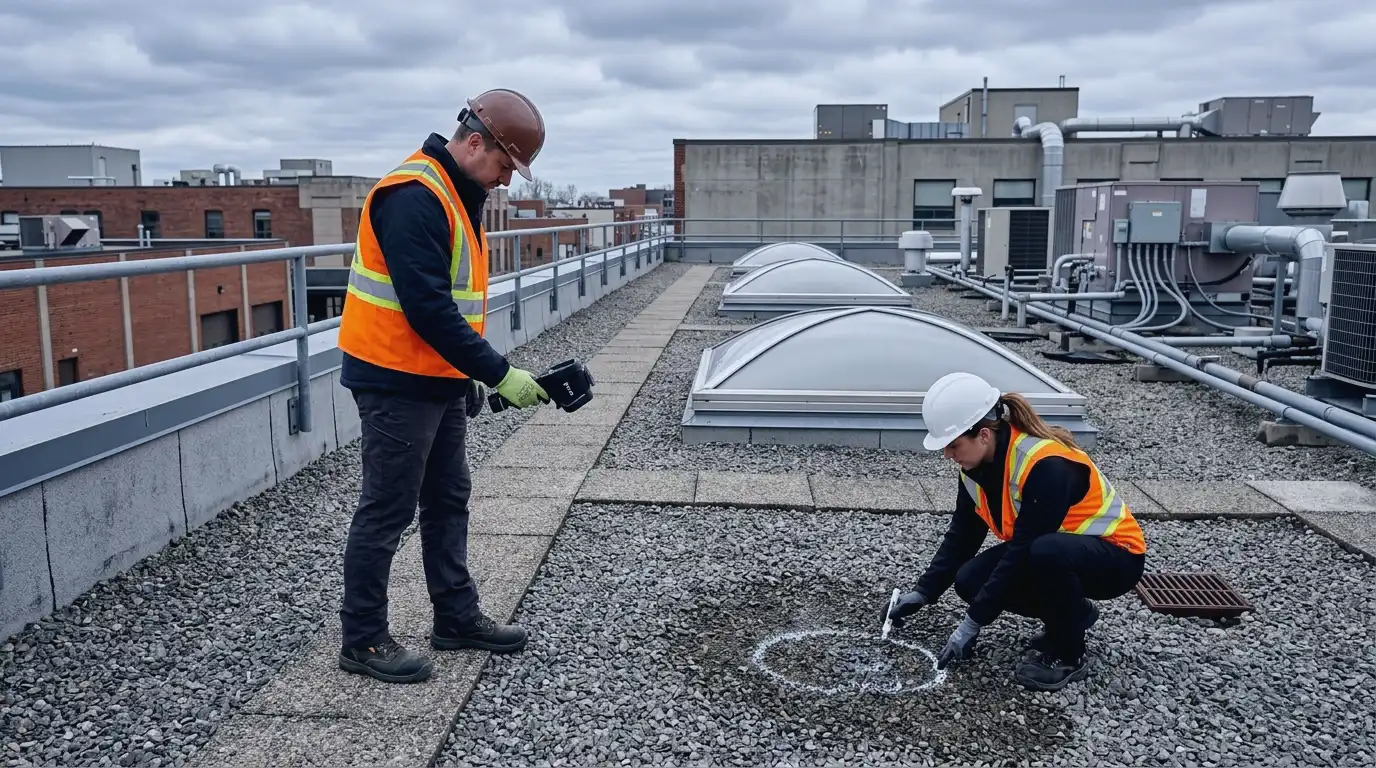
Warehouse Square Footage Oversells Itself
Large roofs along the 401 corridor make solar look straightforward from an aerial image. Then the drainage runs prove long, the mechanical units repeat in rows, every perimeter gives up a setback, and the routes crews walk have to stay walkable. What remains can be materially less than the gross figure, and it is the only figure worth carrying into a business case.
Pinning that number down early also changes the conversation with whoever designs the system. A layout drawn to fill a roof and a layout drawn around the roof's working parts can differ enough to move the project economics. The second is the one that remains workable when routine maintenance begins.
The Building Keeps Running While You Assess It
Durham's logistics and manufacturing properties do not pause for a roof review. Dock schedules, shift changes, truck courts, crane bays and tenant hours shape when a roof can be walked, where a lift can be set up and how material would ever reach the roof during construction. Those are ordinary constraints, and they are easier to solve at the assessment stage than during mobilization.
Rooftop process equipment matters as well. Exhaust from a production line can soil module surfaces and add cleaning and access requirements that a quick visual check would miss. Owners generally know these things about their own buildings already. Getting them on the table early is what keeps the plan honest.
North and East of the Highway
Bowmanville, Courtice, Port Perry and Uxbridge bring smaller commercial plates, flex industrial units and retail properties into the picture. A smaller roof does not mean a lighter review. Parapets, shading from adjacent structures, equipment crowded onto a modest area and thin or missing roof records can all count for more on a compact building than on a wide open field.
The right response is a review scaled to the property rather than a warehouse template applied to a plaza. In practice that means spending the early effort on roof records and a condition walk, and being straight about which unknowns need resolving before anyone treats a production estimate as real.
Utility and Program Facts Belong to the Address
Ontario's net metering framework sits in Ontario Regulation 541/05, and the Ontario Energy Board is direct about the first step. Before investing in or arranging a system, confirm with the electricity utility serving the property that you are eligible and that the system can be connected. The connection application follows, along with the inspection, safety and technical requirements that utility applies.
One rule is worth knowing early because it affects sizing rather than paperwork. Under the regulation, credits for surplus generation carry forward for up to twelve months and are then reduced to zero. That makes expected on-site consumption and system sizing worth reviewing carefully, because unused credits do not accumulate indefinitely. Program incentives move on their own schedule too, which is why current project eligibility and technical assumptions must be verified for the property. The current numbers for your property are the only ones that matter.
Planning references: Ontario Energy Board net-metering guidance
Starting a Durham Review
Bring the address, an approximate roof size, the roof's age if you have it, any roofing work carried out since, whatever reports and drawings can be found, and a sentence on what the building is used for. Electrical information and a year of bills sharpen the stage after that. Gaps are normal on older industrial properties and are not a reason to hold off.
Properties in Ajax should start with that city's own page here, which is written around that market. Everywhere else across the region this is the right entry point, and either way the review narrows to one address, one roof and one set of operating conditions.
Durham Solar Planning Across Warehouse and Industrial Roofs
This page covers Durham's mix of newer 401-corridor distribution buildings and older extended industrial properties across Ajax, Pickering, Whitby, Oshawa and Clarington.
Durham Questions About Large Roofs, Repairs and Structural Review
Durham owners often need to reconcile very large roof plates with repair history, live operations and structural review before layout.
Do you cover commercial properties across Durham Region?
Yes, for commercial and industrial buildings in Ajax, Pickering, Whitby, Oshawa and the smaller Durham communities. The review is tied to the specific address and the condition of that roof rather than to the municipality.
Our plant roof has been patched for years. Is it written off for solar?
Not necessarily. Patch history matters less than what the patches are covering. A condition review looks for wet insulation, failing details and drainage problems, and it often finds that part of the roof is sound while another part needs renewal first.
Can a large warehouse roof be filled with panels?
In practice, no. Setbacks, drainage and overflow routes, mechanical clearances, safe access routes and structural and electrical limits all take area out. The usable figure comes from a site-specific layout, not from the building footprint.
Who confirms the roof can carry the added load?
A qualified structural engineer. A roof review can raise the question and gather what that engineer needs, but the capacity determination is theirs to make.
Which building records are most useful before a Durham Region solar review?
Roof plans, repair history, recent inspection notes, known leak locations, electrical information and any planned rooftop or process changes can make the first review more useful. The exact records available vary by property, so missing documents do not automatically stop the discussion.
What can raise the cost of solar on an older Durham industrial roof?
Wet insulation, patched sections, unclear drainage and aged flashings can add roof work before an array is installed. A condition survey before pricing makes the extent visible.
Which approvals should a Durham owner confirm before pricing solar?
Confirm the applicable utility's connection steps for the address, building and electrical approval needs and any structural review required. Ask for current written requirements.
Bring the Durham Roof History Before You Price the Array
Start with roof age by section, leak and repair records, operating constraints and the address-specific utility context.
Durham Documents That Make the First Review Useful
- Two Generations of Roof Stock, Often on the Same StreetA recent distribution roof is usually a large single-ply field with a known assembly, a tidy mechanical zone and paperwork that still…
- Warehouse Square Footage Oversells ItselfLarge roofs along the 401 corridor make solar look straightforward from an aerial image. Then the drainage runs prove long, the mechanical…
- The Building Keeps Running While You Assess ItDurham's logistics and manufacturing properties do not pause for a roof review. Dock schedules, shift changes, truck courts, crane bays and tenant…