
Huntsville Commercial Roofing Through Muskoka Seasons
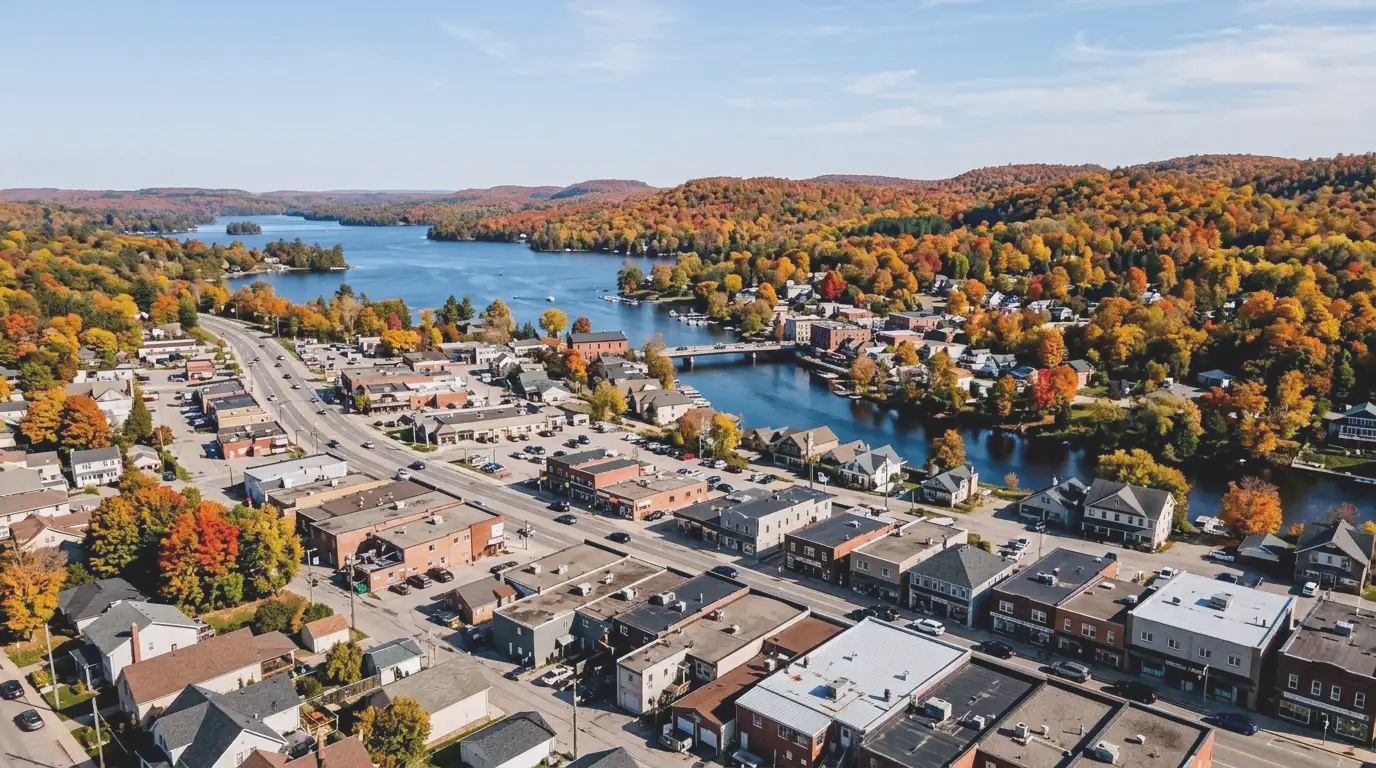
Huntsville is Muskoka's largest town and serves as the commercial and service hub for a region with a dramatically seasonal economy. The Muskoka Commerce Park and surrounding commercial-industrial area north of West Road, east of Highway 11 and south of Highway 60 provides the town's primary business and light-industrial land base.

Commercial and Hospitality Roofs in Huntsville
The Muskoka Commerce Park is planned for commercial service and light-industrial uses, service businesses, trades, storage and light manufacturing that serves the regional economy year-round. Roofs there tend to be smaller-scale flat or low-slope applications on utilitarian buildings without the staging constraints of downtown properties. The diagnostic and repair requirements are relatively straightforward once access is established. The hospitality sector is a different matter: hotels, resorts and lodges that carry significant fixed costs through the winter season need roof work completed in a narrow late-shoulder-season window and cannot absorb the kind of disruption that a manufacturing facility can manage through sequencing.
Huntsville's climate accelerates the roofing calendar in ways that southern Ontario cities don't experience. Snow can fall before mid-October, and spring thaw may not be complete until late April. The practical installation season for certain membrane adhesives and cold-applied materials is shorter than in the GTA, which means project planning has to be tighter, weather contingency has to be built in and any scope that gets added late in the season may need to wait for spring.
Local reference: Town of Huntsville economic development and Muskoka Commerce Park information
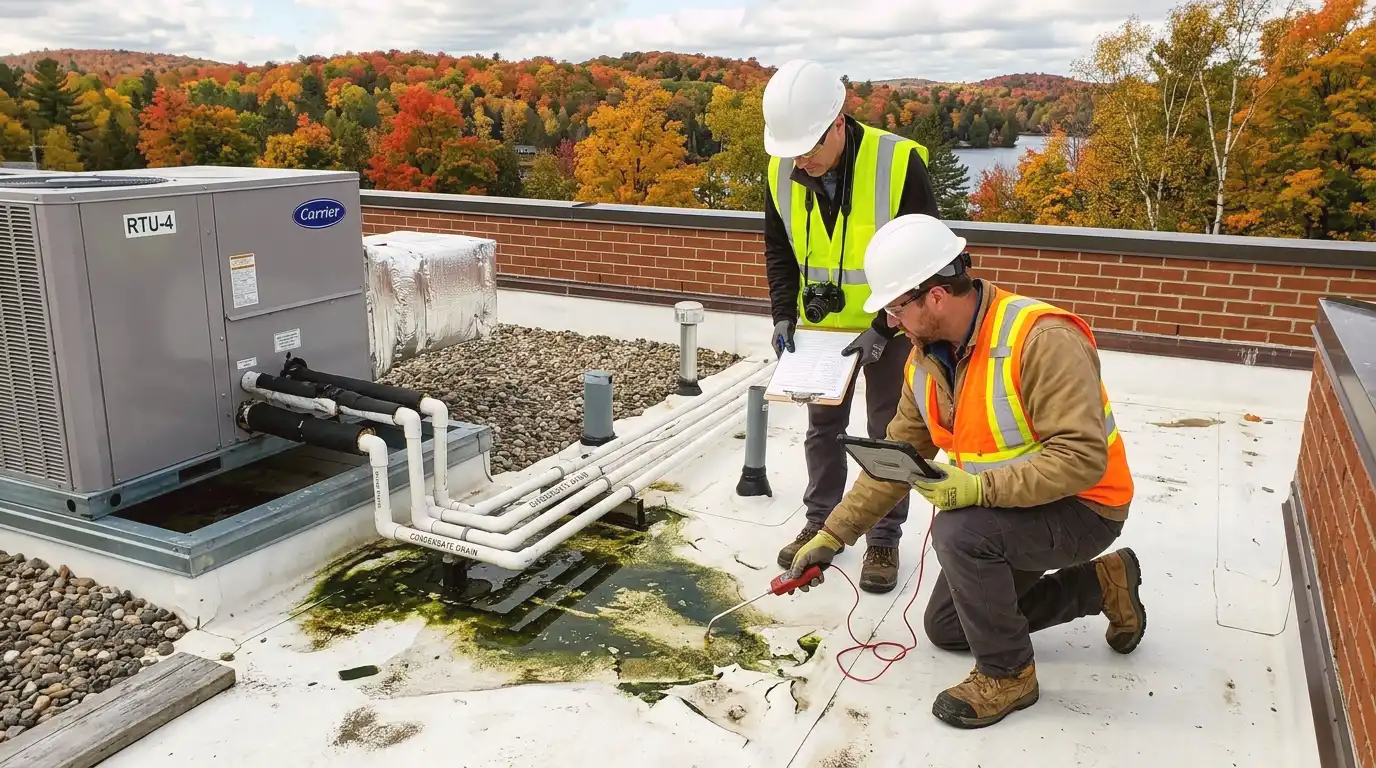
Huntsville Commercial Roofing Services
For low-slope roof construction and membrane planning, see our commercial flat roofing guide.
Investigating Snowmelt and Roof Leaks
In Muskoka, a leak that appears in January or March is often telling you something different than a leak that appears in July. Winter and snowmelt leaks point to drainage paths, overflow conditions, ice-related pressure at flashings and low areas where snowmelt accumulates before it can drain. Summer storm leaks point to field seams, penetrations and perimeter details. Track when leaks appear, what the weather was doing and what the building's interior occupancy was at the time, heating patterns can affect condensation and ice formation at certain roof details in ways that the exterior inspection won't reveal without that context.
Snowmelt timing and drainage paths
Record when spring thaw produces interior symptoms and photograph drainage paths while snow is still melting. Standing water behind a parapet scupper or ice at an overflow edge is visible in late March and invisible in July, documenting it while it's present is the most efficient diagnostic step available.
Hospitality occupancy constraints
Guest rooms, dining areas and public spaces below a Huntsville hotel roof need to be mapped before any diagnostic work opens the assembly. Noise, odour and interior access all require coordination with front-desk and operations staff, not just the physical access to the roof.
Muskoka Commerce Park documentation
Establish drain locations, section references and equipment positions on Commerce Park roofs from the first service call. In a town where the available roofing labour pool is smaller than in urban centres, a consistent record means the next service team can be effective even if it's a different contractor.
Roof Systems for Huntsville Buildings
EPDM membranes remain flexible in cold temperatures and perform well through the freeze-thaw cycles that Muskoka accumulates over a long winter season. TPO heat-welded systems can also perform well when installation quality is high and seaming is done under appropriate temperature conditions. SBS modified bitumen is used on many existing Muskoka commercial buildings and remains a practical option when the substrate is appropriate. The common thread across all of them is that installation quality in Huntsville's climate is more consequential than in more moderate markets, a seam that's marginal in Toronto becomes a failure point when it's tested by months of freeze-thaw cycling.
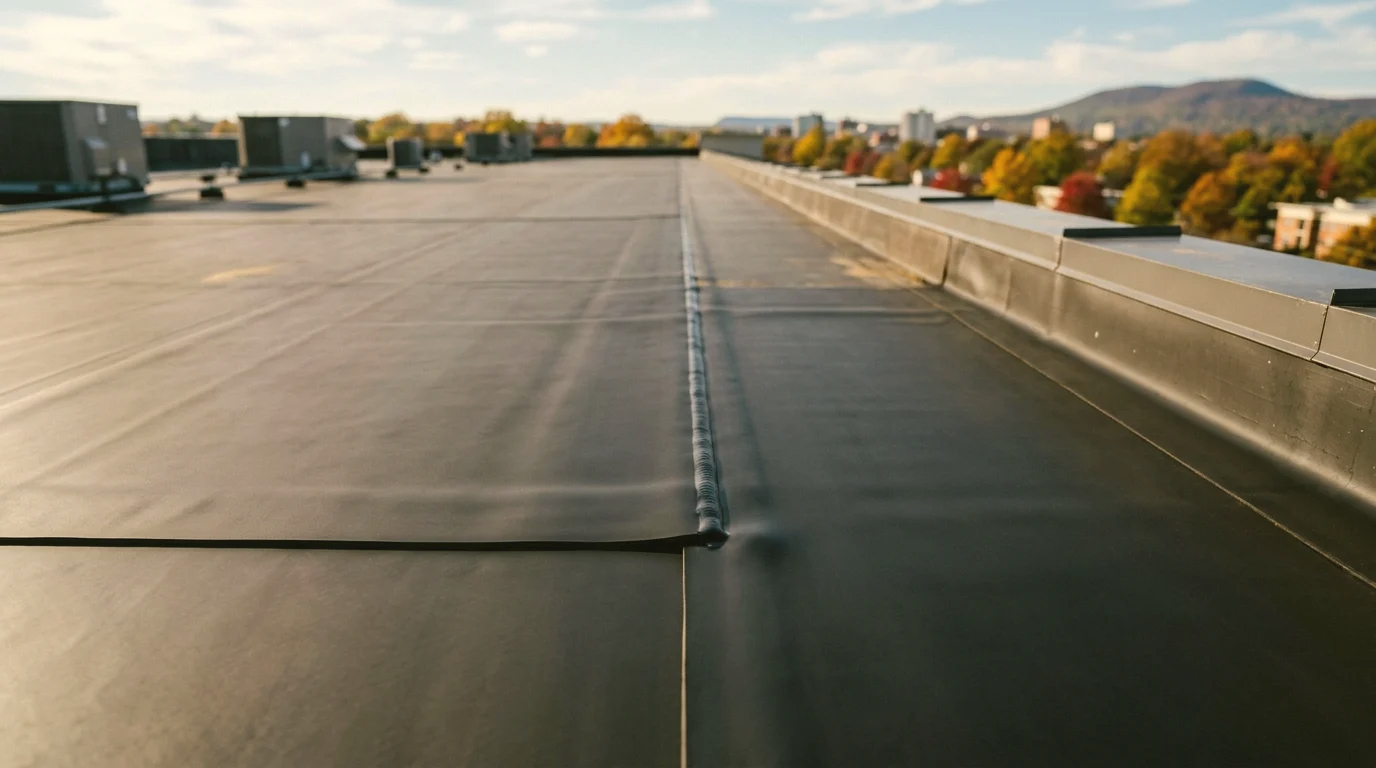
Huntsville hospitality roofs need assemblies and sequencing details that can be installed in controlled daily phases while the building remains occupied. A hotel with a booking in place for Thanksgiving weekend cannot have the rooms below the unsealed section of roof exposed to weather on October 8th. That constraint is not unusual for Huntsville projects and should be designed into the project before the first sheet of insulation is removed.
Commercial Roofing SystemsPlanning Roofing Work Around Daily Operations
Roof Work Around Seasonal Conditions
A Huntsville commercial roof replacement that starts in late September with no weather contingency is a project that may still be unfinished when the first hard frost hits. Build the schedule backward from the first unacceptable date, the check-in for Thanksgiving weekend, the ski-season opening, the critical business period, and identify the latest reasonable start date that still leaves room for weather. If that schedule doesn't work with the budget or contractor availability, the honest answer is to reschedule for the following spring rather than compress a project that requires a minimum number of weather-suitable working days to complete correctly.
Seasonal Roof Maintenance Records
A spring inspection in Huntsville, ideally in May when snowmelt is complete but before summer business activity starts, can capture thaw-related ponding marks, ice-displacement at flashings, drain conditions and any membrane movement that the winter exposed. A fall inspection, ideally in September after the summer season but before frost, can clear drains of fallen debris, identify open flashings and membrane deterioration that needs to be addressed before freeze-up and create a written record that the spring inspection can compare against. That year-over-year comparison is the most useful maintenance tool a Huntsville commercial property owner can have.
Write down each winter ice event and each spring leak in Huntsville; after two seasons the problem areas usually repeat.
Roof maintenance planningServing Huntsville Commercial Areas
Huntsville projects take in commercial, light-industrial, hospitality and institutional properties across the Muskoka Commerce Park, Highway 11 and Highway 60 corridors, Downtown Huntsville and surrounding Muskoka business areas. Wherever the property sits in Huntsville, the next step starts with the roof condition and how the building needs to keep operating.
- Employment & commercial districts
- Muskoka Commerce Park · Highway 11 business area · Highway 60 commercial corridor · West Road and Huntsville industrial area
- Neighbourhoods & nearby communities
- Downtown Huntsville
Huntsville Roofing Questions From Muskoka Owners
What should I realistically expect from an emergency roof repair on my Huntsville building in February?
A temporary measure done well and a permanent repair done properly are not the same thing, and at minus fifteen degrees in Muskoka they can't be. What's realistic in February is stopping active water entry with a membrane-compatible tape, mechanical cover or temporary overlay, something that reduces the immediate damage until conditions allow proper surface preparation, adhesive application or heat welding. The permanent repair needs dry, unfrozen substrate at appropriate temperature. Ask the contractor to be specific about what is being done now, what is temporary, and when and under what conditions the permanent repair will be completed.
Why does my Huntsville commercial building leak only in spring, not during summer rainstorms?
Snowmelt in Muskoka creates conditions that summer rain rarely replicates. A flat roof can hold a significant volume of water during the thaw, and that water is redirected by ice dams at drains, scuppers and low areas in ways that don't happen during a rainstorm. The water may also sit against a parapet or flashing detail for an extended period rather than shedding quickly, exposing micro-failures that brief rainfall doesn't have time to penetrate. Record the interior location and the thaw timing, then inspect the corresponding drainage basin and overflow path during the next active thaw, not after the snow is gone.
How should a Huntsville hotel plan a flat-roof replacement around its guest bookings?
Work backward from the booking calendar. Identify the periods when the hotel is at high occupancy, the rooms and public areas that sit below the roof sections in question, and the noise and disruption thresholds that are acceptable during occupied periods. From that, find the window, typically mid-September through mid-October in Huntsville, where the building is past summer occupancy and the installation weather is still reliable. Build a schedule that finishes by the Thanksgiving weekend with a minimum of two weather contingency days built in. If that window doesn't work for the budget or contractor, plan for the following May through June.
Should snow be removed from a Huntsville commercial flat roof during the winter?
That depends on the structural design of the roof, how the snow has drifted and whether drainage is being blocked. The structural loading capacity of the roof was designed to a specific snow load, and drifting beside rooftop equipment or parapets can concentrate weight well above the average. If you have reason to believe loading is approaching structural limits, or drainage paths are blocked and ice is accumulating in areas that will leak when it melts, have the situation assessed before sending untrained staff onto the roof with shovels. Membrane damage from improper snow removal tools is common and adds a new roofing problem to the existing weather problem.
Is an annual fall inspection worth the cost for a Huntsville commercial property?
For most Huntsville commercial and hospitality buildings, yes. A fall inspection in September or early October can identify blocked drains before the first freeze, catch open flashings or deteriorated seams that can be repaired while the weather permits and create a documented record of the roof's condition before winter. The cost of finding and correcting a blocked drain in October is a fraction of the cost of managing a leak that develops because that drain allowed ice to build up and the thaw found a compromised flashing. For properties with active warranties, documented inspection intervals may also be a warranty requirement.
What should Huntsville hospitality owners ask about roof warranties?
Find out who backs the warranty, how long it runs and what maintenance is required. Ask how seasonal closures affect any inspection schedule it demands. Get the warranty wording in writing before work is approved.
Commercial Roofing Elsewhere in Muskoka and Parry Sound
Let's Review the Huntsville Roof Ahead of the Season
Four-season hospitality and regional retail buildings need roofs that work year-round. Send the Huntsville address and we will help you plan.