
Lindsay Commercial Roofing for Active Local Businesses
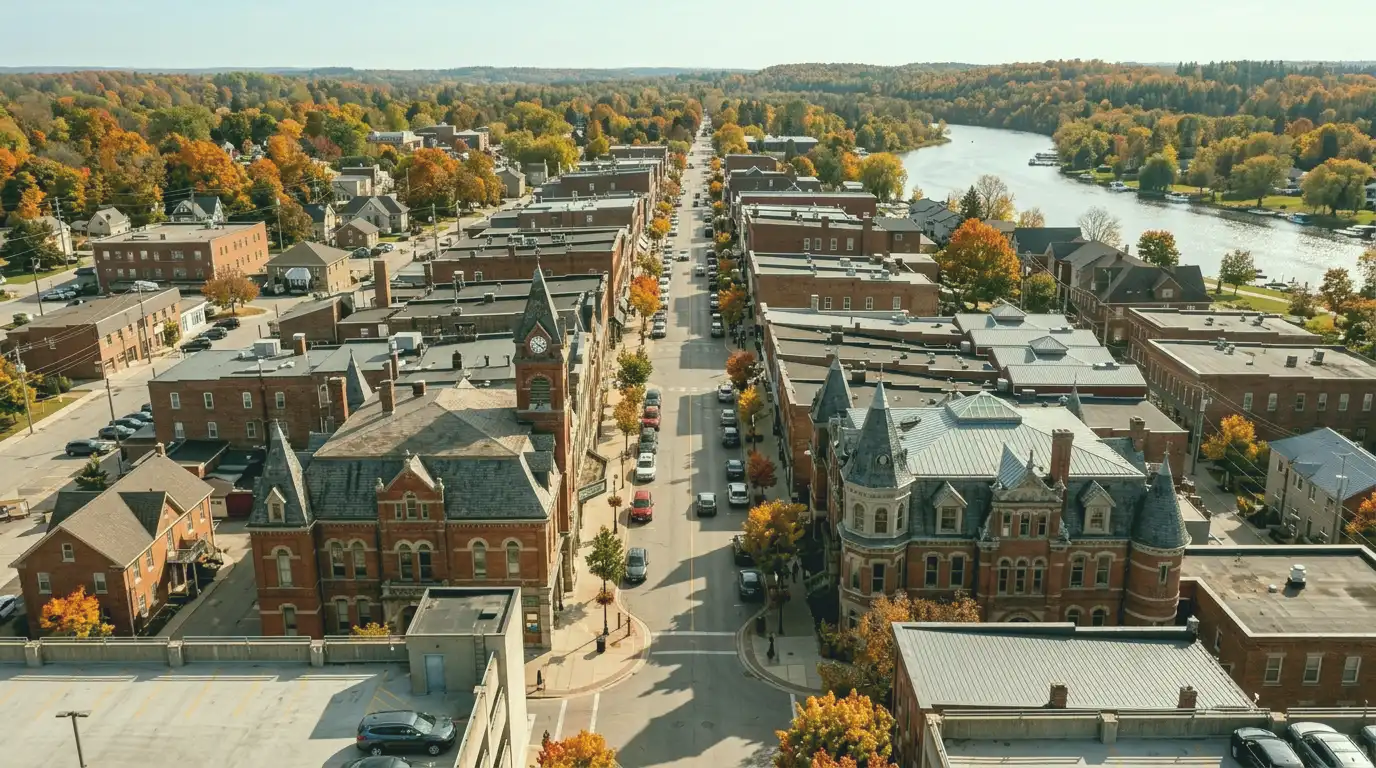
Lindsay is the urban commercial and industrial hub of Kawartha Lakes, a municipality that is otherwise spread across a wide rural and recreational area. The Lindsay Industrial Park off Mount Hope Street provides serviced industrial land for manufacturing, warehouse and distribution operations. Kent Street and William Street carry the downtown retail and service corridor. And Highway 35 connects Lindsay to Peterborough and the broader regional economy.
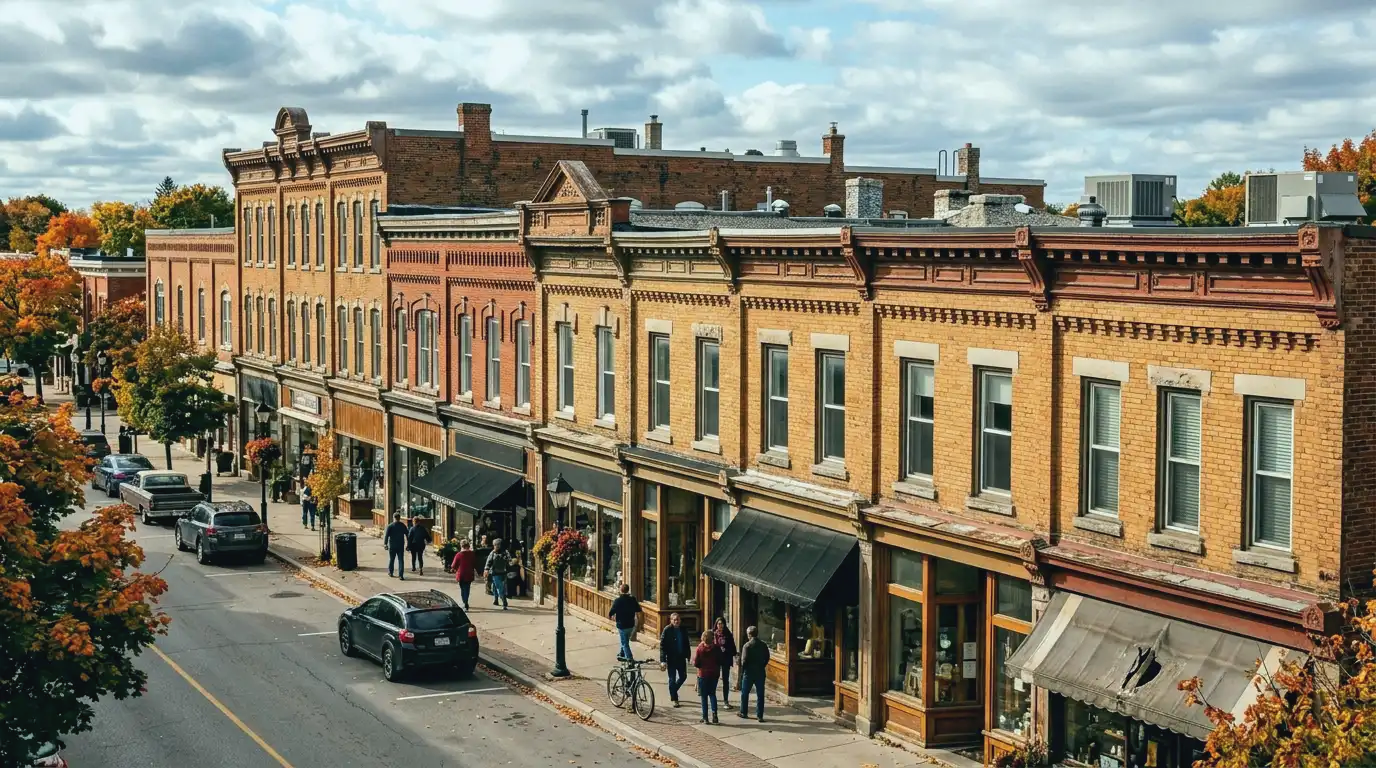
Industrial and Downtown Roofs in Lindsay
An industrial building in the Lindsay Industrial Park and a downtown Kent Street retail property may both have flat roofs, but the issues worth investigating are not the same. In the Industrial Park, the concerns are loading access during roofing, the condition of large membrane fields, drainage basin management on wide roofs, and the impact of any recent mechanical or electrical work on the membrane. In the downtown, the concerns are more likely to be parapet conditions on older masonry buildings, blocked or partially modified interior drains, and the roof-to-wall transitions that accumulate maintenance debt over decades of different tenants.
Kawartha Conservation monitors the Scugog River watershed closely, and Lindsay has experienced flood conditions during major spring thaw events. A commercial building with a flat roof is not immune to what happens at grade level, but the more direct concern for most building owners is what happens above the parapet when snowmelt runs faster than drainage can handle it. A Lindsay commercial roof with marginal drain capacity can be overwhelmed during a rapid thaw event even if the membrane itself is in acceptable condition. Drainage performance is worth testing at the start of any flat-roof investigation here.
Local reference: City of Kawartha Lakes Lindsay industrial area and economic-development planning information
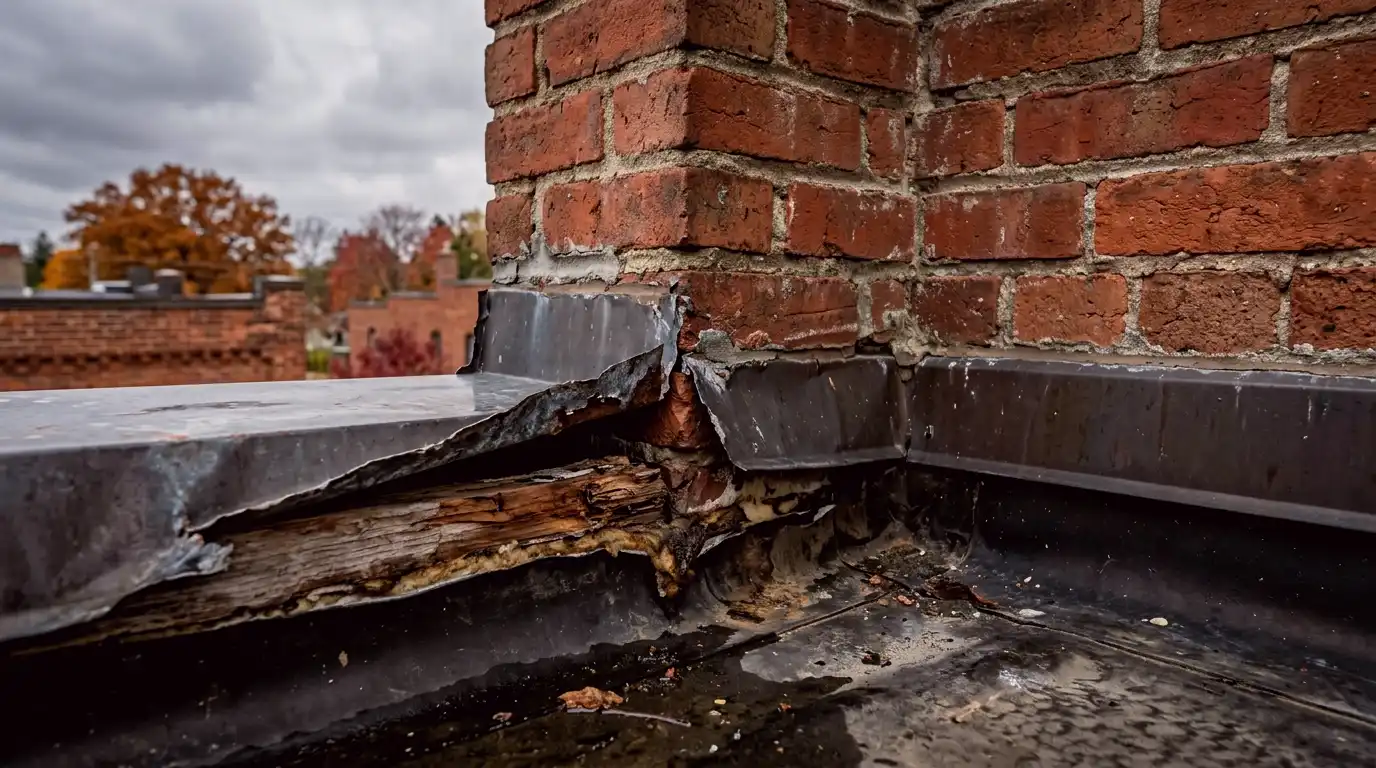
Lindsay Commercial Roofing Services
For low-slope roof construction and membrane planning, see our commercial flat roofing guide.
Trace Drainage and Roof Leak Patterns
In Lindsay, a roof leak that appears during rapid snowmelt is different from one that appears during summer rain. The snowmelt leak points to drainage restrictions, parapet-base conditions and detail areas that stay wet for long periods. The summer rain leak points to active membrane defects. Starting the investigation with clarity about which type of event caused the leak narrows the search area considerably and avoids the false efficiency of inspecting the entire roof uniformly when only part of it is worth examining first.
Scugog River watershed spring thaw and drain performance
Lindsay commercial drains that perform adequately through summer rainfall may be overwhelmed during rapid spring thaw events. Test drain capacity and confirm overflow scuppers are clear before each winter, and record how quickly rooftop water levels drop after a rain event.
Industrial Park large roof basin management
Wide industrial roofs in the Lindsay Industrial Park can have multiple drainage basins that drain at different rates. Map each basin and its corresponding drain separately before assuming a general drainage problem. One blocked drain in a multi-basin roof does not mean all drains are blocked.
Downtown Lindsay parapet and wall-interface conditions
Older Kent Street and William Street commercial buildings frequently have modified interior drainage and aging parapet conditions. Before investigating downtown flat-roof leaks, trace the interior drain line to confirm it is intact and unconstricted.
Roof Systems for Lindsay Buildings
In Lindsay, a flat roof has to handle cold winters and rapid spring melts, so the system choice leans on drainage and cold-weather durability. For an active Lindsay industrial building, a membrane system that handles foot traffic competently and is straightforward to flash around mechanical penetrations is more practically valuable than one optimised for energy performance alone. For a downtown retail property, the quality of the parapet and wall-interface details matters more than membrane type, since those conditions are responsible for the majority of downtown commercial leaks.
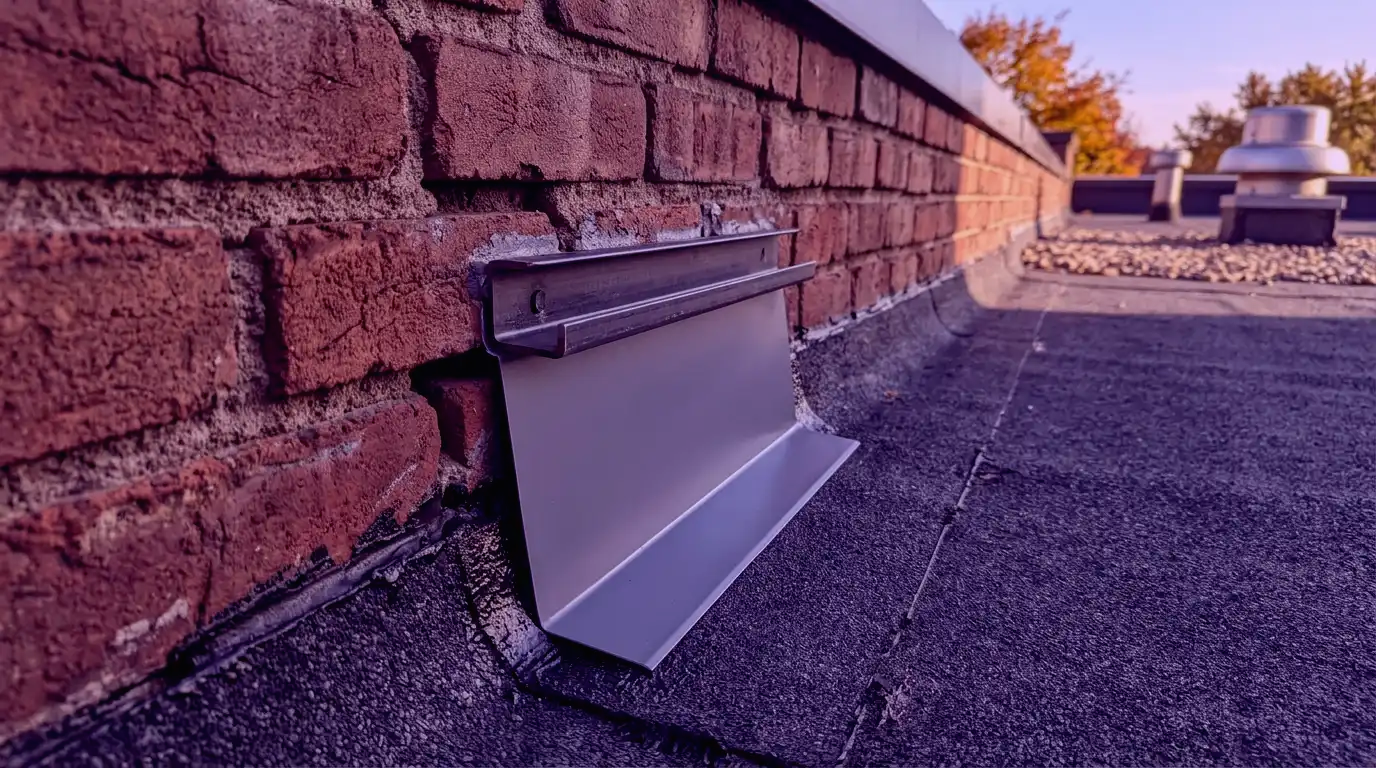
Replacement is also an opportunity to address chronic drainage issues. Tapered insulation can correct low-drainage areas that have been ponding for years without requiring structural changes. Drain sumps, extensions and bowl inserts can improve drain performance in existing openings. These are not major interventions, but they are far easier and less expensive to incorporate during replacement than as separate projects afterward.
Commercial Roofing SystemsPlanning Roofing Work Around Daily Operations
Roof Work Around Loading and Downtown Access
Lindsay Industrial Park roofing requires attention to truck access during material delivery and waste removal, since loading docks continue operating throughout most commercial reroofing projects. Crane or hoist positions should be confirmed well before mobilization. Downtown Lindsay work requires co-ordination with street parking, pedestrian access and sometimes heritage-adjacent building concerns. Communicate a specific schedule to affected businesses rather than an open-ended notice, and designate a single contact for each property to manage day-to-day questions.
Lindsay Roof Maintenance Planning
Schedule a late-winter inspection, February or early March, to assess snowpack accumulation on large industrial roofs and confirm that drain access is not buried or blocked. A spring post-thaw inspection should check drain connections, overflow scuppers and parapet bases for evidence of ice-related movement. A pre-winter inspection in October should clear debris, confirm overflow scuppers are unobstructed and document any areas of concern before they are buried under snow and inaccessible until April.
Keep winter leaks and spring inspection notes side by side in Lindsay, and year-over-year change becomes visible.
Roof maintenance planningCommercial Roofing Across Lindsay
In Lindsay, our scope reaches industrial, retail and institutional properties in the Lindsay area, including the Lindsay Industrial Park, Highway 35 commercial corridor properties, Kent Street and William Street downtown commercial blocks, and industrial and warehouse buildings throughout Kawartha Lakes. Roof size, drainage, equipment and access vary across Lindsay, so the work is planned around the individual property.
- Employment & commercial districts
- Lindsay Industrial Park · Highway 35 and CKL Road 36 commercial corridor · Highway 36 commercial and industrial corridor
- Neighbourhoods & nearby communities
- Downtown Lindsay
Lindsay and Kawartha Lakes Roofing Questions
Why does our Lindsay commercial flat roof start leaking as soon as the snow melts, even though it was fine all winter?
Snow on a flat roof acts as insulation, keeping the membrane at a relatively stable temperature even when outdoor temperatures are well below freezing. As temperatures rise in late winter, the snowpack melts from the top down and releases water faster than a winter-capacity drain can handle. Water that accumulates against flashings, parapet bases and drain collars, often for hours at a time, finds entry points that a short summer rain never reaches. The membrane may be technically sound, but the drainage design or detail conditions were not built for sustained spring-thaw water loading.
Is a moisture survey worth the cost before replacing a large Lindsay industrial flat roof?
On a large building, yes. A moisture survey, typically using infrared thermography after sunset or nuclear backscatter testing, identifies areas of insulation saturation that are not visible from the membrane surface. That information allows the replacement boundary to be set accurately: you replace the wet insulation while retaining dry insulation that still has useful life. On a small building where full replacement is clearly the right decision regardless of moisture extent, a survey may not change the required scope.
Can a Lindsay manufacturing business stay open for shipping and receiving while the roof is replaced?
In most cases, yes, with planning. The roof work plan should identify which bays or sections of the building are active loading and receiving areas and sequence those sections last, or schedule their open-roof periods during shift changes or non-shipping windows. Material staging should not block dock doors or access lanes. A daily tie-in procedure, ensuring every open area is secured and watertight before the crew leaves, is non-negotiable on occupied buildings. This kind of sequencing requires the conversation to happen before mobilization, not as the first crew members are arriving on site.
What should be checked after a HVAC contractor services rooftop units on a Lindsay commercial building?
Confirm that any access panels, curb flashings, or refrigerant line penetrations that were opened or modified during the service call have been properly restored. A mechanical service technician who accesses a rooftop unit routinely is not responsible for inspecting roof flashings, and the roof condition around service penetrations can deteriorate gradually without anyone noticing until a leak develops. A brief visual review of the areas where trade work occurred, within a few weeks of any significant rooftop mechanical service, is the most cost-effective version of a post-work inspection.
How do we know if recurring ponding on our Lindsay flat roof needs a structural correction or just drain maintenance?
Start by confirming the drains are fully functional, clear, properly connected, and with functioning overflow scuppers. If the ponding persists after the drains are confirmed clear, and it follows the same pattern every time, the low area is either a result of original roof slope design, structural deflection over time, or compressed insulation that has lost its original thickness in a localized area. A core sample in the low area can confirm whether compressed insulation is the cause. If it is, replacement of that insulation section with new material, or tapered insulation, during the next reroofing addresses the problem. Structural deflection that is significant enough to cause persistent ponding is less common but does occur in older Lindsay industrial buildings and requires a structural opinion before a roofing solution is specified.
How should a Lindsay owner plan a roof budget?
Build an annual allowance for inspection and repair and plan for replacement before the roof reaches the end of life. Ask for a condition report with a realistic remaining-life estimate. Smoother budgets come from planning ahead, not from waiting for failure.
Peterborough, Port Perry and Orillia Are Nearby
Tell Us About the Lindsay Roof and When It Leaks
Four-season flat roofs in Kawartha Lakes face real winters. Give us the Lindsay address and a few details, and we will help you decide what comes first.