
Sudbury Commercial Roofing for Northern Industrial Roofs
Greater Sudbury is the largest municipality by area in Ontario and serves as the regional hub for northeastern Ontario. The City's industrial and commercial base spans mining supply and service, healthcare, retail, education, government and business services. Its industrial areas include Lasalle/Elisabella, Kingsway, Maley Drive, National Street, Coniston, Valley East and Fielding/Duhamel, eight major concentrations with buildings ranging from heavy industrial to office and service commercial.
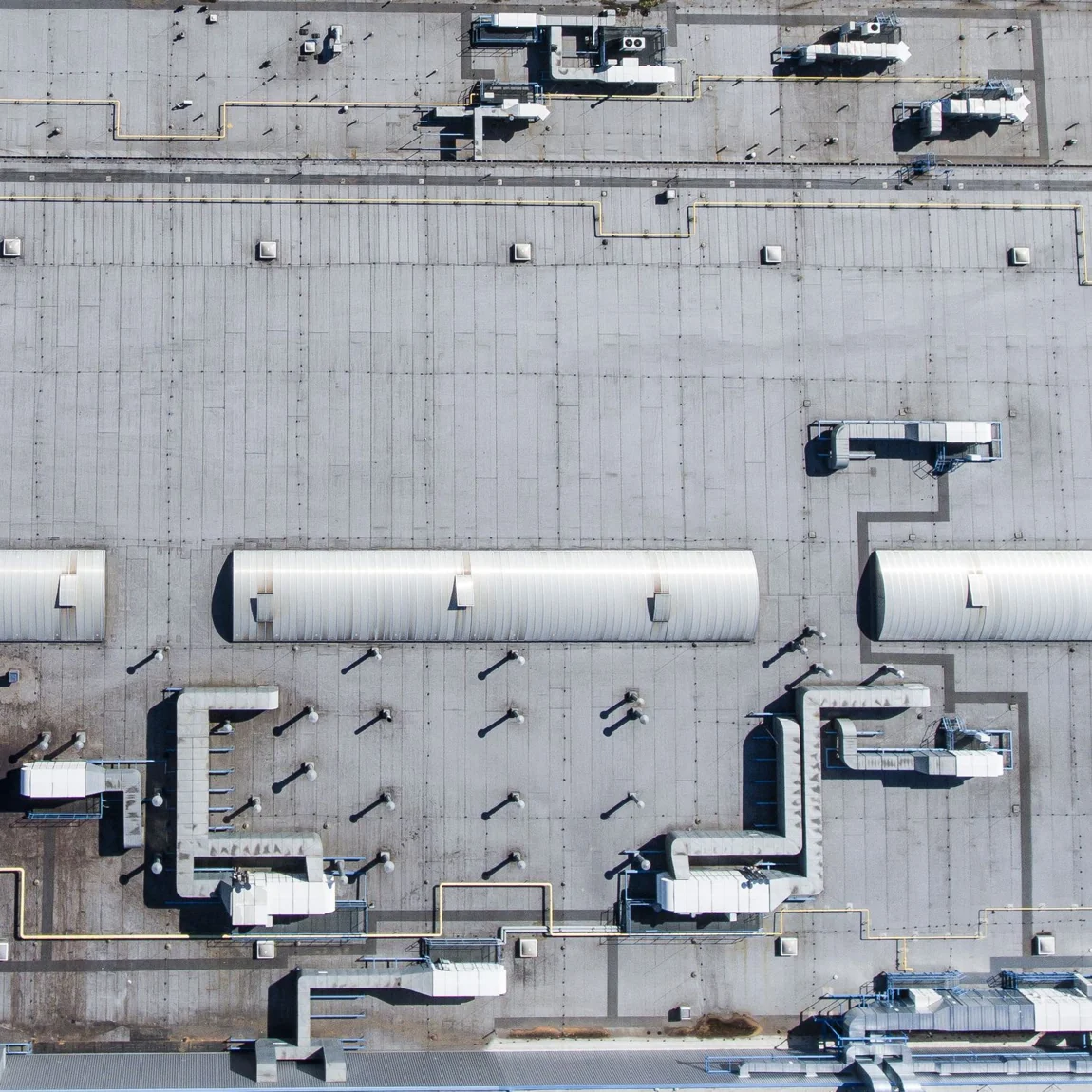
Sudbury's Industrial Geography and Northern Exposure Create a Specific Roof Management Problem
New Sudbury along the Kingsway is Sudbury's most active retail and commercial corridor, with plazas, big-box stores and service businesses operating under occupied, continuously used roofs. The South End and Flour Mill have older commercial and institutional building stock where the roofing history may be less well-documented. Mining supply and service facilities scattered across Greater Sudbury's industrial areas may have broad low-slope roofs, heavy mechanical loads and limited service windows. Healthcare and educational buildings introduce occupied-building scheduling constraints. Those are genuinely different roof management situations, and they deserve genuinely different approaches.
Northern exposure changes the maintenance calculus for commercial roofs in ways that a southern Ontario property owner might not anticipate. Spring thaw is not a single event, it is a multi-week period when meltwater accumulates against drainage structures still partially frozen. Drains that work adequately in summer can become pressure points during this period, especially if winter debris has accumulated over them. Fall is equally important: debris cleared from drains before freeze-up can prevent drain-ring ice formation that would otherwise hold standing water all winter. Those two seasonal checks are worth prioritizing above almost everything else on a Sudbury commercial roof.
Local reference: City of Greater Sudbury employment land strategy and industrial area planning
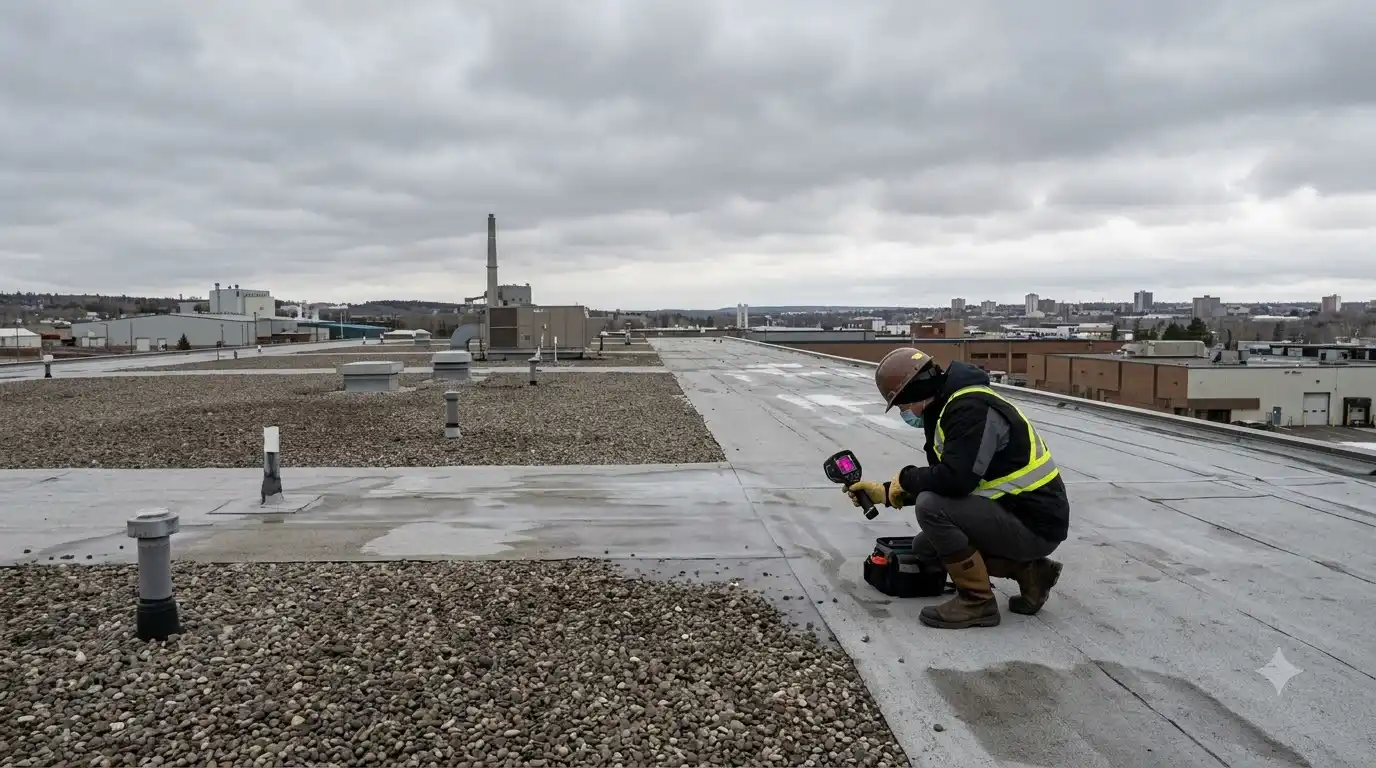
Sudbury Commercial Roofing Services
For low-slope roof construction and membrane planning, see our commercial flat roofing guide.
Linking Sudbury Leak Patterns to Seasonal Conditions and Roof Zones
In a northern climate, leak timing carries more diagnostic information than it would in a milder region. A leak that appears only during prolonged thaw, weeks after the last significant snowfall, is telling you something different from one that appears during a summer thunderstorm. Meltwater can pool against parapet bases, saturate scupper openings and force its way under membrane edges in ways that summer rain does not replicate. Keep the interior symptom record and add the weather condition, outdoor temperature and timing. That record makes the investigation on a Sudbury commercial roof significantly more useful.
Sudbury industrial and mining-supply facilities
Divide large roofs into labelled drainage basins and equipment zones so investigations remain consistent across changing seasons and different service technicians.
New Sudbury retail and commercial roofs
Coordinate diagnostics with tenant operations and parking lot access while giving drainage and HVAC curb details extra attention on buildings with dense equipment loads.
Northern seasonal leak patterns
Record whether symptoms appear during thaw, rain or wind events and inspect drain, scupper and perimeter conditions once safe access is available, separating snow-load structural concerns for engineering review.
Designing Sudbury Roof Assemblies for Northern Exposure and Maintainable Service Life
No single membrane type is the automatic choice for northern Ontario commercial buildings. PVC, TPO, EPDM, SBS modified bitumen and built-up systems have all performed well and failed on Sudbury buildings, usually the difference is in how the assembly was detailed and maintained rather than which membrane was selected. For Sudbury roofs, the ability to inspect and perform maintenance safely through changing seasons is a practical design criterion: roof hatch locations, perimeter access, walkway surfaces and drain cleanout access all affect whether the building team can actually maintain the roof they have.
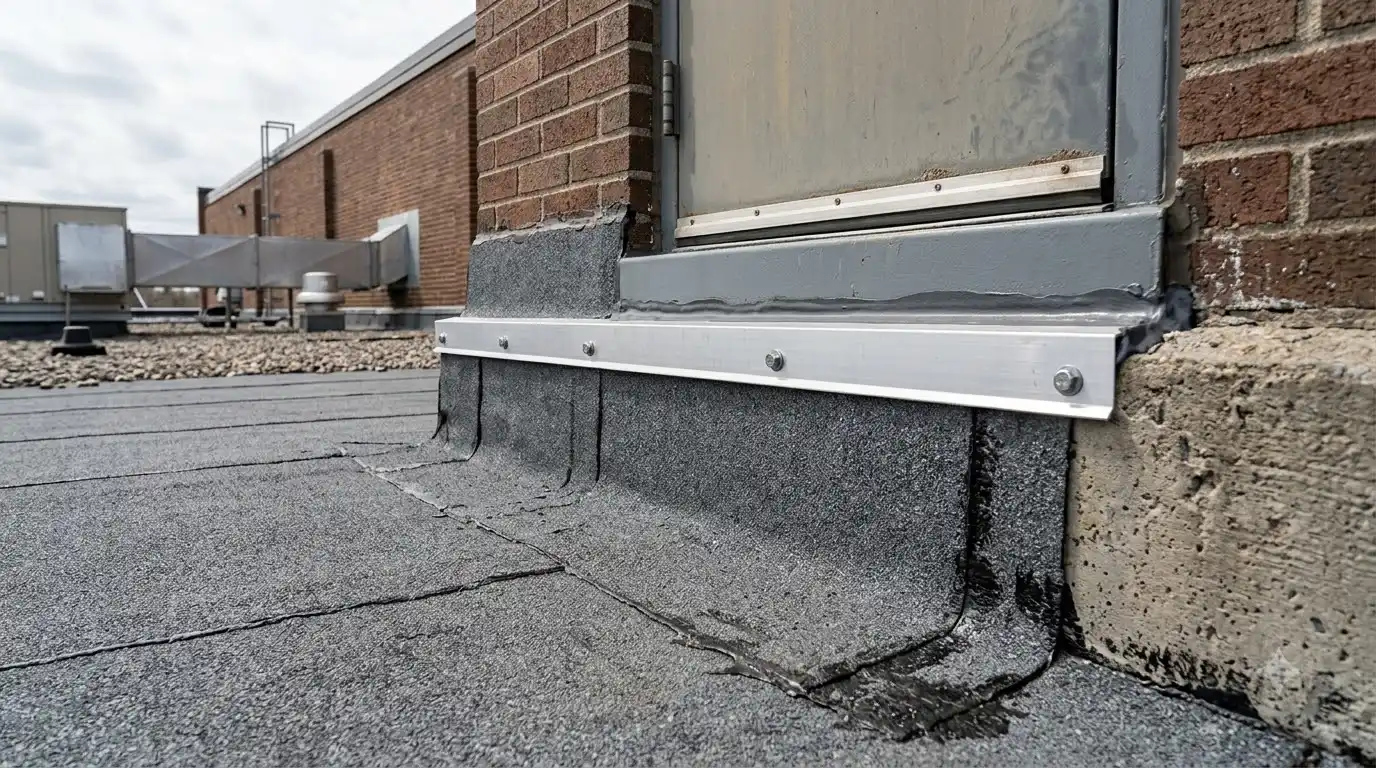
At replacement, the drainage system deserves as much attention as the membrane. Oversized drain sumps that can clear ice and debris more easily than standard configurations are worth the design effort on a roof that will experience months of snow accumulation each year. Overflow routes should be clearly located and unobstructed. Drains should have accessible cleanout connections at the interior ceiling. Include drain and overflow detailing in the replacement design so meltwater has a clear route during spring.
Commercial Roofing SystemsPlanning Roofing Work Around Daily Operations
Sudbury Roofing Logistics Must Account for Weather Windows and Industrial Safety
The working season for major Sudbury roofing projects is shorter than in southern Ontario. Planning should account for the realistic installation window while building in weather contingencies. Industrial properties may have safety orientation requirements, controlled access to process areas and shift-based scheduling that constrains when roofing activity is permitted. Healthcare and institutional buildings have occupied-building considerations. Regardless of building type, daily watertight stopping points need to be defined before the roof is opened, not adjusted after the afternoon shift ends. Sudbury weather can change quickly, and a Sudbury crew should be drilling the close-out routine, not improvising it.
Two Key Maintenance Windows for Every Sudbury Commercial Roof
A Sudbury commercial roof benefits from at least two deliberate inspection visits each year. The fall visit, before freeze-up, should focus on clearing drains, checking scuppers and perimeter drainage, inspecting flashings, identifying membrane areas that showed stress over the summer and flagging anything that might hold water under ice. The spring visit, after safe access is confirmed, should check what the winter revealed: new cracks in membranes, shifted flashings, ice-damaged drain rings and any areas where meltwater appears to have found a route into the building. Add event-driven checks after major wind events or lake-effect squalls that brought unusual loading or debris. Compare photographs from the same viewpoints each visit.
A dated record of freeze-thaw cycles and the leaks that followed helps a Sudbury owner see how winter acts on the roof.
Roof maintenance planningLasalle/Elisabella Industrial Area to Kingsway Industrial Area: Commercial Roofing Coverage in Sudbury
In Sudbury, we serve commercial, industrial and institutional properties across Greater Sudbury, including New Sudbury, the South End, Flour Mill, Lively and industrial areas and business parks including Lasalle/Elisabella, Kingsway, Maley Drive, Coniston, National Street and Valley East. For each Sudbury building, we base the recommendation on the roof that is there now rather than the neighbourhood name.
- Employment & commercial districts
- Lasalle/Elisabella Industrial Area · Kingsway Industrial Area · Maley Drive Industrial Area · Coniston Industrial Area · Valley East Industrial Area · National Street commercial and industrial area
- Neighbourhoods & nearby communities
- New Sudbury · South End · Flour Mill · Lively · Garson · Downtown Sudbury
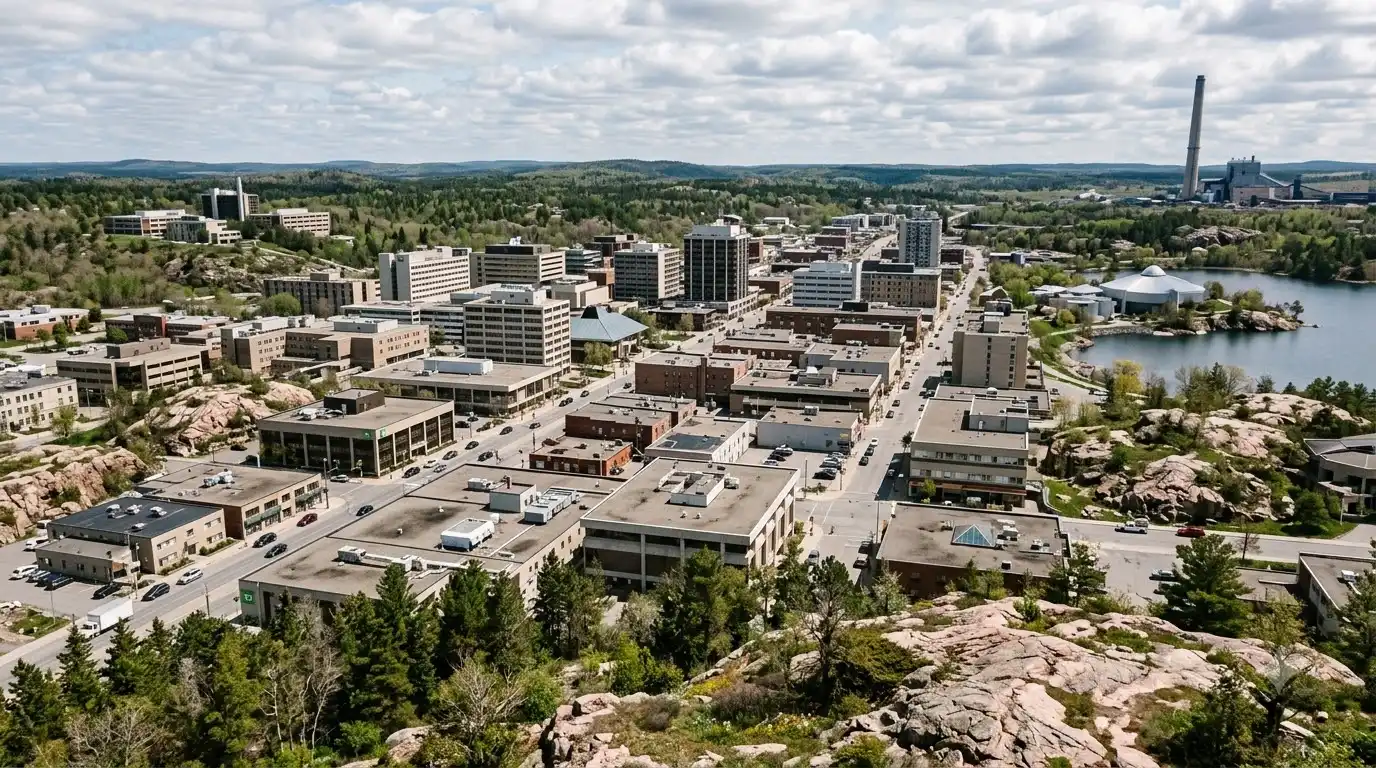
Sudbury Roof Questions About Northern Snow Loads and Roof Life
Can Sudbury commercial roofing work happen in winter?
Some work is possible, emergency leak control, stabilization repairs using cold-applied materials and inspections during safe access conditions. Permanent membrane installation, however, depends on temperature ranges specified by the manufacturer and on the ability to properly prepare surfaces. Most product specifications exclude installation below certain temperatures, and attempting to install below those limits produces work that appears complete but fails early. Emergency responses in winter should be documented honestly, 'temporary water control pending permanent repair in spring', and followed up once conditions allow proper preparation.
How is snow load managed on a Sudbury commercial flat roof?
The structural engineer who designed the building (or the engineer hired for a current assessment) is the appropriate source for snow-load capacity information. A roofing inspection can report drainage conditions, membrane changes and visible evidence of structural stress, but it cannot establish whether a snow load is within the building's design capacity. That requires structural analysis. If there are concerns about deflection, unusual creaking, or the roof appears to be retaining an unusual snow depth relative to surrounding buildings, restrict access and involve a qualified structural engineer, not a roofing contractor.
What is the best drain configuration for a large Sudbury warehouse to handle snowmelt?
Multiple internal drains with oversized sumps are generally more reliable than a minimal drain count, because they distribute the meltwater load and provide redundancy if one drain is partially obstructed. Overflow scuppers or emergency drains located above the primary drain should be clearly identified and kept unobstructed at all times, their purpose is to prevent catastrophic ponding if primary drains become blocked by ice or debris during a thaw event. Drain cleanout access from the interior, rather than only from the roof surface, is also useful in a northern climate because it allows checking without requiring roof access in uncertain spring conditions.
How does freeze-thaw cycling affect a commercial roof differently than just cold temperatures?
Sustained cold is actually more predictable for roofing materials than repeated freeze-thaw cycling. When temperatures oscillate around zero, a pattern common during Sudbury's shoulder seasons, membrane seams, flashings and penetration details undergo repeated expansion and contraction. Open seams or improperly cured adhesive can work progressively looser over a freeze-thaw season in a way that a sustained cold period would not produce. Perimeter details where metal and membrane interact are especially susceptible, because metal moves at a different rate than the membrane it is anchoring. Spring inspections should pay specific attention to these details after a season with significant temperature oscillation.
Should a Sudbury property manager inspect a roof immediately after a major lake-effect snowfall?
Wait for safe conditions first. Inspecting a snow-covered roof adds loading and creates serious fall-hazard risk. The practical post-storm check is interior: walk the building and note any new water marks, ceiling discolouration or condensation that was not present before the event. Document those locations and correlate them with the roof plan. When the roof can be accessed safely, typically after a controlled thaw, inspect the areas above the interior symptoms and compare drainage conditions. If structural concerns exist, the interior check should be immediate and the structural professional should be contacted before anyone goes on the roof.
How should Sudbury institutions plan roof maintenance in a northern climate?
Schedule inspections in spring and fall, clear drains before winter and repair known defects promptly. Keep records that show a consistent maintenance routine, which supports budget requests.
North Bay and Sault Ste. Marie Are on the Same Route
Plan the Sudbury Roof Around Snow, Access and Verified Deck Condition
Northern exposure tests flat roofs hard. Share the Sudbury address and what you see, and we will help you plan.