
Guelph Commercial Roofing for Industrial and Civic Sites
Guelph has an industrial and commercial depth that goes well beyond its size. The Hanlon Creek Business Park and adjacent Hanlon Business Park off the Hanlon Expressway now cover 1.9 million square feet of class-A industrial and office space in south Guelph, accommodating manufacturing, logistics, vertical farming and corporate operations. The Northwest Industrial Park along Woodlawn Road, York-Watson Industrial Park and South Guelph industrial areas add mature manufacturing and warehouse stock where many buildings carry multiple generations of roof repairs.
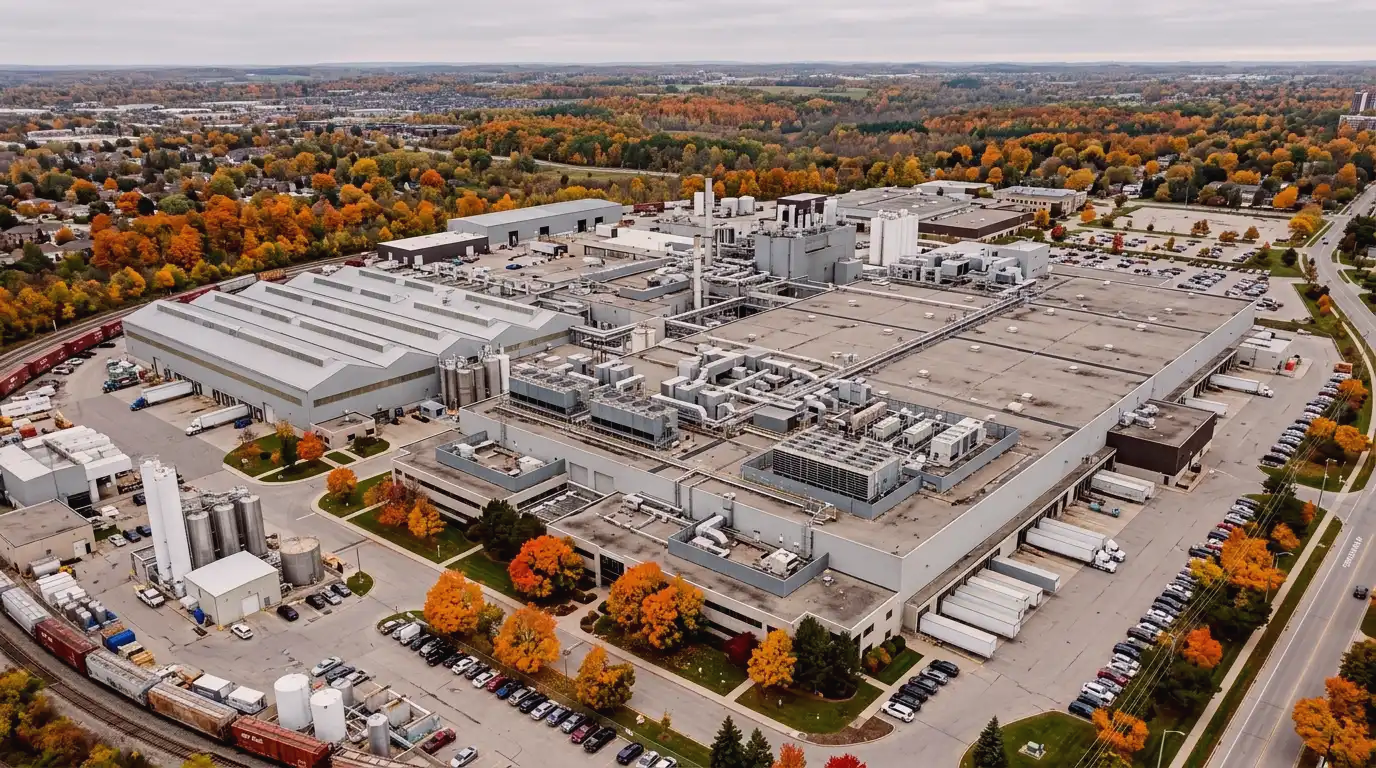
Guelph's New and Established Industrial Roofs
Those buildings carry current warranties, modern rooftop equipment integration and documentation. Northwest Industrial and York-Watson, by contrast, include properties from the 1970s and 1980s where roof systems have been repaired, overlaid and modified across decades.
Guelph's automotive-parts supply chain and agri-innovation sectors bring a specific roof consideration: process-related exhausts, condensate and rooftop equipment from production activities. Not every industrial building in Guelph has these conditions, and the ones that do need them documented and confirmed rather than assumed. A manufacturing roof with dry process exhausts has essentially the same requirements as a warehouse. A roof with confirmed grease or chemical exposure around specific curbs needs material selection driven by the actual exposure at those locations.
Local reference: City of Guelph industrial property and Hanlon Creek Business Park information
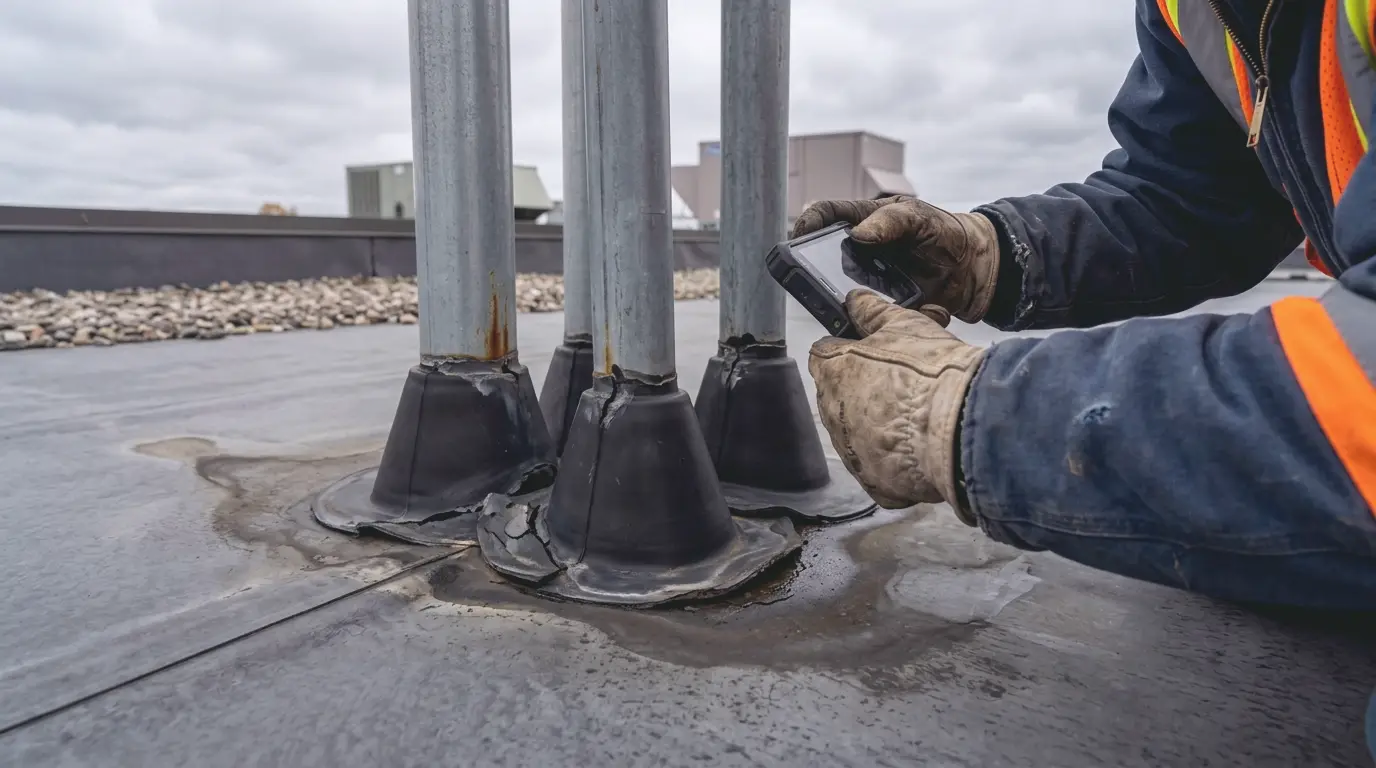
Three Guelph Roof Decisions to Clarify Early
Guelph commercial roofing projects for manufacturing, research and institutional buildings can involve process equipment and sensitive operations. Separate verified roof exposure and actual material requirements from assumptions about the building use.
Distinguish process conditions from roof failure
Document condensate, exhaust, rooftop equipment and actual exposure around specific curbs before attributing a problem to the membrane itself.
Commercial roof inspectionsVerify material compatibility where exposure exists
If grease, chemical or unusual exhaust exposure is confirmed, check repair and replacement materials against current manufacturer requirements for that condition.
Commercial roofing systemsPlan around sensitive operations
Manufacturing schedules, research equipment, patient areas and air-handling requirements should be documented before the daily roofing sequence is set.
Commercial roof replacementGuelph Commercial Roofing Services
For low-slope roof construction and membrane planning, see our commercial flat roofing guide.
Identify Roof and Process Conditions Separately
The most common diagnostic mistake on a Guelph manufacturing or research building is attributing a leak to general membrane age when it's actually a curb, penetration or service-path failure. Start by mapping the interior symptom to the correct roof zone, then identify every rooftop element in that zone, equipment curbs, condensate discharge points, pedestrian paths from hatch to equipment, expansion joints and drains. Inspect each of those elements before assessing the field membrane. On a roof with confirmed process exhaust near the leak, also evaluate whether the surrounding membrane has been affected by the exposure over time.
Hanlon corridor large-roof basin mapping
Assign drain numbers and basin boundaries on Hanlon Creek and South Guelph industrial roofs before any investigation. On roofs covering 50,000 or more square feet, the difference between Basin 3 and Basin 5 may mean two completely different zones of the building.
Process equipment and exhaust details
Document what each rooftop exhaust or process penetration serves before specifying a repair material. Grease, dry exhaust, steam and chemical exhaust each affect membrane chemistry and flashing details differently. Confirm the actual exposure rather than assuming based on the building's general industry category.
University and institutional sensitive spaces
Identify laboratory air intakes, sensitive equipment rooms and occupied academic or healthcare areas below the roof zone before scheduling tear-off or adhesive application. On University of Guelph campus buildings, these requirements may include coordination with the facilities and operations department.
Roof Systems for Guelph Manufacturing Sites
Hanlon Creek Business Park buildings and mature Woodlawn Road industrial properties present different specification starting points. New construction may call for mechanically fastened TPO or PVC with factory-tapered insulation and integrated solar-ready zones. An older property being re-roofed may have a steel deck with aged insulation that needs moisture assessment before new insulation is added, and may need drain capacity upgrades that weren't part of the original design. The membrane type is one variable; the condition of everything beneath it is the larger question on mature Guelph industrial stock.
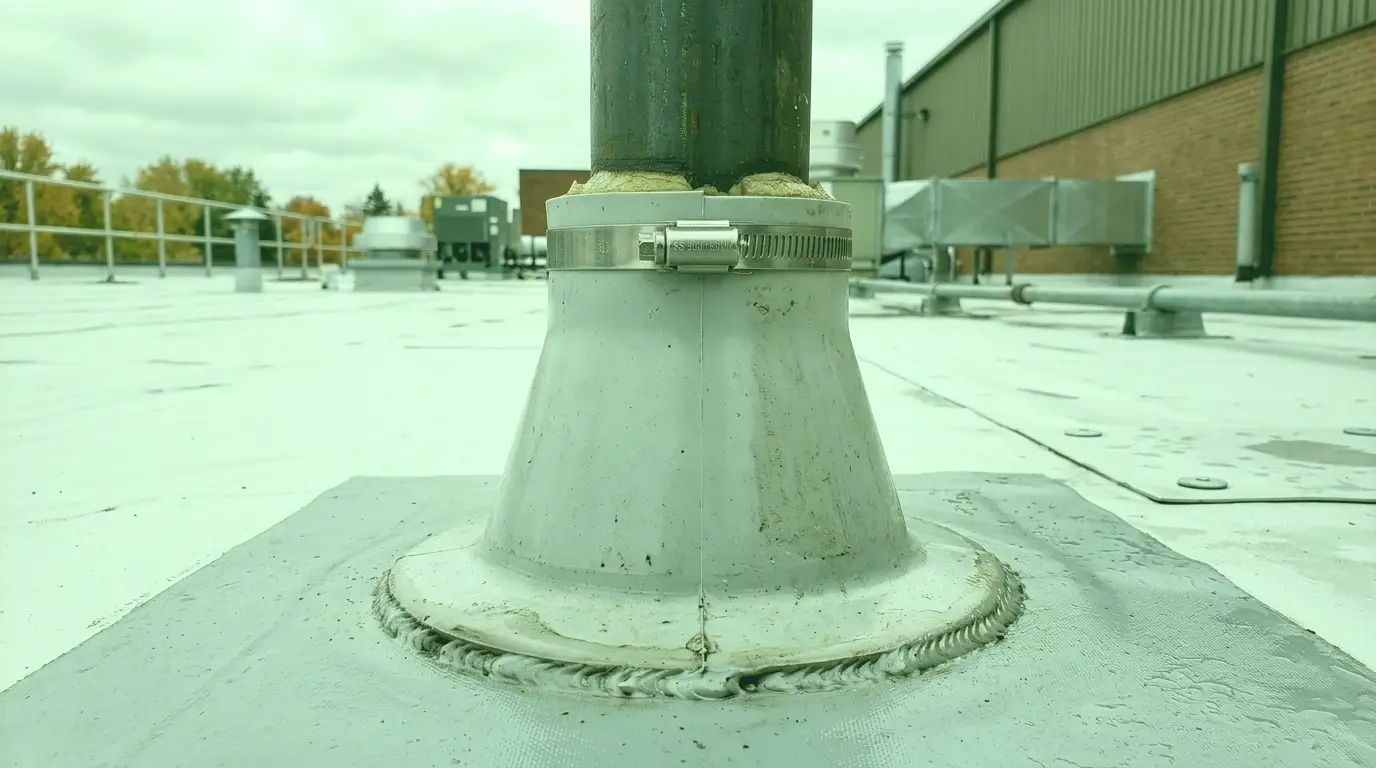
University, hospital and institutional buildings in Guelph add air-intake protection and occupied-space sequencing as non-negotiable specification requirements. The replacement project plan needs to include which zones sit above sensitive spaces, what interior protection is required during tear-off and where mechanical ventilation can and cannot be disrupted during installation. Those requirements belong in the specification, not in verbal agreements on the day of mobilisation.
Commercial Roofing SystemsPlanning Roofing Work Around Daily Operations
Roof Work Around Production and Research
Automotive-parts and manufacturing facilities may have scheduled production runs, shift change constraints and restricted access to certain plant areas. University and hospital roofing projects must work around academic calendars, patient populations, air-handling requirements and security access protocols. Distribution and logistics facilities may operate around the clock. The right project plan for each of these situations is different, and the roofing contractor should be documenting those constraints during project planning, not discovering them after tear-off has started.
Inspect After Rooftop Trade Work
A scheduled annual inspection is a baseline, not a complete maintenance program. Add targeted inspections after every significant rooftop trade visit, HVAC additions, electrical work, process modifications, communications equipment and solar installations, and after major weather events. On manufacturing buildings, revisit the curbs and flashings around process equipment after any changes to the production area that affect rooftop exhaust or HVAC configuration. That habit prevents a modified exhaust condition from quietly deteriorating a membrane for a year before the next scheduled inspection.
Guelph facilities can log rooftop equipment changes and any interior sensitivity events alongside leak reports.
Roof maintenance planningCommercial Roofing Across Guelph
Our Guelph service area covers manufacturing, warehouse, logistics, research, institutional and commercial properties across Hanlon Creek Business Park, Hanlon Business Park, Northwest Industrial Park, York-Watson, South Guelph, the University of Guelph campus area, Downtown Guelph and other Guelph business locations. For each Guelph building, we base the recommendation on the roof that is there now rather than the neighbourhood name.
- Employment & commercial districts
- Hanlon Creek Business Park · Hanlon Business Park · Northwest Industrial Park along Woodlawn Road · York-Watson Industrial Park · South Guelph industrial area · Northwest Industrial Park · University Research Park · Southgate Business Park
- Neighbourhoods & nearby communities
- Downtown Guelph · South Guelph · Hanlon Creek · Exhibition Park · Grange Hill East · The Junction · Old University · Onward Willow · Two Rivers · Westminster Woods
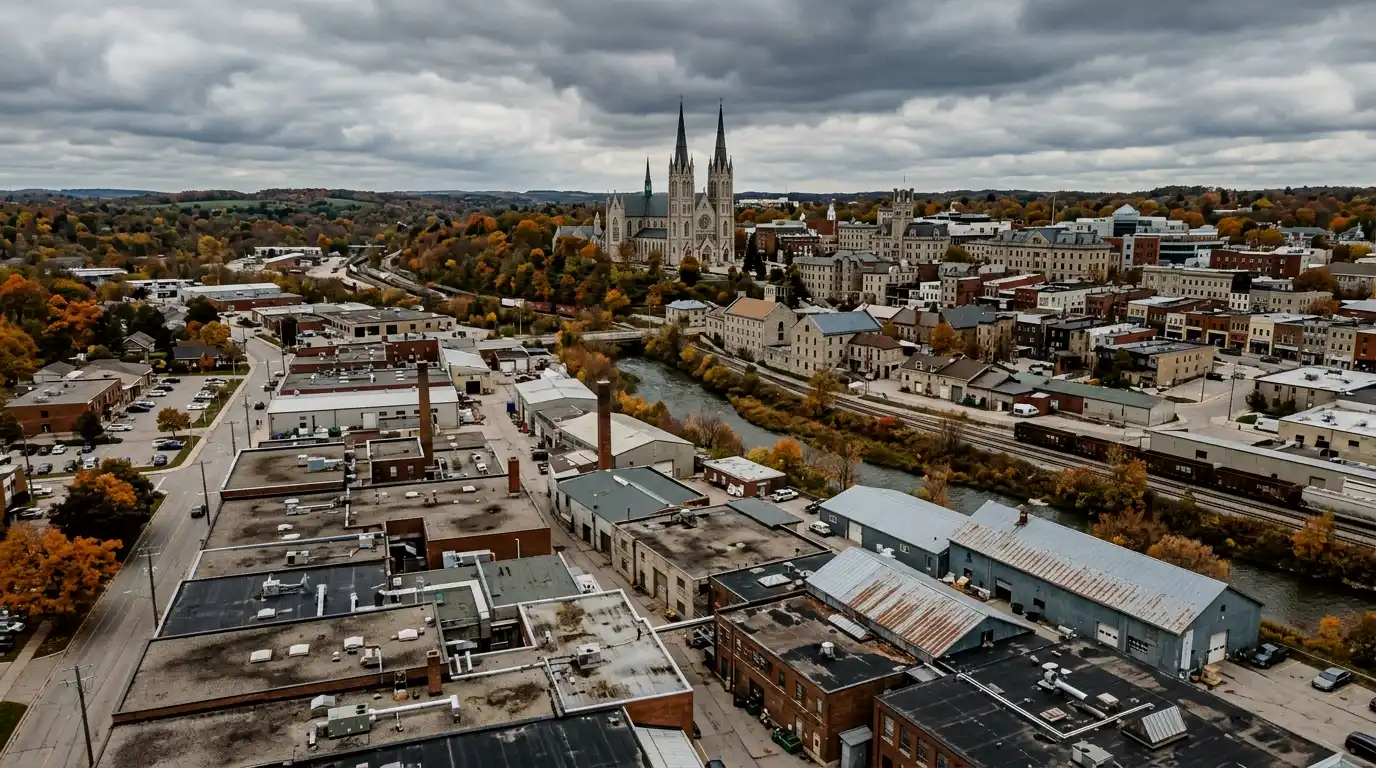
Guelph Roof Questions From Manufacturers and Facility Teams
How can a Guelph manufacturer determine whether a roof leak is coming from process equipment or the flat-roof membrane?
The process of elimination requires more precision than a visual walk. Start by identifying what sits above the interior symptom area, is there a process exhaust, condensate line, HVAC curb or service penetration? Inspect the path that condensate or exhaust would travel from that equipment to where water is reaching the interior. If the equipment recently changed, new exhaust configuration, modified HVAC routing, compare the timing. If the membrane itself is the suspect, look at the seams and drains in that drainage basin. A combined process-and-membrane investigation is the right starting point, not an assumption either way.
Is a moisture scan worth doing before replacing a large Guelph industrial roof?
It can be, particularly on older Northwest Industrial or York-Watson buildings where the repair history is unclear and the insulation condition across the roof is unknown. A targeted scan of suspect areas, zones that have been repaired repeatedly, areas where drainage is slow, sections with damaged or blistered membrane, can confirm whether wet insulation is localised or widespread. That information affects whether a full replacement or a partial replacement-and-repair program is the appropriate scope. The scan result needs to be interpreted alongside visual inspection; a scan alone can return false positives on certain insulation types or in certain temperature conditions.
Can roofing work proceed on the University of Guelph campus or a Guelph hospital building while the building is occupied?
Often, but with planning requirements that go beyond standard commercial projects. Identify the air intakes for the affected building zones, confirm with the facilities department which areas below the work zone are occupied and what noise or vibration constraints apply, establish indoor protection for any spaces with exposed ceilings below the tear-off zone, and use low-VOC adhesives where required near air intakes. Campus roofing on an occupied academic building during the semester is manageable but requires the coordination to happen before mobilisation, not during it.
What should a Guelph business-park property include in a roof inspection report?
The inspection should produce a plan-referenced condition record: numbered drains and their status, photographs of seams in each section, curb and penetration flashings individually identified, expansion joints noted by location, any areas of ponding or slow drainage marked on the plan, previous repair locations noted and rated, and an overall section-by-section condition summary. An inspection report that describes conditions generally without location references has limited value when a specific area leaks six months later and no one can determine whether it was noted in the last report.
How should Guelph's Hanlon Creek Business Park rooftop solar be coordinated with the building's flat roof?
The Hanlon Creek Business Park buildings were developed with sustainability as a core design goal, which makes solar coordination a natural planning conversation. For newly completed buildings, confirm that the panel layout preserves access to every numbered drain and maintains defined service walkways to rooftop equipment clusters. For buildings that are a few years into their operation, review whether any post-installation trade work has changed the roof condition before committing to a solar layout. In both cases, keep clear sightlines and access routes for the annual inspections that the building's sustainability certification may require.
What should a Guelph research building ask about roof work near sensitive equipment?
Ask how vibration, dust, odours and noise will be controlled and what interior protection will be in place. Share equipment locations and operating schedules with the roofer. Agree on shutdown triggers, such as sudden weather, and on who has authority to pause work.
Commercial Roofing Across Wellington and Waterloo
Start With What the Guelph Roof Is Actually Doing
Research and manufacturing roofs in Guelph often sit over sensitive operations. Send us the address and what is above or below the roof, and we will help scope the right next step.