
Milton Commercial Roofing: Plan for Scale and Access
Milton has grown into one of the most significant industrial real estate markets in the Greater Toronto Area, driven by Derry Green Corporate Business Park and the established Milton 401 Industrial/Business Park. The buildings going up there are large-format, Class A logistics and distribution facilities, some of which are designed to net-zero-ready standards with rooftop solar integration.
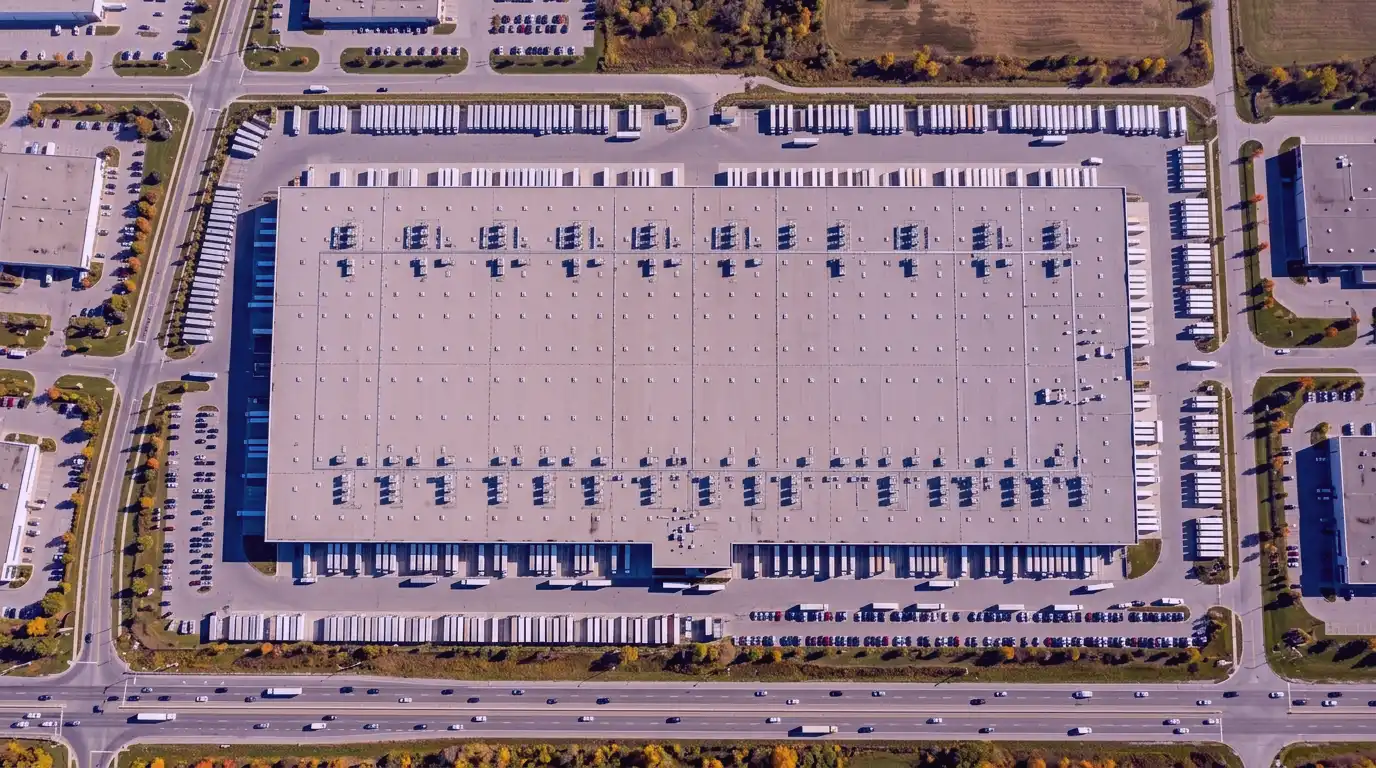
Milton's New and Established Industrial Roofs
A Derry Green logistics facility built in the last few years likely has a well-specified TPO or single-ply membrane, documented drainage design, and a manufacturer warranty with specific maintenance and inspection conditions. The owners of those buildings sometimes assume that new construction means no roofing concerns for a decade. That assumption is wrong: penetrations added during occupancy by tenants, foot traffic from HVAC and electrical contractors who did not receive site-specific orientation, and warranty conditions that are not being met because nobody checked them, those are the concerns for new Derry Green buildings.
Older Milton industrial properties along Industrial Drive and in the established 401 Business Park have a different set of problems. Buildings from the 1990s and early 2000s that have been reroofed once or modified over the years carry the typical challenges of mid-life Ontario industrial stock: insulation that was never fully replaced, drainage designs that were adequate for the original building but not for additions, and maintenance histories that reflect reactive responses rather than planned management. The gap between how these buildings look from the outside and what is actually happening inside the insulation layer is often substantial.
Local reference: Town of Milton Derry Green and major industrial and commercial-park information

Three Milton Roof Decisions to Clarify Early
Milton commercial roofing work on logistics and warehouse properties is often shaped by access, truck movements, roof age and phased construction. Put those constraints in the roof scope before pricing.
Plan around loading and truck schedules
Set material delivery, hoisting and waste-removal windows around the facility operation and preserve clear routes to critical docks.
Commercial roof replacementSeparate newer and older roof sections
Document additions, reroofed areas, drainage changes and insulation history so a large warehouse is not assigned one condition rating.
Commercial roof inspectionsCoordinate roof timing before solar
Confirm remaining roof life, drainage and service access before a long-life rooftop solar project is placed over the membrane.
Commercial flat roofingMilton Commercial Roofing Services
For low-slope roof construction and membrane planning, see our commercial flat roofing guide.
Map Large Roof Sections Before Repair
A leak report from the tenant should be mapped to the specific bay or column grid location where it appeared, then related to the drainage basin above that location and the drains and overflows that serve it. On a large building, a blocked drain in one basin has no effect on an adjacent basin, and a membrane failure that appears to affect a large area may be a water-travel issue originating from a single small defect.
Derry Green new-construction penetration tracking
Newer Milton logistics buildings accumulate undocumented penetrations as tenants modify their operations. Any new HVAC, electrical, fire-suppression or communications roof penetration should be documented and the flashing reviewed before the opening is sealed.
Large-bay roof drainage basin management
Map each drainage basin and its associated primary drain and overflow scupper separately on large Milton industrial roofs. Confirm which drains serve which interior bays so that a reported leak can be matched to the correct drainage zone quickly.
Loading-dock end parapet and edge conditions
The loading-dock end of a Milton logistics building is exposed to concentrated vehicle movement, elevated vibration and seasonal thermal stress from dark pavement below. Perimeter metal, flashings and membrane edge conditions on dock-facing elevations deserve particular attention during inspection.
Roof Systems for Milton Industrial Buildings
TPO has become the dominant system for new Milton industrial construction because it suits the large, relatively flat fields typical of logistics buildings, it welds quickly, tolerates the thermal cycling that a large metal-deck roof undergoes, and is compatible with the ballasted and mechanically attached designs most common in Halton Region construction. For replacement projects on older Milton buildings with built-up or modified bitumen systems, TPO is often the right replacement choice, but only after confirming that the existing insulation, or replacement insulation, is appropriate for the deck type and attachment method.
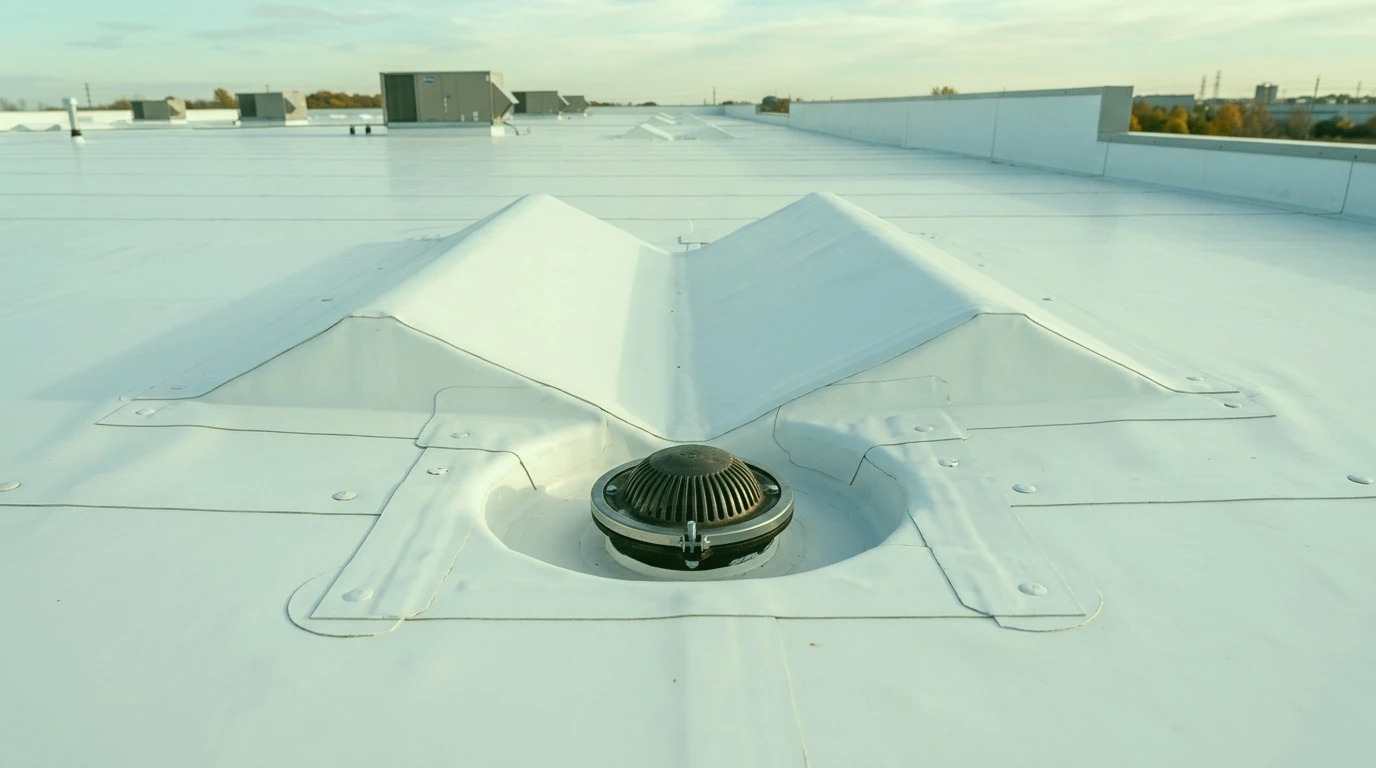
Net-zero-ready buildings in Derry Green are designed with solar in mind, and TPO systems installed on those buildings are typically specified with solar-ready attachment points and higher insulation R-values than standard industrial construction. For existing Milton industrial buildings considering solar retrofits, the conversation about roof condition has to come before the solar proposal, a membrane with five to seven years remaining service life should be replaced first, and the solar and roofing scopes coordinated so the array goes on a fresh, properly warrantied membrane.
Commercial Roofing SystemsPlanning Roofing Work Around Daily Operations
Roof Work Around Loading and Logistics
Some Milton logistics facilities operate around the clock, and reroofing on occupied 24-hour buildings requires a different planning approach than a day-shift manufacturing plant. Daily tie-in zones must be confirmed each shift, not just at end of day. Material delivery and waste-removal timing must work around truck scheduling rather than against it. Access to roof hatches from inside the facility may require security co-ordination at shift change. These are solvable logistics problems, but they have to be resolved before the contract is signed, not improvised during mobilization.
Maintain Warranty and Roof Records
For Derry Green and newer Milton industrial buildings, manufacturer warranty conditions typically require documented annual inspections and prompt reporting of identified defects. Confirm what those conditions are for each building and track compliance. For older Milton industrial stock, a semi-annual inspection schedule, spring drain check and fall pre-winter review, provides the minimum maintenance that justifies continued repair investment rather than forcing an accelerated replacement decision after an avoidable failure.
Milton warehouse owners can keep a short log of dock-area leaks and rooftop work to support roof-life planning.
Roof maintenance planningRoofing Across Milton Business Parks
Our Milton service area covers logistics facilities, manufacturing buildings, warehouses and business-park properties across Milton, including Derry Green Corporate Business Park, the 401 Industrial/Business Park, Industrial Drive properties and commercial buildings in Downtown Milton. Across Milton, we look at the actual roof, drainage and day-to-day building use before recommending repair or replacement.
- Employment & commercial districts
- Derry Green Corporate Business Park · 401 Business Park
- Neighbourhoods & nearby communities
- Downtown Milton · Derry Green · Old Milton · Mountainview · Dorset Park · Fallingbrook · Timberlea · Bronte Meadows · Valley View

Milton Roof Questions From Warehouse and Logistics Operators
Does a relatively new Derry Green warehouse in Milton still need commercial roof inspections?
Yes, and probably more carefully than many owners realize. Manufacturer warranties on TPO and other single-ply systems typically include conditions about annual documented inspections and timely reporting of defects. If those conditions are not met, the warranty may not respond when a claim is made. Beyond warranty compliance, new buildings are not immune to operational damage: tenants add HVAC equipment, run conduit through the membrane, and send service contractors onto the roof without briefing them on where not to walk. Annual inspections on new buildings identify those kinds of damage early, when repair is simple, rather than after they have been ignored through multiple seasons.
How is ponding water evaluated on a very large Milton distribution centre roof?
Start by mapping where the ponding occurs relative to the building's column grid and the drain locations for that section. A low area that is consistently wet long after surrounding areas dry is almost always served by a drain that is either restricted, improperly positioned or at a higher elevation than the surrounding membrane due to insulation compression. The evaluation should confirm that the drain itself is functional before concluding that the membrane or slope needs to be corrected. On a large building, it is also worth checking whether a neighbouring drainage basin is backing up through a shared overflow into the low area, this is less common but does happen on some older configurations.
Can we phase a Milton distribution centre reroofing without interrupting shipping and receiving?
Yes, with planning. The phase boundaries should align with fire walls, expansion joints or bay boundaries that divide the building into independent roof sections, and each phase should be small enough that it can be completed and made watertight within a single work shift. Crane and hoist positions must allow dock doors on the active end of the building to remain open and accessible during the entire project. If the facility operates overnight, confirm whether membrane-removal or torch work near occupied areas is compatible with the overnight activity, and adjust the schedule if necessary. The planning conversation should happen before the contract is awarded, not after mobilization begins.
Can rooftop solar affect the warranty on our Milton warehouse roof?
It depends on the membrane and the warranty terms. Most major TPO and PVC manufacturers allow solar installations on warranted roofs provided specific conditions are met: approved attachment or ballast methods, maintained access to drains and overflows, and notification to the manufacturer before installation. Some warranties require the solar installation to be done by an approved contractor or to be reviewed by a manufacturer representative. Reading the actual warranty document, not a summary, and sending the solar contractor's installation plan to the manufacturer for review before installation is the right process. Discovering that the solar installation voided the warranty is a problem that is much easier to prevent than to resolve.
What should we check after an electrical or communications contractor has been on our Milton industrial roof?
Walk the most likely access path from the roof hatch to wherever the contractor was working and look for punctures, abrasion marks, debris left on the membrane, any unsealed openings from conduit or cable penetrations, and any areas of membrane displacement from equipment or materials being set down. These checks take ten minutes and catch the kinds of damage that, if left unaddressed through a winter, become a significant repair or a warranty dispute. On a large roof, have the contractor confirm in advance where they will be working and what access route they intend to use, so the post-visit check can be targeted efficiently.
How do I estimate remaining life on a Milton warehouse roof?
Have a qualified inspector assess membrane condition, seams, flashings, drainage and insulation, and ask for a remaining-life estimate with supporting evidence. A moisture survey can help identify hidden damage. Use the results to decide whether to maintain, partially repair or plan replacement.
Commercial Roofing Across Halton and the West GTA
Plan the Milton Roof Around the Dock Schedule
Large warehouse roofs in Milton deserve a plan before problems appear. Send the address and building age, and we will help you work out what to review.