
Mississauga Commercial Roofing for Logistics and Retail
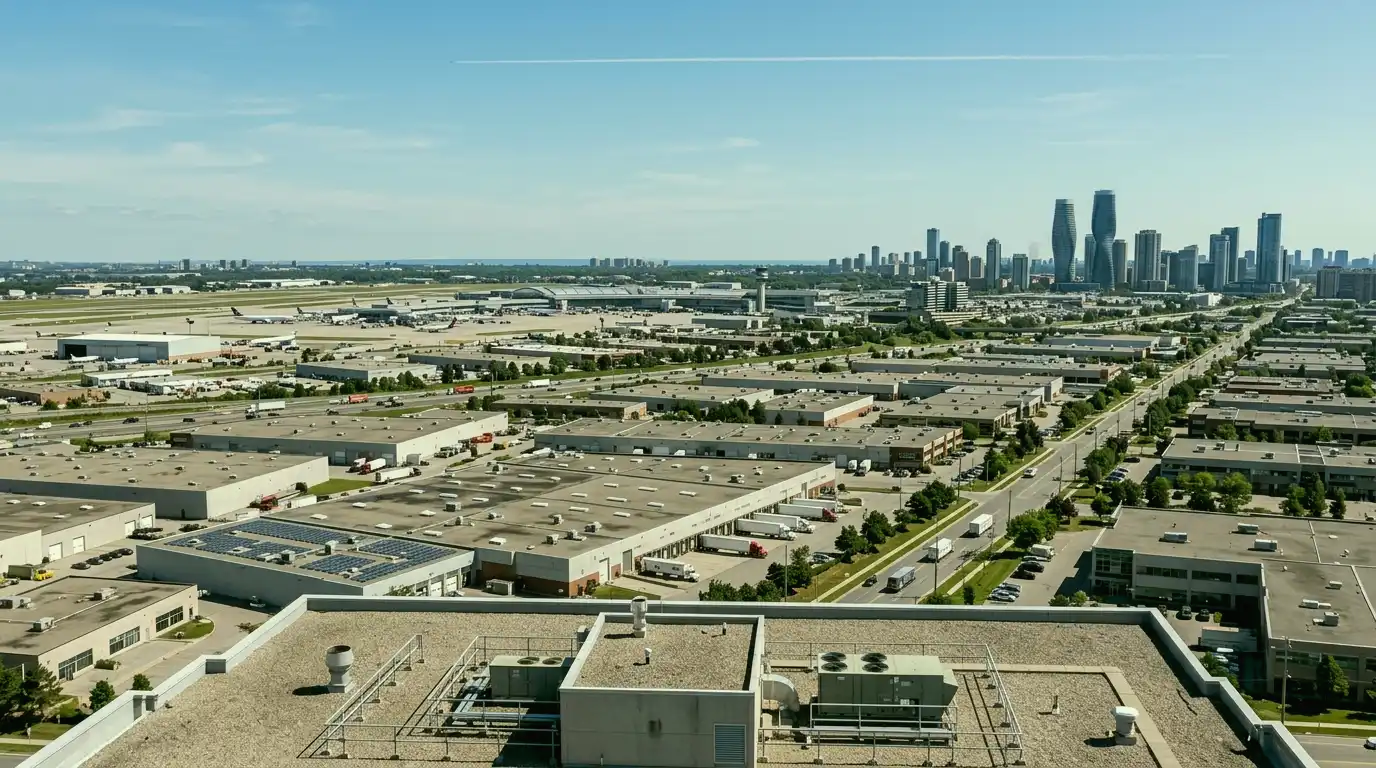
Mississauga has one of the largest concentrations of commercial and industrial roof area in Ontario. The City's major business districts, Airport Corporate Centre along the Pearson airport corridor, Dixie Road industrial area, Gateway Corporate Centre, Meadowvale Corporate Centre, Sheridan Park and the northeast industrial cluster, represent a cross-section of Ontario's commercial building history from the 1970s through the present.
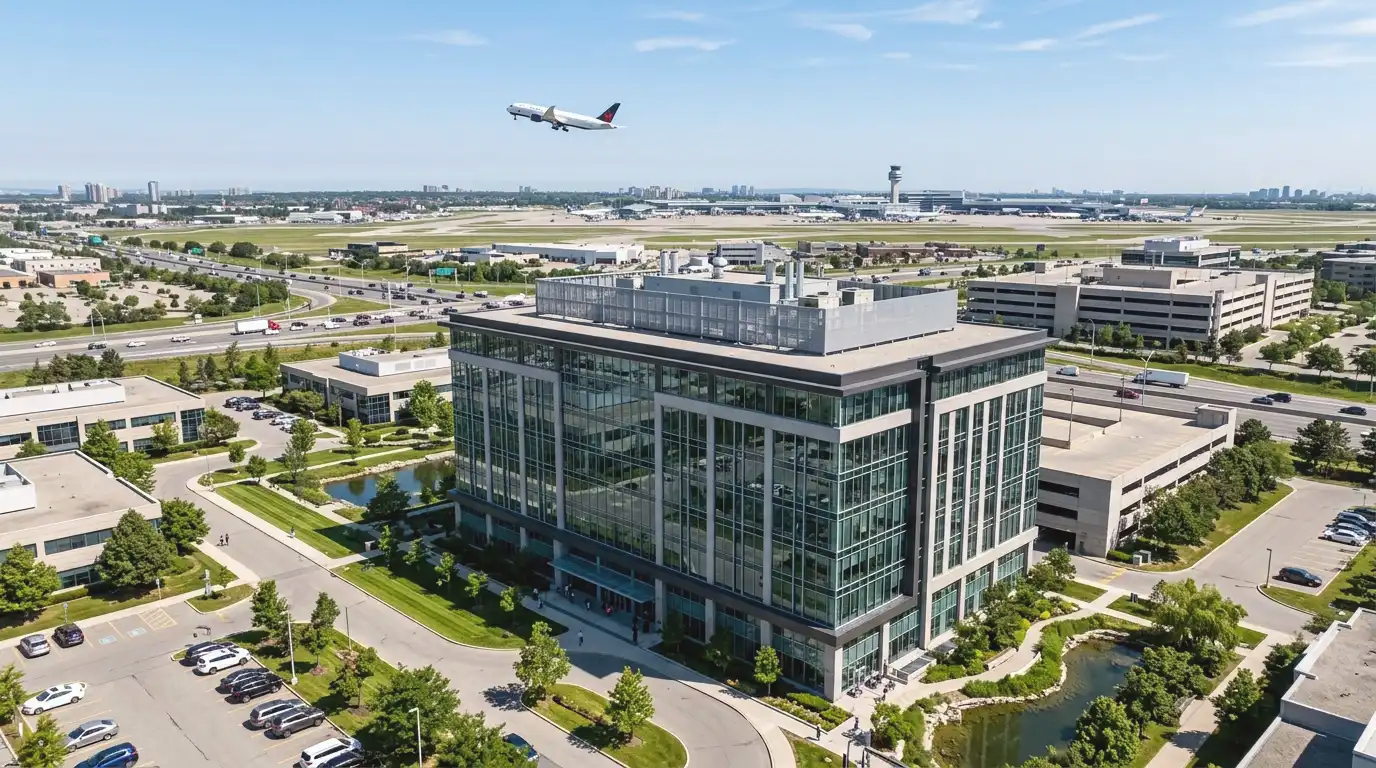
Three Types of Mississauga Commercial Roofs
Older Dixie Road industrial properties, warehouses, light manufacturing and distribution facilities that date from the 1970s and 1980s, carry the longest maintenance histories and often the most complex roof assemblies. These buildings have frequently been reroofed over existing systems rather than stripped to the deck, and the total assembly thickness can be difficult to assess without test cuts. Drainage on some of these roofs was adequate when the building had two or three penetrations; decades of tenant changes have added far more.
Corporate centre properties near Airport Corporate Centre and Meadowvale represent a different category: purpose-built office and R&D facilities from the 1990s and 2000s that were constructed to a higher standard but are now reaching the age range where the original roof assembly is approaching end of life and the insulation may have experienced decades of thermal cycling and minor moisture infiltration. These buildings require a condition assessment that goes beyond surface observation before a replacement decision is made. The Malton industrial area near the airport adds properties that deal with aircraft vibration and aviation-related operational constraints alongside standard commercial roofing concerns.
Local reference: City of Mississauga business survey and industrial-area information
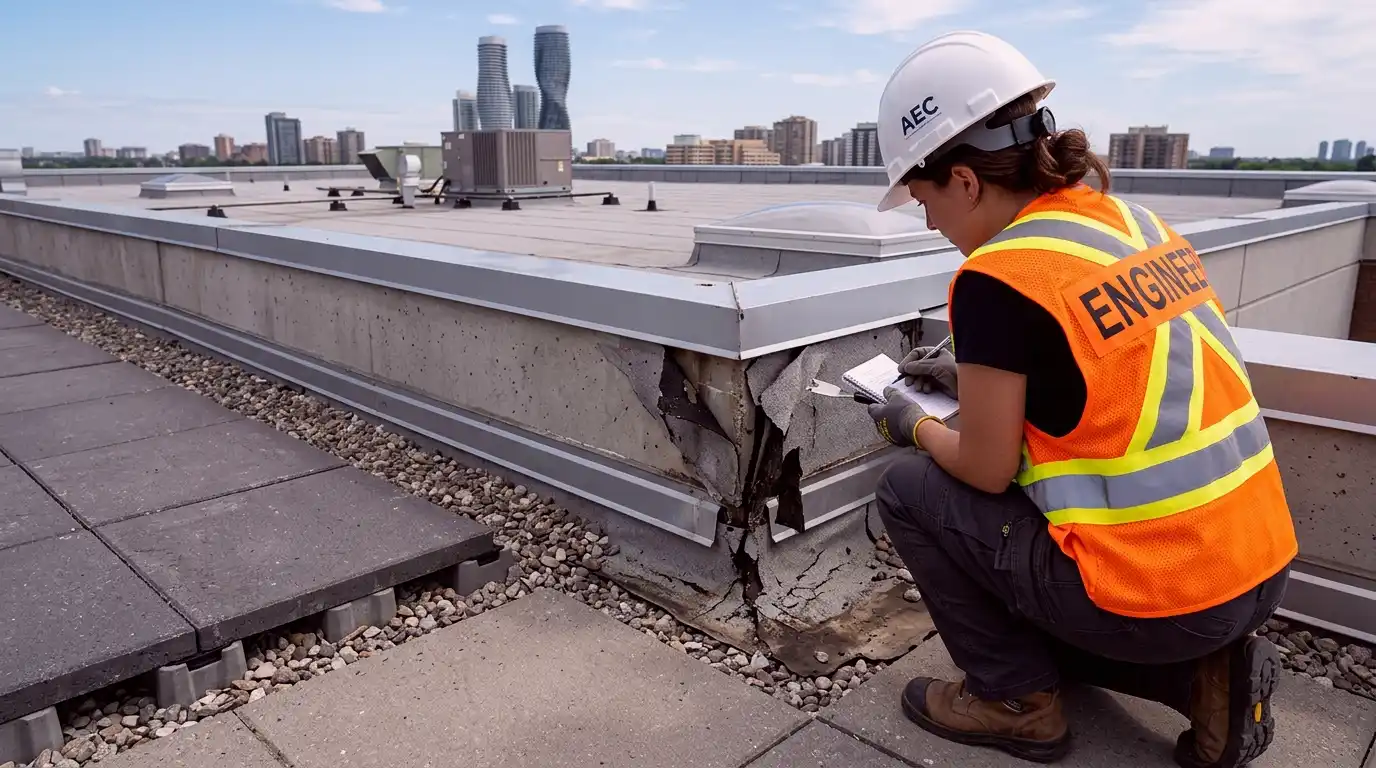
Three Mississauga Roof Decisions to Clarify Early
Mississauga commercial roofing scopes on active logistics, office and industrial properties need to account for access, rooftop trade activity and roof history. These operating details can change repair and replacement planning.
Record rooftop trade activity
Track HVAC, electrical and communications visits so a new leak can be compared with recent work instead of starting the investigation from zero.
Commercial roof maintenancePlan around docks, parking and occupied areas
Confirm delivery windows, hoisting, pedestrian routes, tenant operations and air-intake concerns before reroofing begins.
Commercial roof replacementVerify what is below an older roof surface
On layered or repeatedly reroofed buildings, use condition evidence to confirm moisture, insulation and assembly questions before deciding on the next system.
Commercial roof inspectionsMississauga Commercial Roofing Services
For low-slope roof construction and membrane planning, see our commercial flat roofing guide.
Tracking Mississauga Roof Leaks
In Mississauga, the building type shapes the investigation approach. A corporate centre office building with finished ceiling tiles requires water-travel mapping from the visible stain upward through the plenum to the roof level. A Dixie industrial building with open interior volume allows more direct observation but has a larger membrane area to assess. A Cooksville retail plaza has a tenant-specific investigation that relates each stain to the roof section above that unit rather than treating the whole building as one problem.
Airport Corporate Centre and Meadowvale office-campus investigation
Corporate campus buildings in Mississauga frequently have mechanical penthouses with dense equipment serving multiple floors. Leaks in these buildings often originate at rooftop mechanical equipment or expansion joints between wings rather than at the field membrane.
Dixie and northeast industrial drainage and saturation assessment
Older Mississauga industrial buildings in the Dixie and northeast clusters can have saturated insulation in multiple sections from leaks that were addressed at the surface but not the substrate. Confirm insulation condition before setting repair boundaries on buildings with a documented history of repeated repairs.
Retail plaza rooftop HVAC and tenant-zone correlation
Mississauga retail plaza leaks that appear in common areas or in a neighbouring tenancy often originate in the roof section above a different tenant. Map the roof drain locations against interior stain locations before assuming the leak is directly above the complaint.
Roof Systems for Mississauga Properties
Mississauga's commercial building density means that every major membrane type is installed here in quantity, and the replacement system specification should match the existing substrate condition, the building occupancy, and the long-term plans for the property. Reflective membranes are appropriate on Mississauga's densely built urban landscape where summer heat gain is a meaningful operating cost. Mechanically attached versus fully adhered versus ballasted systems each have specific applications depending on wind-uplift conditions, deck type and occupancy requirements during installation.
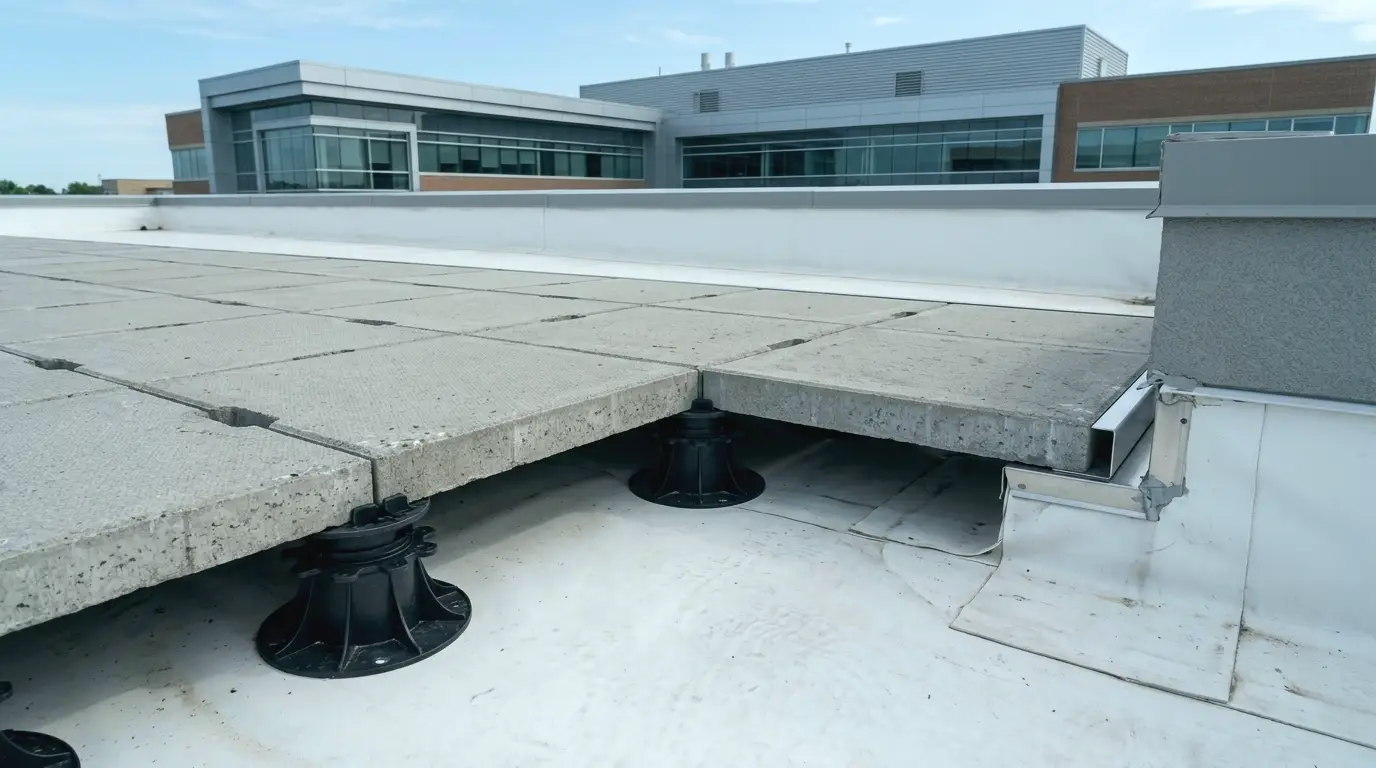
For large Dixie and northeast industrial properties with buildings that have been reroofed over existing assemblies, the replacement decision also has to address total assembly weight. In some cases, the cumulative weight of successive reroofing layers requires a full tear-off to remain within the structural load rating of the deck. This is not a speculative concern, it is a real factor on buildings of that era and should be part of the pre-project assessment rather than a surprise after the contractor starts removing the top membrane.
Commercial Roofing SystemsPlanning Roofing Work Around Daily Operations
Roof Work Around Airport and Office Operations
Mississauga corporate centre reroofing requires prior agreement on work hours that do not conflict with building tenants' operational schedules, crane positions that avoid parking structure loading restrictions and building-entrance interference, and air-quality management at mechanical intake locations, particularly relevant for airport-adjacent properties with specific air-handling requirements. Industrial reroofing in the Dixie and northeast areas requires confirmed dock access plans and material staging that does not impede logistics operations. Establish these requirements through a pre-project meeting with the facility or property manager well before mobilization.
Roof Maintenance for Busy Commercial Buildings
Mississauga corporate centre properties benefit from quarterly drain checks and semi-annual inspections given the density of rooftop equipment that trades access regularly. A protocol requiring that any rooftop service contractor notify building management of their access date, so a roof review can be scheduled within two weeks of each visit, catches mechanical-contractor-caused membrane damage before it creates a liability issue. Industrial properties in Dixie and the northeast benefit from spring and fall inspections with a moisture survey every four to six years to track insulation condition.
A Mississauga owner can note noise or access restrictions near the airport so future work is scheduled properly.
Roof maintenance planningCommercial Roofing Across Mississauga
Work in Mississauga extends to industrial, warehouse, office and retail properties across Mississauga, including the Airport Corporate Centre corridor, Dixie industrial area, Gateway Corporate Centre, Meadowvale Corporate Centre, Sheridan Park, northeast industrial properties and retail and service buildings across Cooksville, Malton and Clarkson. The right roofing plan in Mississauga depends on the building itself, including drainage, rooftop equipment, access and repair history.
- Employment & commercial districts
- Airport Corporate Centre · Gateway Corporate Centre · Meadowvale Corporate Centre · Dixie industrial area · Northeast industrial area · Sheridan Park Corporate Centre · Western Business Park
- Neighbourhoods & nearby communities
- Cooksville · Dixie · Meadowvale · Malton · Clarkson · Downtown
Mississauga Roof Questions From Owners and Facility Managers
How often should a Mississauga commercial roof be inspected when several trades access it regularly?
Twice a year as a baseline, spring and fall, with an additional review triggered any time a rooftop service contractor accesses the roof for HVAC, electrical, communications or fire-suppression work. The highest risk period is not a weather event but immediately after a trade has been on the roof, because most membrane damage from service contractors is small, visually inconspicuous and entirely preventable if caught early. A building with four or five rooftop trades per year should budget for six to eight brief inspections annually rather than two formal ones.
Why can a Mississauga warehouse keep leaking in the same area near rooftop HVAC after several repairs?
The most common reason is that each repair has addressed a surface symptom without confirming the cause. A curb flashing failure, a condensate drain blockage, a penetration flashing that was never properly completed, and a membrane failure adjacent to a curb can all produce the same interior drip location. If previous repairs have patched the membrane surface without ruling out the curb interior, the condensate line and the original installation quality of the flashing, the same area will continue producing problems. The correct approach is a methodical elimination of each potential cause rather than applying another membrane patch and hoping.
Can a Mississauga warehouse roof be replaced while trucks and tenants keep using the facility?
Yes. Active warehouse reroofing is standard practice in Mississauga, and the logistics buildings in the Dixie and northeast industrial areas are reroofed while occupied regularly. The project plan must establish phase boundaries that can be made watertight at the end of each shift, crane and hoist positions that do not block loading lanes, and a daily check-in process with the facility manager. The planning conversation establishes what cannot happen, no open-roof overnight, no staging in dock approach areas, no torch work above temperature-sensitive inventory without prior agreement, and the project executes against that plan.
Is a reflective white membrane automatically the best choice for a Mississauga commercial flat roof?
Not automatically, though it is often the right choice in Mississauga's urban environment where summer heat gain is a real operating cost. The correct system depends on the deck type, the required attachment method, the building's occupancy and sensitivity to odour or open-flame installation methods, the warranty requirements, and whether the existing insulation is compatible with the adhesive or mechanical attachment required for the new membrane. A reflective membrane installed over incompatible or damaged insulation on an inadequate deck does not perform as specified regardless of its energy-efficiency ratings. Get the substrate right first, then optimize membrane selection.
What information should a Mississauga property manager collect before requesting commercial roofing quotes?
Gather any existing inspection reports, maintenance records or previous roofing contracts for the building. Note the approximate dimensions of each roof section and whether sections were built or reroofed at different times. Document all known leak locations with the dates they were reported and which weather conditions triggered them. List all rooftop equipment, HVAC units, exhausts, satellite dishes, electrical equipment, and note any that were added after the building was originally roofed. That package allows a roofing contractor to provide a more accurate quote and reduces the likelihood of significant scope changes after mobilization.
What should Mississauga owners confirm about access and staging for roof work?
Check crane or hoist locations, parking restrictions, delivery windows and any site rules for tenants or neighbours. Ask the roofer to prepare a staging plan with safe pedestrian routes. Confirm how debris and materials will be controlled.
Start With the Mississauga Roof and How the Building Operates
Corporate campuses and airport-area industrial buildings have different needs. Tell us which applies and what the roof is doing, and we will help you plan.