
North Bay Commercial Roofing for Northern Conditions
North Bay carries a distinct combination that most Ontario cities do not: a functioning aerospace cluster built around the Jack Garland Airport with a 10,000-foot runway that accommodates heavy-lift and wide-body aircraft, two municipally-serviced industrial parks, a post-secondary and health services presence and a downtown commercial district with a different building character altogether.
Roof Planning for North Bay Buildings
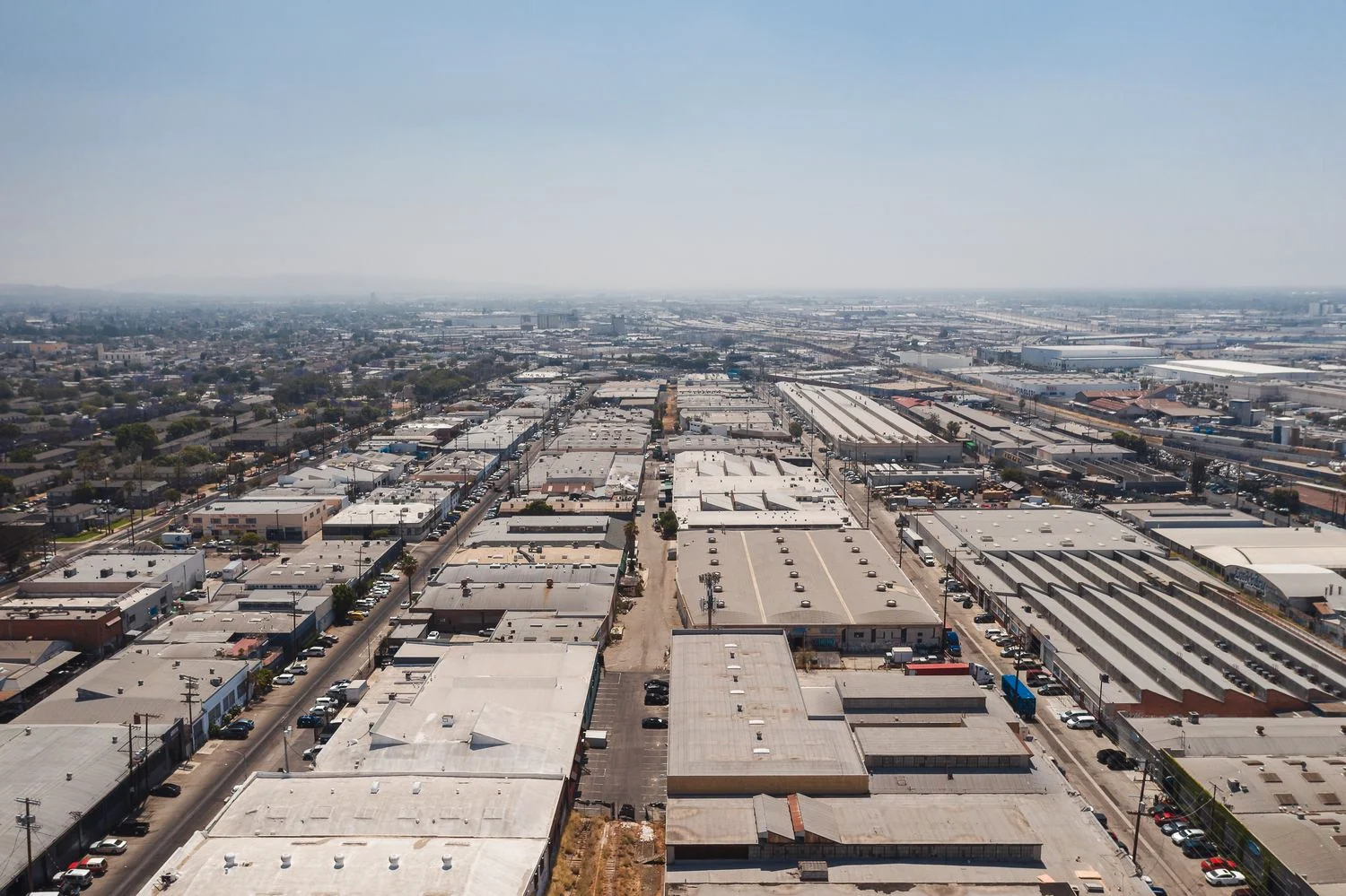
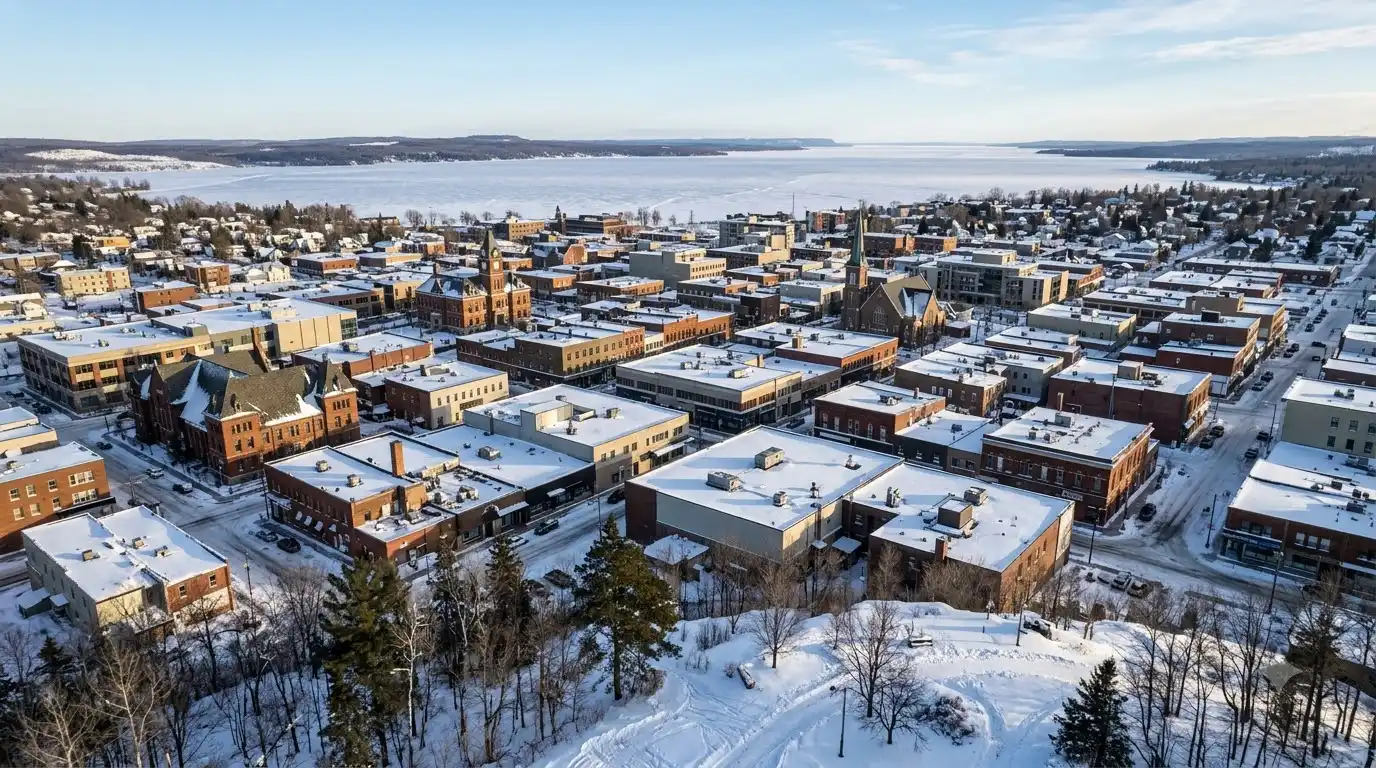
The Airport Industrial Business Park near the Jack Garland Airport offers ground-side and air-side properties with room for aerospace manufacturing, maintenance and repair operations. The Gateway Industrial Park at Lakeshore Drive and Ferris Drive covers service, manufacturing and logistics uses and has been largely built out for years, meaning the building stock there is older and may carry roof histories that involve several previous contractors. Seymour Street commercial properties and Downtown North Bay add a third building type, older masonry and mixed commercial, where wall and parapet conditions often matter as much as the membrane itself.
A well-maintained North Bay roof file does not begin in spring. It begins in fall, when drains should be cleared and known deficiencies addressed before they freeze into larger problems. Winter in this latitude does not offer inspection access the way spring and summer do, so the condition you enter winter with is largely the condition you carry until April. A roof that leaks during a January thaw was probably already compromised in October; the season exposed it rather than created it.
Local reference: City of North Bay industrial parks and economic-development information
North Bay Commercial Roofing Services
For low-slope roof construction and membrane planning, see our commercial flat roofing guide.
Use Leak Timing to Target Drainage Zones
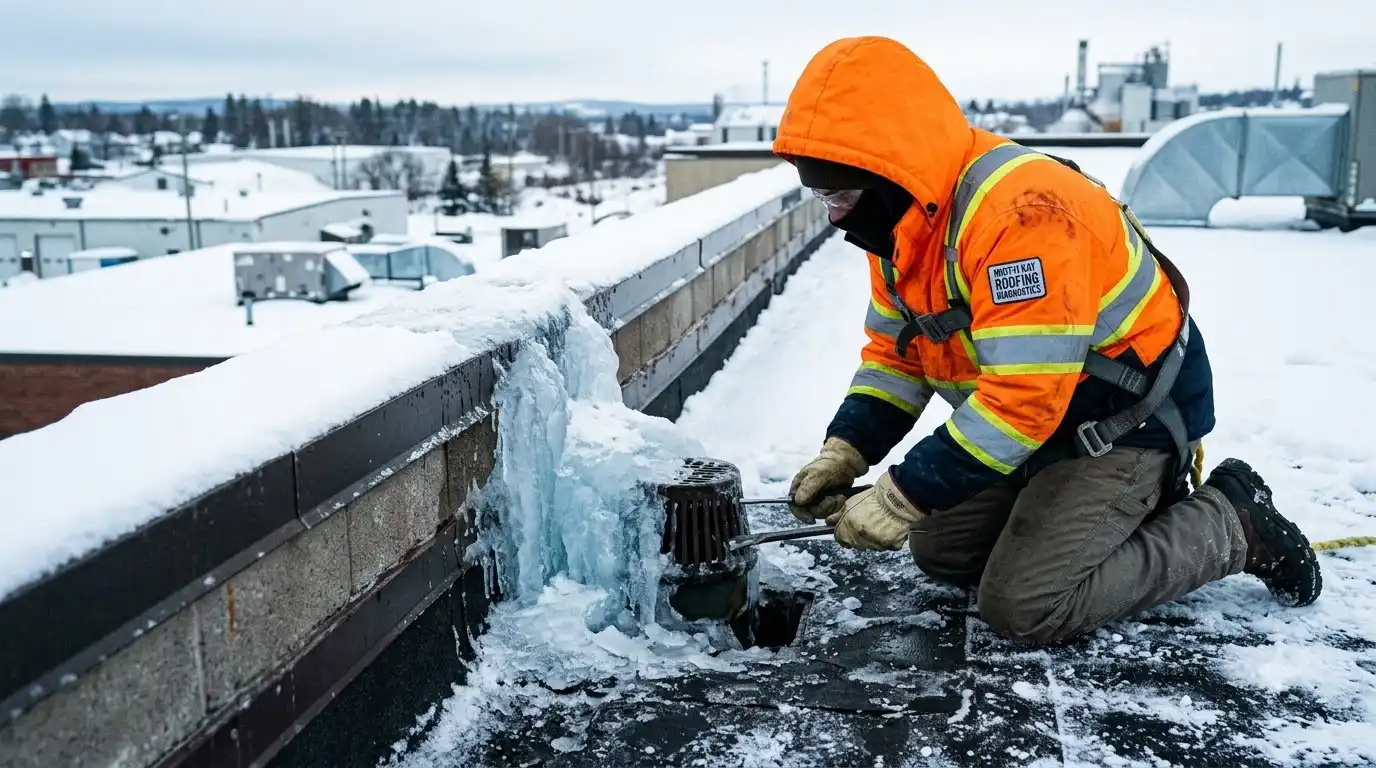
In North Bay, the season a leak appears in is itself a diagnostic clue. A leak that only occurs during a mid-winter thaw points toward drain connections, parapet edges or curb details that stayed wet under snow for weeks before failing. A spring-melt leak may involve a low area that held standing water as the roof thawed from edges inward. A summer storm leak will behave differently from either, often pointing toward seams, field defects or equipment flashings. Recording the exact interior location, weather conditions and timing before going to the roof narrows the search considerably.
Airport Industrial Business Park
Map drainage basins, airside perimeter conditions and equipment zones so hangar and industrial roof findings stay tied to the correct part of a large, complex footprint.
Gateway Industrial older stock
Identify previous roof generations and repair layers on mature Lakeshore Drive and Ferris Drive buildings before selecting compatible materials for the next repair.
Winter evidence inspection
Photograph drain behaviour, wall transitions and low areas in thaw conditions while seasonal evidence is still present rather than relying on summer-dry observations to explain a winter leak.
Roof Systems for North Bay Buildings
In North Bay, winter dominates roof planning, so drainage, snow behaviour and cold-weather durability drive the assembly choice. Membrane chemistry matters less than getting the full assembly right: deck condition, insulation type and thickness, vapour control, attachment method, perimeter design, drain placement and equipment curb detailing all need to work together. An assembly optimized for a Southern Ontario distribution centre may transfer to a North Bay industrial building reasonably well; an assembly optimized for a downtown commercial building with an old parapet wall may not.
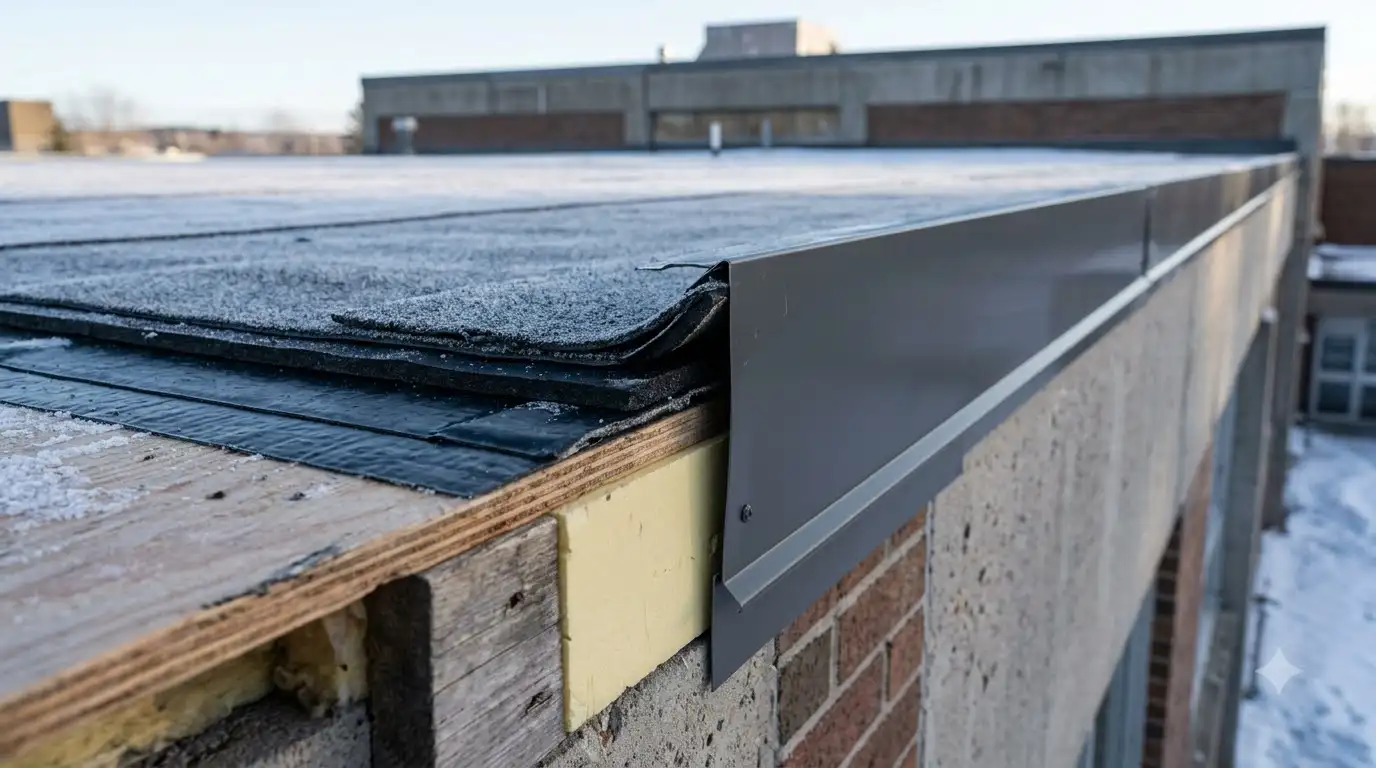
Replacement is the right time to rebuild chronic drain sumps that have deformed or settled, remove abandoned penetrations and simplify a curb layout that has grown complicated through several generations of tenants or equipment changes. Protect daily access routes to HVAC and other frequently serviced equipment through four-season conditions. Where any new rooftop equipment is being considered, review structural requirements and confirm that drainage and maintenance access remain workable in winter, so nothing is installed in a position that will be difficult to reach safely once snow accumulates.
Commercial Roofing SystemsPlanning Roofing Work Around Daily Operations
Planning Roof Work Through Weather Windows
Northern roofing projects need honest scheduling. Daily production can be limited by weather, substrate temperature, material handling in cold conditions and securing work areas against rapid weather changes. Identify material storage, disposal, hoisting, site access and interior protection requirements before any membrane is opened. Industrial and institutional properties in North Bay may have day-to-day operational demands that matter more to the building manager than the roofer's preferred work area sequence. Build recovery days into the schedule rather than assuming every planned day delivers ideal installation conditions.
Seasonal Roof Maintenance Planning
A fall review should accomplish two things: clear drainage and address any manageable deficiency before it freezes in place. A spring review should document what changed, new ponding patterns, frost-heaved drains, membrane or accessory movement, and the condition of any emergency repairs carried through winter. Add storm-specific checks after significant events and after any rooftop trade work. Photograph the same locations from consistent viewpoints each visit so a property manager can see whether a slow drain is getting worse year over year, not just whether it is blocked today.
North Bay owners can log winter ice events and where meltwater re-enters the building.
Roof maintenance planningServing North Bay Industrial Areas
North Bay owners can call on us for commercial and institutional properties around the Airport Industrial Business Park, Gateway Industrial Park, Seymour Street commercial areas, Lakeshore Drive and Ferris Drive, and Downtown North Bay. Wherever the property sits in North Bay, the next step starts with the roof condition and how the building needs to keep operating.
- Employment & commercial districts
- Airport Industrial Business Park · Gateway Industrial Park · Lakeshore Drive and Ferris Drive industrial area
- Neighbourhoods & nearby communities
- Downtown North Bay · Seymour Street commercial area
North Bay Roofing Questions
Why does my North Bay industrial building leak in January but stay dry all summer?
Thaw events in January can hold water against roof details for far longer than a summer rainstorm. Snow cover acts as a reservoir, and when it melts, the resulting water can press against drain connections, parapet edges and curb flashings for days instead of hours. A detail that can shed a two-hour rain event without failing may not survive seventy-two hours of slow meltwater exposure. Recording the exact timing and interior location of a January leak and then inspecting the corresponding drain basin during a thaw period will tell you more than a summer inspection ever could.
How should a North Bay property owner prepare the roof for winter?
Clear primary drains and overflow scuppers, inspect flashings around curbs and previous repair areas, secure any loose rooftop accessories and address any known deficiencies that should not freeze in place. Update the roof plan and emergency-access notes for facility staff. The goal is to enter winter with documented conditions rather than carrying unresolved problems into a season when safe roof access is limited and repair options narrow considerably.
Does heavy snow on a North Bay flat roof mean the building needs structural reinforcement?
Not by itself, and a visual roofing inspection should not be used to answer that question. A roofing technician can document visible membrane conditions, drainage and snow distribution, but structural snow capacity is a building-specific engineering question. If there are signs of deflection, cracking, unusual movement or other structural concerns, involve a qualified structural engineer. Do not treat a flat-roof snow inspection as a substitute for a structural assessment.
Can a North Bay hangar or aviation facility roof be replaced while aircraft operations continue?
It can be, but aviation facilities require additional planning beyond what a standard commercial reroof involves. Airside safety zones, FOD (foreign object debris) control, aircraft movement coordination, crane and hoisting restrictions and potential Transport Canada considerations all need to be worked out before mobilization. Define the daily work area, debris containment method, daily watertight closure and aircraft protection protocol in the project scope so operational staff know what to expect each day before work starts.
When should a North Bay flat roof move from repair to replacement?
Evaluate the pattern, not just the count. Repairs to one specific vulnerable detail, a drain connection, a problematic curb, can remain cost-effective even over several seasons. But when unrelated failures are appearing in different basins, when wet insulation is spreading beyond isolated defects, or when recurring emergency calls across an entire winter cost more than planned replacement would, the economics have shifted. Map repairs on a roof plan and review them against drainage and membrane condition. The pattern usually makes the case more clearly than any single incident.
What winter issues should North Bay owners watch on a flat roof?
Watch for ice damming at drains and edges, drifted snow against walls and rooftop units, and heavy meltwater ponding. Keep drains clear and avoid sharp tools during snow removal. Report new stains early, because winter leaks are easier to trace while the pattern is fresh.
Also Serving Sudbury, Parry Sound and Sault Ste. Marie
Plan the North Bay Roof Around Winter Access and Roof Condition
Airport-area and four-season commercial roofs in North Bay face a hard winter. Tell us the address and the problem, and we will help you choose a first step.