
St. Catharines Commercial Solar
St. Catharines commercial solar planning is closely tied to manufacturing and QEW corridor buildings where many roofs are already well into their service lives. The first question is often not whether modules fit, but whether the membrane and details beneath them are ready for the same project horizon.

Walker, Bunting and QEW Industrial Roofs Often Need Lifecycle Decisions
Older manufacturing and warehouse properties can contain roof sections from several eras. A roof map should identify those differences so the owner can decide whether repair, targeted replacement or broader renewal belongs ahead of the solar layout.
For a Walker, Bunting or QEW-area industrial property, associate each known repair with the roof section it affected. Ask the reviewer to identify any area where the available history is insufficient to support a sequencing decision. The owner can then commission a focused investigation before a solar proposal treats an uncertain section as part of the ready installation area.

Manufacturing Penetrations and Exhaust Can Break Up the Usable Field
Process exhausts, vents, curbs and service equipment need room for maintenance and can influence module placement. Their clearances should be treated as design inputs, not as leftover problems after the array is maximized.
Lake-Influenced Weather Keeps Drainage and Edges Important
Wind, winter precipitation and freeze-thaw conditions make roof edges, drains and overflows important inspection points. A solar layout should preserve access to those areas so seasonal maintenance remains straightforward.
Ask the St. Catharines maintenance team to identify how roof edges and drainage points are inspected now. Compare those routes with the proposed array and record any location that would become difficult to observe or service. The design review can then address a specific maintenance conflict without relying on a generic setback or an unverified assumption about exposure.
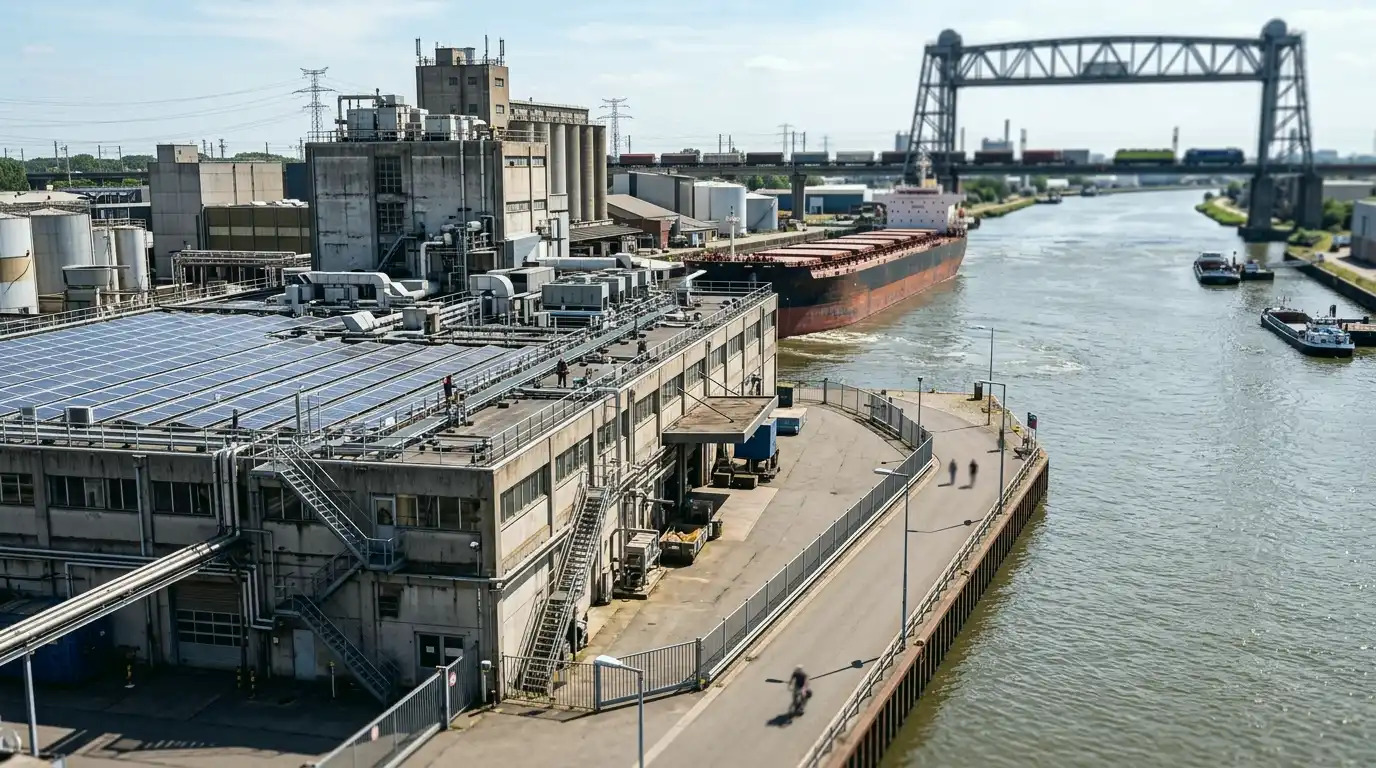
A Later-Life Roof Can Still Support the Project With the Right Sequence
A roof nearing replacement does not mean the property is a poor solar candidate. It may mean the roofing work should happen first so the owner starts the solar project on a better long-term platform.
Industrial Operations Shape How Work Reaches the Roof
Active manufacturing and distribution properties can limit staging, crane positions or work windows. Feasibility should consider those constraints early so installation planning does not interfere with core site operations.
For an occupied St. Catharines manufacturing property, agree which site contact controls material movements and which operating areas cannot be blocked. Show those restrictions on the construction brief alongside proposed hoisting and roof access. If the plan depends on a shutdown or shared loading space, identify that approval as an outstanding item before committing to the work dates.
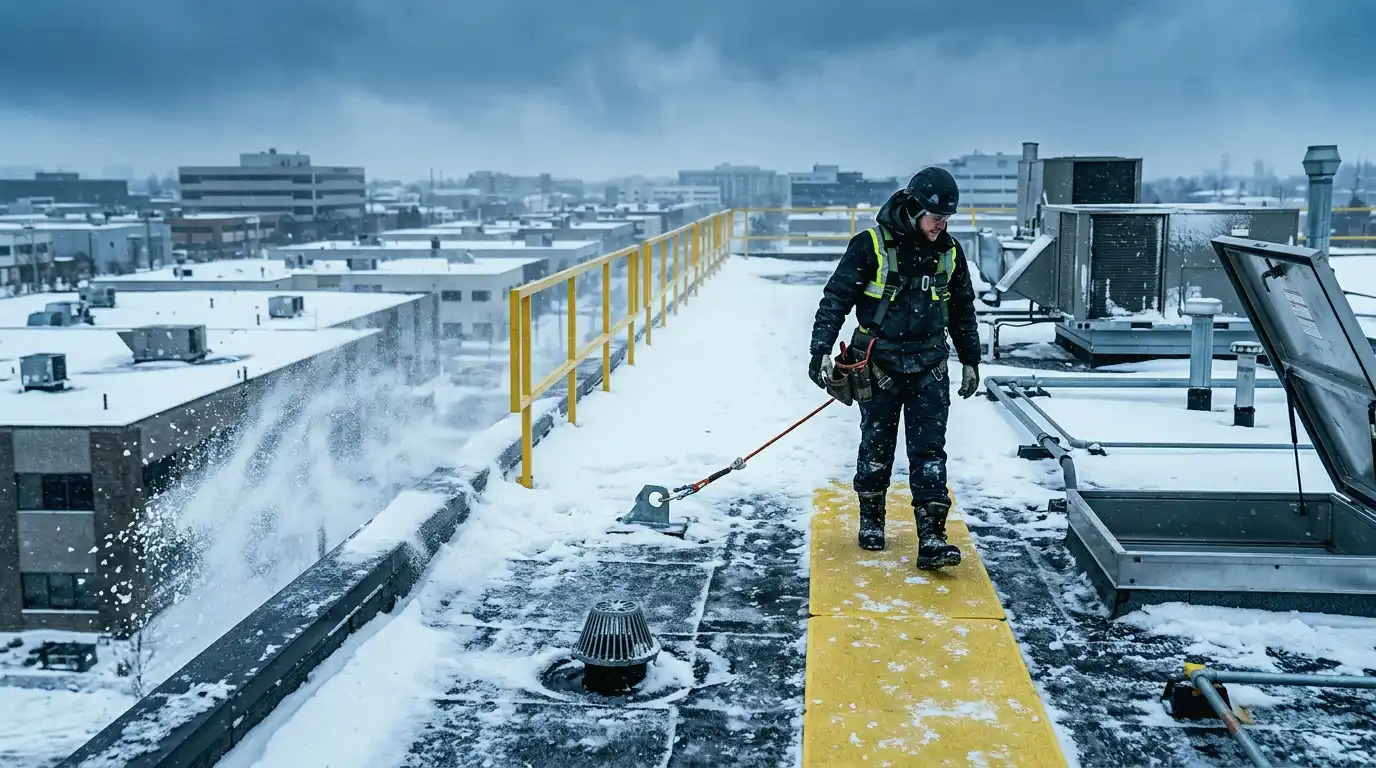
Roof Review Comes Before Detailed Feasibility When Condition Is Unclear
If records are incomplete or leak history is recurring, begin with roof readiness. Once the membrane condition, drainage and major service zones are understood, the solar feasibility conversation can move forward on firmer ground.
Planning references: Ontario Energy Board net-metering guidance
Putting a Number on Remaining Roof Life
Ask a qualified inspector to estimate remaining life and explain the basis. That number is the anchor for the sequencing decision.
If the remaining life is shorter than the intended array life, price reroofing into the project so the two assets are planned together.
Before Pricing Solar on a St. Catharines Industrial Roof
On a building with several manufacturing roof sections, ask for a drawing that separates each membrane and drainage area. A single installation date in a property file may describe only the most recent work, not every roof section that could support modules. The solar concept should identify which sections are suitable now, which need investigation and which should be excluded until the roof record is clearer.
Have the project team document equipment exhaust, safe service paths, roof edges and drainage access before estimating usable array area. If the electrical connection or roof condition is not yet confirmed, keep those items as open decisions in the proposal rather than assumptions presented as approvals.
Read more: Commercial solar roof readiness Commercial solar feasibility
St. Catharines Solar Planning on Later-Life Manufacturing Roofs
This page reflects St. Catharines' manufacturing and QEW-corridor roofs, many of which are well into their service life.
St. Catharines Questions About Remaining Roof Life, Exhaust and Drainage
Later-life roofs and active manufacturing equipment make remaining service life the key sequencing question in St. Catharines.
Do older St. Catharines industrial roofs rule out solar?
No. They may require repair or replacement first, depending on current condition and remaining life. A condition report that estimates remaining life shows whether the roof can carry an array or should be renewed first.
Why do exhausts matter on manufacturing roofs?
Exhausts can require service space and project-specific clearances that reduce or reshape usable solar area. Mapping them early avoids redesign.
Can QEW corridor buildings stay operational during work?
Planning can coordinate access and staging around operations, but the actual site constraints need review before installation. Share schedules and restricted areas with bidders early.
What is the best first step if the roof leaks?
Resolve the roof condition and leak source before detailed solar layout, so the project is not built over an unresolved problem. A repair or readiness review can say whether the fix is local or points to wider deterioration.
Should a St. Catharines owner reroof before installing solar?
If the roof has limited remaining life, reroofing first often avoids paying to remove and reinstall the array. An independent condition report can estimate remaining life and compare options.
What costs are easy to miss on a later-life St. Catharines industrial roof?
Wet insulation, deck repairs, flashing replacement and drainage corrections are frequent surprises. A survey before pricing reduces them.
Put a Defensible Number on Roof Life Before Solar
Bring inspection records, repair history, moisture findings and process-equipment details so the owner can decide whether reroofing belongs first.
St. Catharines Lifecycle and Roof-Condition Records to Gather
- Walker, Bunting and QEW Industrial Roofs Often Need Lifecycle DecisionsOlder manufacturing and warehouse properties can contain roof sections from several eras. A roof map should identify those differences so the owner…
- Manufacturing Penetrations and Exhaust Can Break Up the Usable FieldProcess exhausts, vents, curbs and service equipment need room for maintenance and can influence module placement. Their clearances should be treated as…
- Lake-Influenced Weather Keeps Drainage and Edges ImportantWind, winter precipitation and freeze-thaw conditions make roof edges, drains and overflows important inspection points. A solar layout should preserve access to…