
Hamilton Commercial Solar
Hamilton commercial solar is not one roof market. Harbour-area industrial properties can have heat, particulate, exhaust and process equipment, while newer Red Hill and airport employment lands can present much cleaner roof fields. The assessment has to start with the environment the membrane is actually working in.
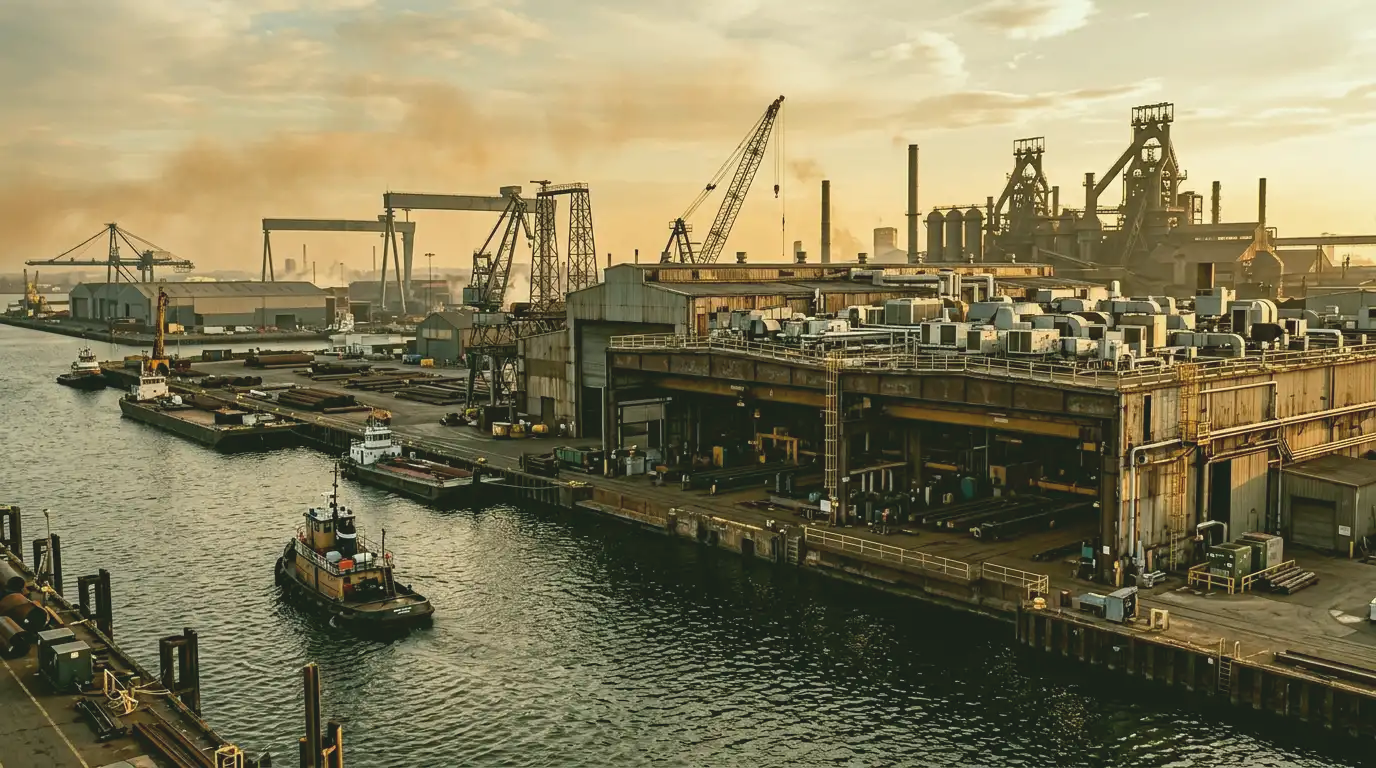
Harbour and Bayfront Roofs Need an Industrial-Environment Review
Heavy industrial buildings can expose roofs to process exhaust, particulates and frequent equipment service. Those conditions may affect membrane wear, rooftop cleanliness and where technicians need reliable access. A solar plan should be coordinated around that service map instead of treating the roof as passive space.
Ask the Hamilton plant team for locations where roof cleaning or equipment service is already unusually frequent. Compare that operational record with the condition inspection and let the appropriate specialists determine what it means for the proposed system. This separates an observed exposure issue from an assumed one and gives the owner a specific question to resolve before equipment selection.
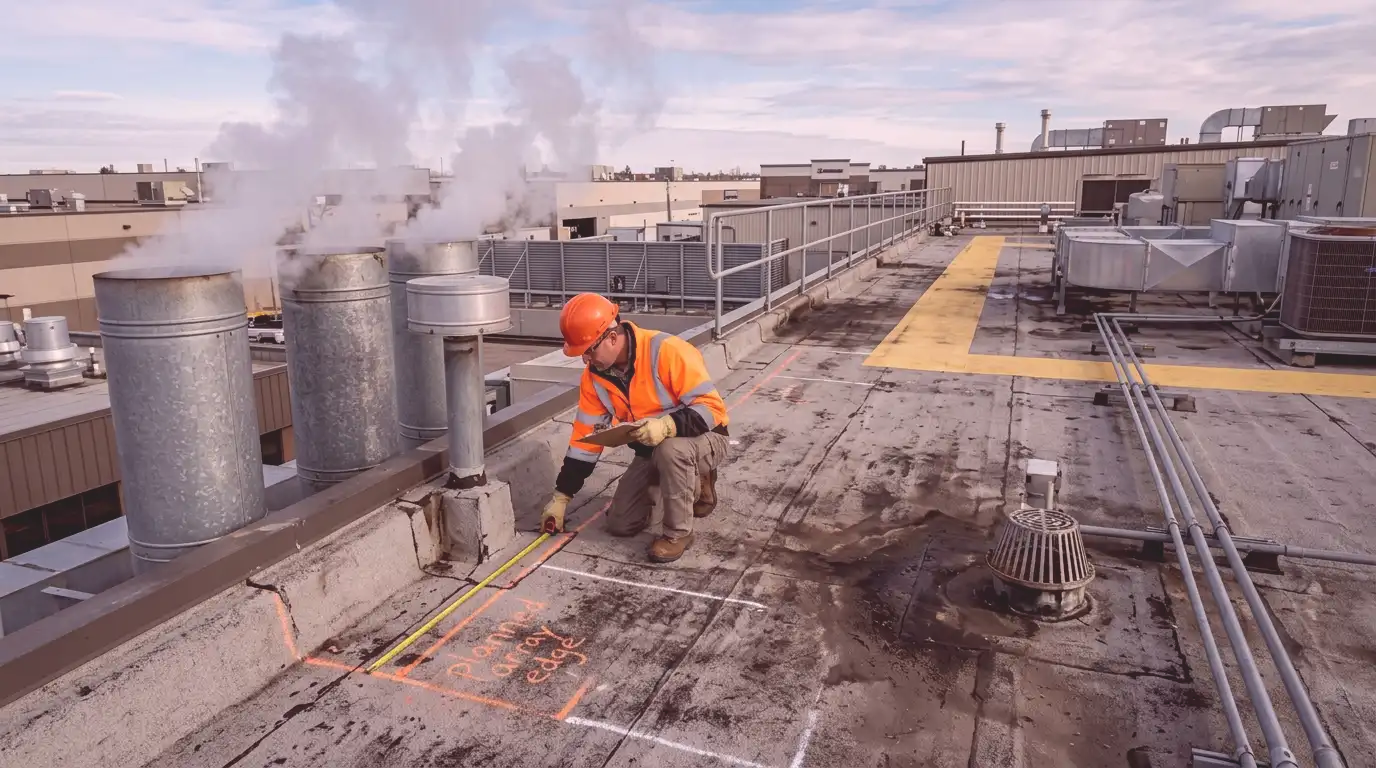
Newer Red Hill Business-Park Roofs Have Different Risks
A newer logistics or commercial roof may offer large open fields, but tenant work and rooftop service can still introduce damage or undocumented penetrations. A pre-solar baseline protects the owner by recording the roof before construction traffic begins.
Membrane Condition Has to Be Compatible With the Solar Timeline
Hamilton buildings with recurring repairs or later-life membranes need a decision about remaining roof life before solar. If major roofing work is likely soon, completing it first can prevent future module removal.
Where the roof remains sound, targeted repairs and access improvements may be enough to support the next project stage.
Request a written explanation of the condition finding behind the Hamilton roof-life recommendation. Where investigation is incomplete, distinguish a confirmed repair scope from further assessment still needed. The owner can then compare proceeding, preparing selected areas or renewing the roof first using the same documented condition record, rather than treating a preliminary age estimate as a final decision.
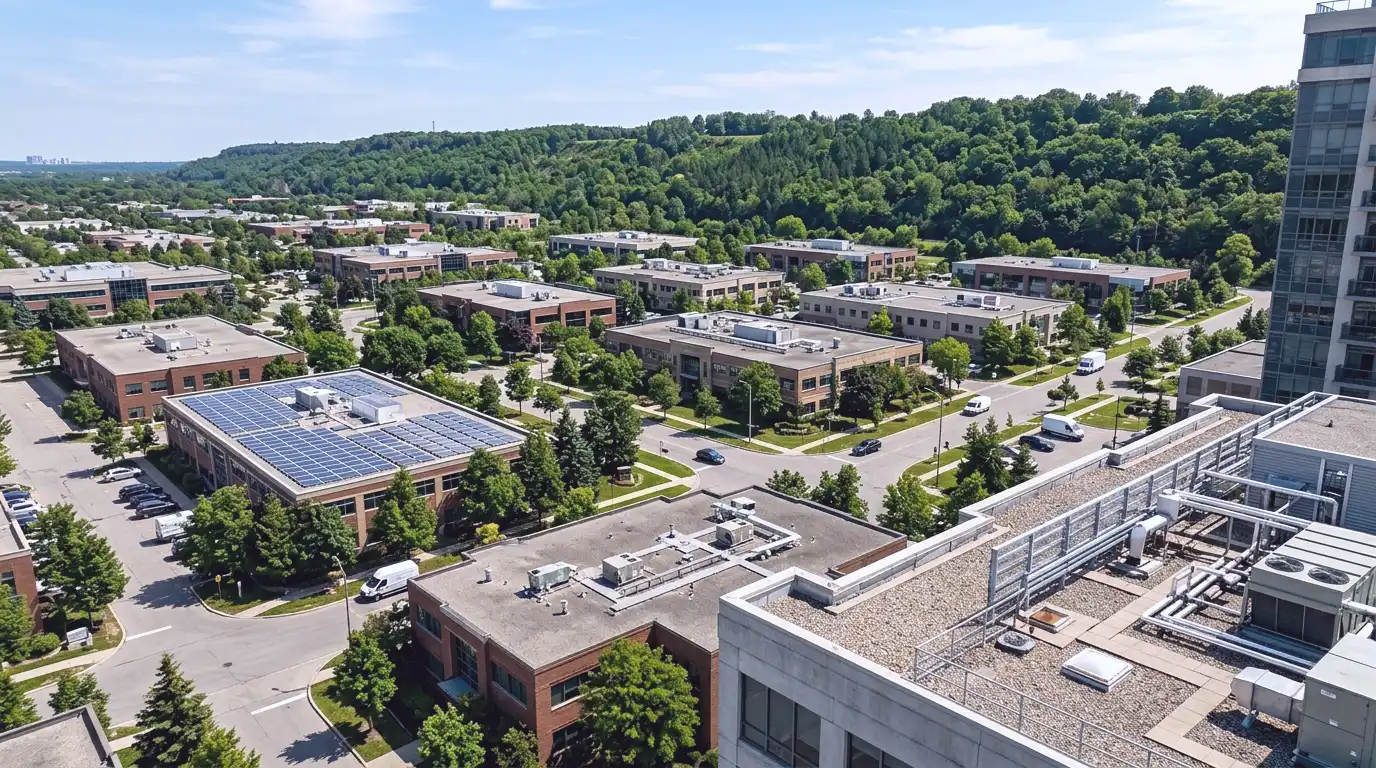
Process Equipment Can Control the Layout
Large units, exhausts, stacks and service corridors can divide an industrial roof into smaller usable zones. The project should preserve technician access and keep heat or discharge considerations visible for the design team.
Every Hamilton Site Has Different Staging Constraints
Harbour properties, dense urban commercial sites and newer industrial parks do not share the same crane access, material staging or neighbour conditions. Feasibility should identify how work would actually reach the roof and how the building can remain operational during installation.
For a Hamilton site with limited space beside the building, ask the installation coordinator to show the proposed delivery route and lift location together. Identify any dependency on shared access, neighbouring land or operating restrictions, and confirm the relevant arrangements before scheduling. A roof layout alone cannot show whether crews and equipment can reach that roof as planned.
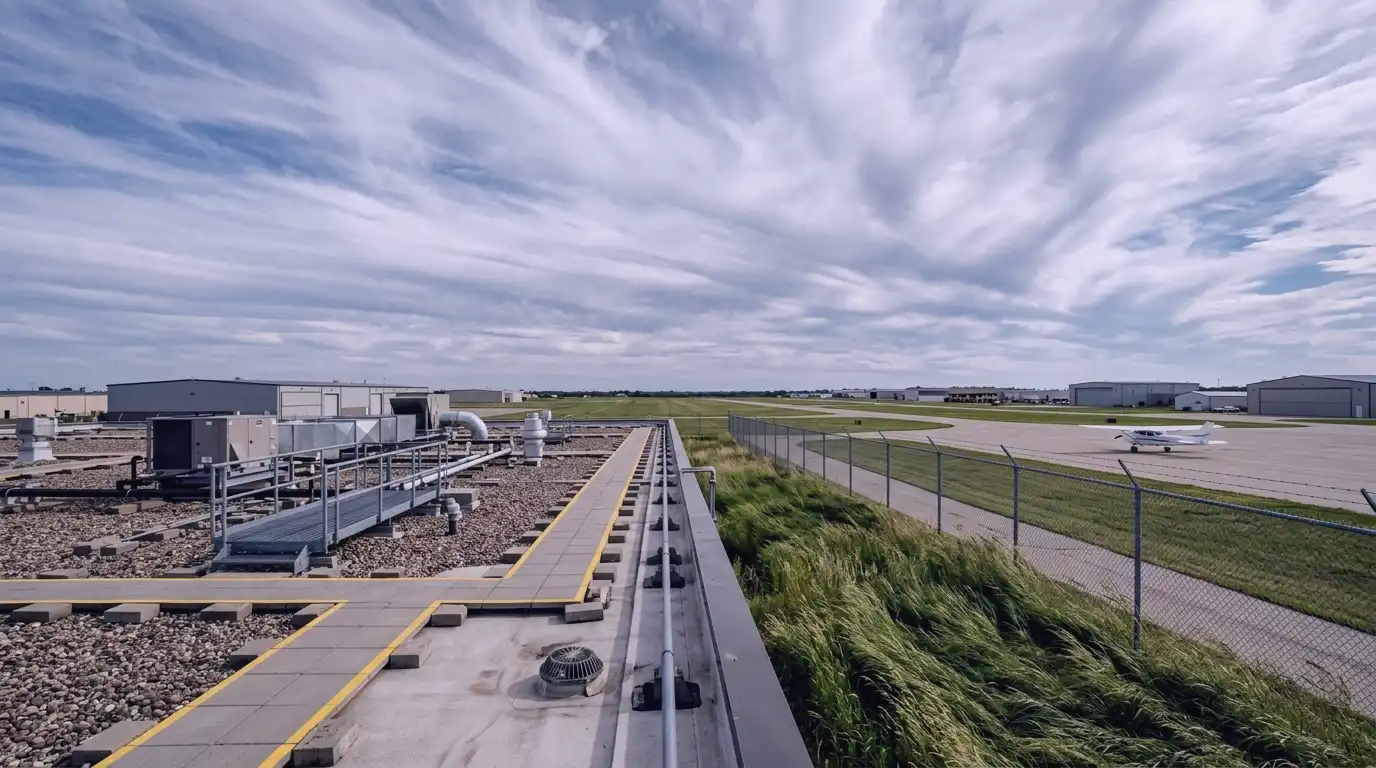
The Hamilton Assessment Should Explain What Is Known and What Needs Engineering
Roof condition, drainage and access can be documented during the building review. Structural capacity and electrical requirements must be confirmed by the appropriate professionals. Keeping those responsibilities clear prevents early assumptions from being mistaken for final design answers.
Putting Exposure Into the Procurement Conversation
Ask every Hamilton bidder to state what exposure assumptions they made and what materials they propose. Exposure that is ignored in the proposal usually reappears as a maintenance cost.
A short exposure note from plant operations, covering known emissions and heat sources, gives bidders a common starting point.
Planning references: Ontario Energy Board net-metering guidance
Separate Roof Exposure and Lifecycle Questions in Hamilton
Hamilton industrial properties can present very different roof exposures and equipment conditions. A harbour-area process building and a newer business-park facility should not share a default membrane or solar layout recommendation. Ask for a condition record that identifies edge details, corrosion-sensitive equipment, rooftop exhaust and maintenance zones on the actual property.
The solar concept should reserve drainage and service access, then compare the roof renewal timetable with the intended array life. If the existing assembly has multiple repairs or uncertain moisture conditions, define what investigation is needed before the property owner signs an installation scope.
Read more: Commercial solar roof readiness Commercial solar feasibility
Hamilton Solar Planning Across Harbour Exposure and Mixed-Age Industrial Roofs
This page reflects Hamilton's harbour-area industrial roofs and its business-park and airport-area buildings, where exposure and operations vary widely.
Hamilton Questions About Exposure, Roof Layers and Industrial Operations
Hamilton projects need to account for emissions, heat, wind exposure and roof sections that may not share the same age or assembly.
Does industrial exposure rule out rooftop solar in Hamilton?
No. It means the actual roof environment, equipment and maintenance needs should be understood before layout and material assumptions are finalized. Heat, particulate and exhaust conditions differ across the city, so site evidence matters more than a district label.
Should older Hamilton roofs be replaced first?
Only when condition and remaining-life evidence support that decision. The roof should be assessed rather than replaced on age alone, because a sound older roof may carry an array while a younger damaged one may not.
Can the layout work around process equipment?
It can be evaluated around equipment and service requirements, with project-specific clearances established by the appropriate design team. Mapping equipment and service paths early prevents layout changes later.
Do Red Hill business-park roofs need the same review as harbour roofs?
They need the same roof-first discipline, but the actual risks and layout constraints can be very different. Harbour-area roofs raise exposure questions, while business-park roofs often raise drainage, access and tenant questions.
How does industrial exposure affect solar pricing on a Hamilton harbour-area roof?
Exposure may call for compatible materials, corrosion-resistant hardware and more frequent inspection, all of which affect cost. Ask the bidder what exposure assumptions were used and how the roof will be monitored.
Who should be involved in procurement for a Hamilton industrial solar project?
Include the roofing contractor, an electrical designer, a structural engineer and the plant's operations lead. Bringing them together early prevents surprises and helps sequence work around production.
Put Industrial Exposure Into the Hamilton Procurement File
Bring plant-process notes, roof history, edge conditions and shutdown limits so bidders state their exposure assumptions.
Hamilton Industrial Roof and Process Details to Share
- Harbour and Bayfront Roofs Need an Industrial-Environment ReviewHeavy industrial buildings can expose roofs to process exhaust, particulates and frequent equipment service. Those conditions may affect membrane wear, rooftop cleanliness…
- Newer Red Hill Business-Park Roofs Have Different RisksA newer logistics or commercial roof may offer large open fields, but tenant work and rooftop service can still introduce damage or…
- Membrane Condition Has to Be Compatible With the Solar TimelineHamilton buildings with recurring repairs or later-life membranes need a decision about remaining roof life before solar. If major roofing work is…