
Brockville Commercial Roofing: Protection and Upkeep
Brockville sits on the St. Lawrence River midway between Toronto and Montreal, and its commercial profile reflects that position. The John G. Broome Business Park and Western Industrial Park host a diverse manufacturing base, food processing, pharmaceuticals, cables and wires, micro-electronic equipment, packaging materials, and power tools, that extends well beyond what a city of this size might suggest.
Industrial Park and Downtown Roof Conditions
The buildings in Brockville's John G. Broome Business Park are modern industrial structures, food processing facilities, pharmaceutical plants, packaging operations, with rooftop equipment densities that reflect their operational complexity. A cookie and bar production facility like Leclerc generates significant heat and steam load from baking operations, which translates upward into the roofing assembly. Pharmaceutical manufacturing buildings have cleanroom or controlled-environment sections where the internal environment is tightly managed, and the roof's vapour management and insulation performance matter as much to production quality as to building protection. Managing rooftop equipment access, post-service inspections, and the specific membrane chemistry appropriate for chemical-vapour-adjacent environments requires more thought than a standard industrial inspection.
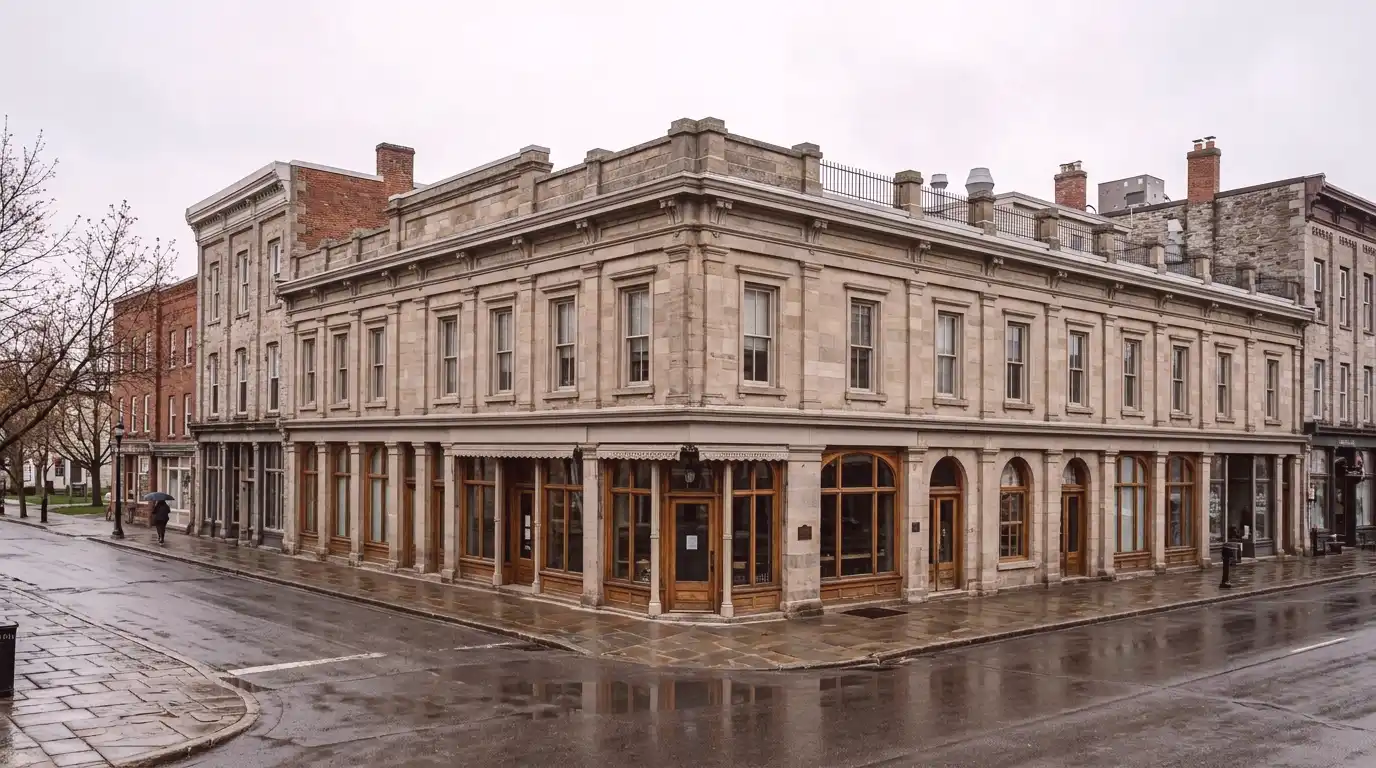
Downtown Brockville's heritage commercial stock on King Street and along the waterfront presents a different set of considerations. Many of these buildings were constructed in the Victorian and Edwardian eras and have been re-roofed in sections over decades. Their parapet and cornice details were not designed for contemporary roofing systems, and adapting a modern membrane to an older building's profile requires careful flashing design rather than standard detailing. Tourism-adjacent commercial on the waterfront, near the Aquatarium at Tall Ships Landing and the Brockville Arts Centre, adds a seasonal dimension, since disruption during peak summer visitation months has more impact on revenue than the same disruption in November would.
Local reference: Leeds Grenville Economic Development, Brockville industrial parks and investment profile
Brockville Commercial Roofing Services
For low-slope roof construction and membrane planning, see our commercial flat roofing guide.
Inspecting Brockville Commercial Roofs
Brockville's St. Lawrence River setting makes wind direction and weather exposure useful diagnostic information, particularly on buildings with open perimeter exposure near the river. Instead of assuming river proximity automatically shortens roof life, track which weather events trigger a leak and inspect the corresponding parapet, coping, wall transition, drain or equipment zone. Cold winters, spring thaw and wind-driven rain all test different details, so a condition record tied to actual events is more useful than a general climate assumption.
On Food and Pharma Buildings, Assess from the Inside Out
At Brockville food processing and pharmaceutical facilities, interior conditions drive roofing performance as much as exterior weather does. Steam, heat, cleaning vapours, and controlled-environment pressurization can push moisture upward into the insulation layer when the vapour retarder is inadequate or compromised. An inspection that begins with the interior environment, reviewing HVAC layout, exhaust discharge points, and any signs of condensation at the deck or insulation level, provides context that a surface-only inspection cannot.
Heritage Downtown Buildings Need Flashing Compatibility Assessment
Before defining a repair or re-roofing scope on a heritage King Street commercial building, assess whether the parapet copings, cornice details, and existing drain configurations can accept the proposed membrane system without modification. Older buildings frequently have parapet heights, coping profiles, and drain placements that were designed around materials and practices no longer in common use. A re-roofing that does not resolve those compatibility issues at the outset tends to produce callbacks and warranty disputes that reflect the mismatch rather than a failure in the membrane itself.
Post-Winter Edge Inspection is Essential on River-Exposed Roofs
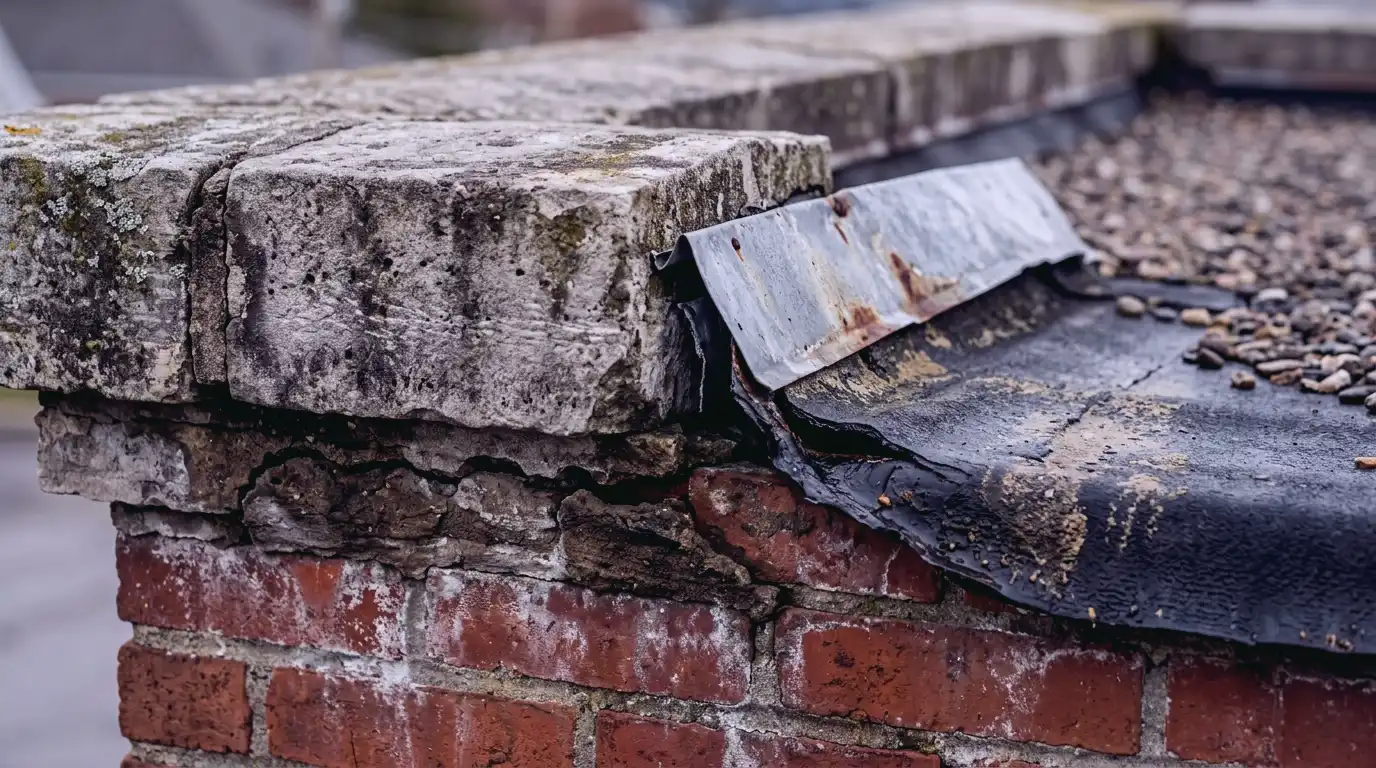
For Brockville commercial roofs with western or southern exposure toward the St. Lawrence River, a post-winter edge inspection should prioritize perimeter flashings and parapet cap conditions. River-corridor winds drive precipitation horizontally under marginal flashings that would not leak in a standard rain event. Any cap or edge metal that is lifted, unseated, or has visible separations from the wall surface is an active water entry point that worsens with each freeze-thaw cycle.
Roof Systems for Brockville Buildings
For Brockville food-processing, pharmaceutical and packaging buildings, roof-system selection should follow the actual operating environment. Where grease, oils, cleaning chemicals, solvents or other process exhausts are confirmed at the roof surface, the membrane manufacturer should be consulted for chemical compatibility and the affected equipment zones detailed accordingly. PVC can be appropriate in some chemically exposed applications, while TPO, EPDM, SBS and other systems may be suitable elsewhere on the same site depending on the verified exposure, substrate and warranty requirements.
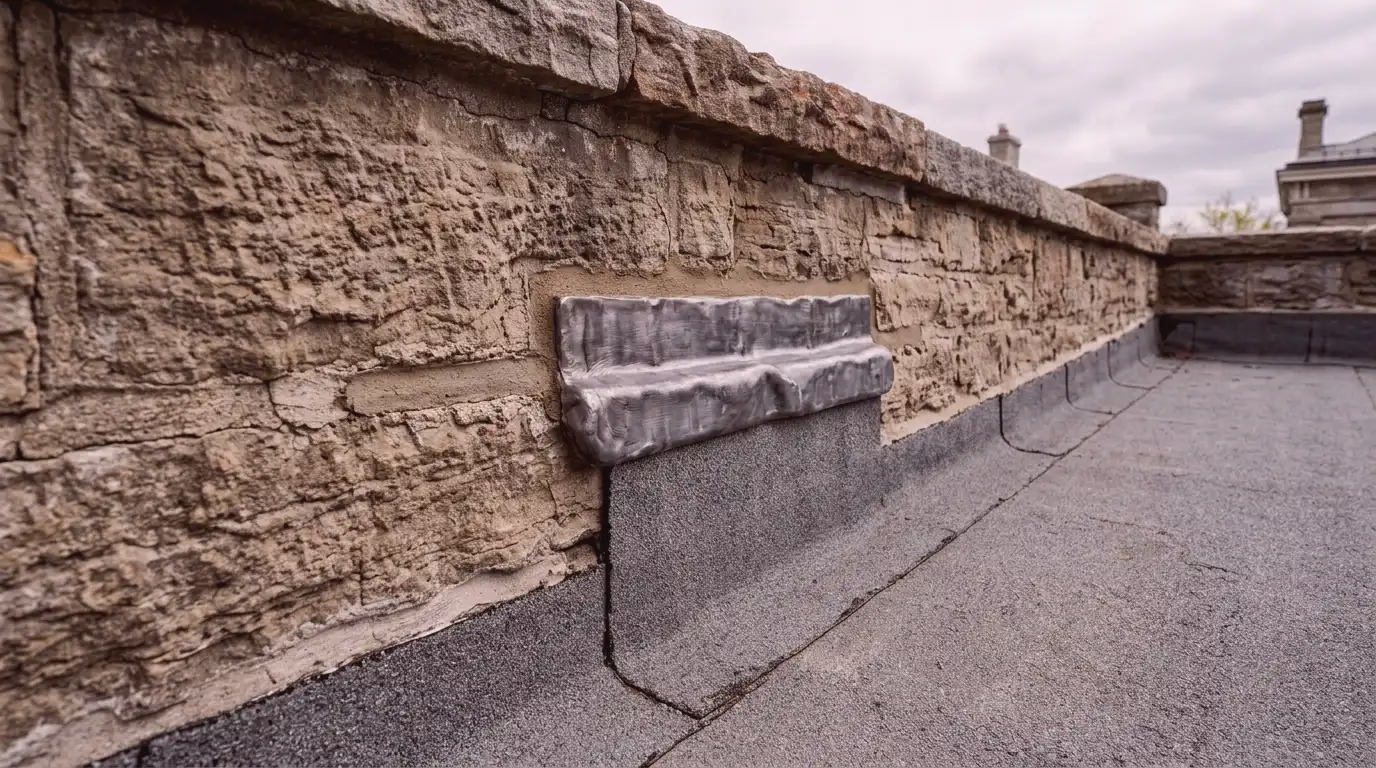
For Brockville's older downtown commercial buildings, modified bitumen, built-up and single-ply systems can all be viable depending on the deck, parapet geometry, drainage and existing assembly. The priority is not to force a particular membrane onto a heritage building, but to design the wall transitions, coping, drains and irregular roof sections so the new system works with the actual building. Service-life expectations should come from the selected manufacturer, installation quality, maintenance and site conditions rather than a fixed lifespan promise.
Commercial Roofing SystemsPlanning Roofing Work Around Daily Operations
Roof Work Around Active Industrial Properties
At Brockville food processing facilities, roofing work adjacent to or above production areas requires coordination with the facility's food safety team. Adhesive off-gassing, dust from insulation cutting, and membrane material odours can all be incompatible with active food production below. Scheduling roofing work sections away from production areas, using low-VOC adhesive formulations where available, and confirming ventilation protocols before work begins are not optional steps at a regulated food facility. For downtown heritage properties on King Street or the waterfront, planning work outside peak summer tourist months, and coordinating with adjacent businesses and the city regarding sidewalk access and street-level overhead protection, prevents the conflicts that make smaller projects disproportionately complicated to execute.
Planning Brockville Roof Maintenance
The St. Lawrence River corridor's shoulder-season weather, persistent humidity in late fall and freeze-thaw cycling through winter, makes Brockville's post-snowmelt spring inspection particularly important. By April, the winter's full effect on seams, flashings, and drains is visible in ways that mid-winter inspections cannot reveal. For industrial park manufacturing buildings with year-round rooftop equipment access, a post-service check after HVAC, refrigeration, and mechanical maintenance visits closes the penetration vulnerability window that trade traffic creates. Downtown heritage buildings benefit most from a fall inspection that confirms all flashing terminations and parapet caps are sealed before the river-corridor weather season arrives in earnest.
Brockville manufacturers can note production changes, roof penetrations and leak dates in one running log.
Roof maintenance planningRoofing Across Brockville Business Parks
Our Brockville coverage spans industrial, institutional and commercial properties across Brockville, including the John G. For each Brockville building, we base the recommendation on the roof that is there now rather than the neighbourhood name.
- Employment & commercial districts
- John G. Broome Business Park · Western Industrial Park · King Street commercial corridor · Brockville waterfront and tourism commercial · Railway Corridor Industrial Area
- Neighbourhoods & nearby communities
- Downtown Brockville · King Street heritage district · Tall Ships Landing waterfront · Centretown · Stewart Boulevard commercial area · North End
Brockville Roof Questions From Plant and Property Managers
How does Brockville's St. Lawrence River location affect flat roof performance differently than an inland Ontario city?
The river setting can make wind-driven weather and exposed perimeter conditions more important on some Brockville buildings, especially properties with open exposure toward the St. Lawrence. That does not mean every river-adjacent roof deteriorates faster than an inland roof. Use leak timing and wind direction as clues, then inspect the exposed coping, parapet, wall transitions and drains that match the event.
What should Biscuits Leclerc and other food manufacturers in the Broome Business Park know about roof membrane selection?
Food manufacturing can create rooftop exhaust, grease, heat, steam and cleaning-related exposures, but the actual chemistry and concentration vary by process. Document what each exhaust serves and where it discharges before choosing membrane or flashing materials. Where a confirmed exposure could affect the roof, use the membrane manufacturer's chemical-resistance guidance and approved details rather than assuming one membrane type is automatically required across the entire facility.
How does heritage designation affect a re-roofing project on a Brockville King Street commercial building?
Heritage designation in Brockville triggers review of any alteration that affects the building's character-defining elements. For roofing, this primarily concerns elements visible from the public realm, parapet copings, cornice flashings, rooftop additions, and mechanical equipment visible above the parapet line. The Brockville Heritage Advisory Committee reviews applications for heritage permit approvals, and the review process adds time to the project schedule. Beginning that conversation before finalizing the roofing scope, rather than after a contractor has been selected and a material committed to, avoids the situation where a compliant scope needs to be redesigned after the planning process has already started.
Can a food processing facility in Brockville keep production running during a roof replacement?
Usually, but with careful zone management and material selection. The critical issue is off-gassing from roofing adhesives and the odour from membrane materials, which can contaminate food products or trigger air quality concerns in a food-safe environment. Low-VOC adhesive systems are available and should be specified where production areas are directly below active roofing work. Production should be scheduled away from the zone being actively worked on each day, and the facility's food safety team should be involved in the work sequencing plan before mobilization. Some facilities require air monitoring during roof work in adjacent sections, that requirement should be identified and addressed in the project scope, not discovered during construction.
What inspection schedule is appropriate for a pharmaceutical manufacturing facility in the Broome Business Park?
At minimum, spring and fall formal inspections are appropriate, and for pharmaceutical facilities, those inspections should include an interior perspective. Review mechanical drawings to understand where HVAC equipment, exhaust discharge, and makeup air systems relate to the roof assembly, and compare those against observations from the rooftop. Add a brief post-service check after any mechanical or HVAC trade visits to the roof, documenting what was accessed and confirming no penetrations were opened and left unsealed. Keep the inspection records with the facility's maintenance documentation, if a regulatory inspection ever touches the building envelope or HVAC systems, a consistent roof maintenance record supports the broader compliance picture.
How should a Brockville manufacturer handle a roof leak over production equipment?
Protect people and equipment first, using tarps or diverters if safe. Then document the location and conditions, and arrange a temporary repair followed by a proper investigation. Ask the roofer to trace the source rather than patching the stain, and to report any wet insulation that could keep causing problems.
Describe the Brockville Building and the Roof Problem
Tell us the Brockville address and what you see. We will help you choose between repair, assessment and replacement planning.