
Kingston Commercial Roofing for Institutional Properties
Kingston's commercial and industrial roof inventory is more varied than a city of its size might suggest. The City's four serviced business parks, Cataraqui Estates, Clyde, Alcan and St. Lawrence, range from newer Class A industrial with controlled drainage and modern membranes to established properties with complex histories of additions and reroofing.
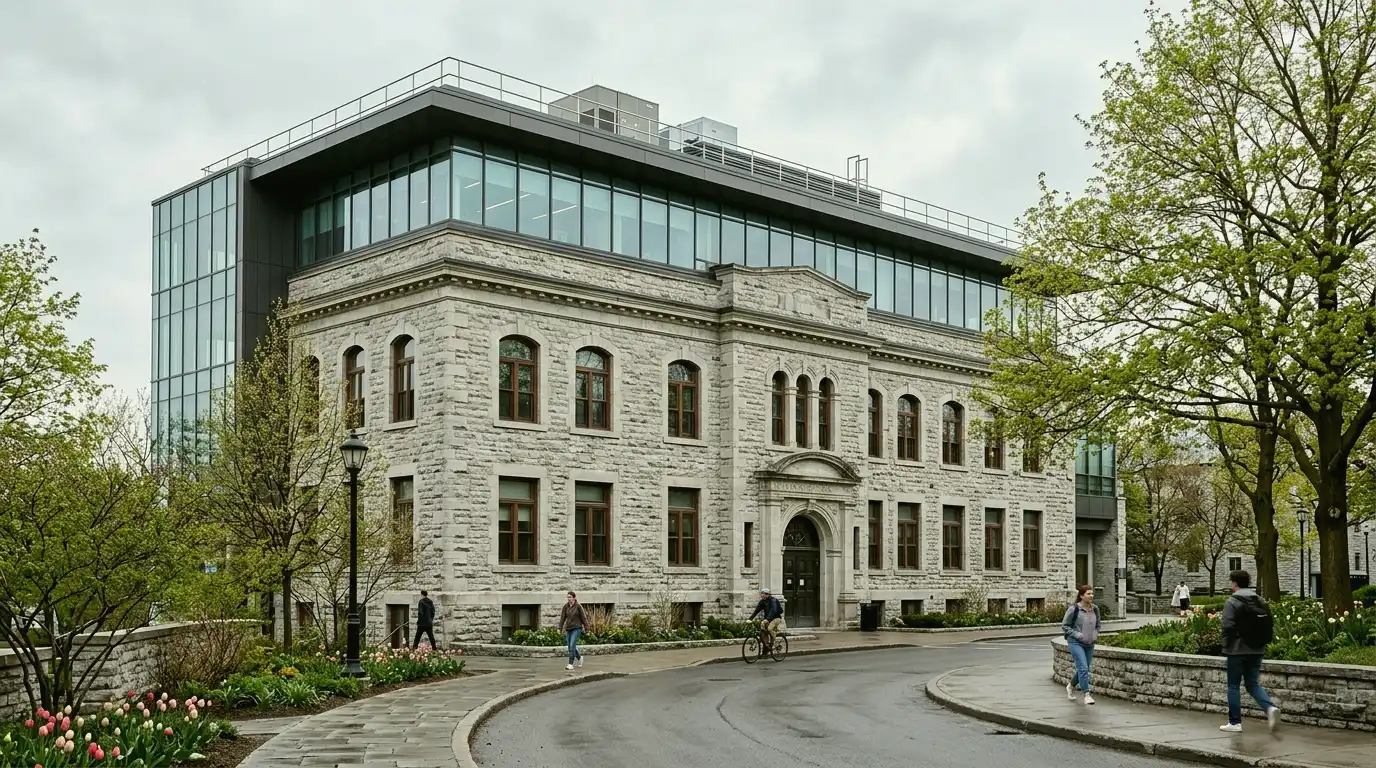
Kingston Roofs Across Different Building Ages
Cataraqui Estates, along the Gardiners Road corridor near Highway 401, has attracted newer large-format industrial and warehouse construction in recent years. Those buildings tend to have cleaner roof systems and better documentation, but they also have warranties with conditions that building owners may not be tracking carefully. The Clyde and St. Lawrence parks, in Kingston's east end, include older industrial buildings where the roof history is sometimes verbal rather than documented and where additions have been built onto original structures at different times with different roofing contractors.
Downtown Kingston and the Princess Street commercial corridor add a category that is common in older Ontario cities: commercial buildings with flat or near-flat roofs that have been modified repeatedly for different retail and service tenants, often without permits being pulled for rooftop work. These buildings can carry parapet conditions, blocked interior drains, and abandoned penetrations that have nothing to do with the current tenant. A thorough inspection on these properties traces the full drainage path and the full penetration inventory before recommending anything.
Local reference: City of Kingston industrial and business-park information
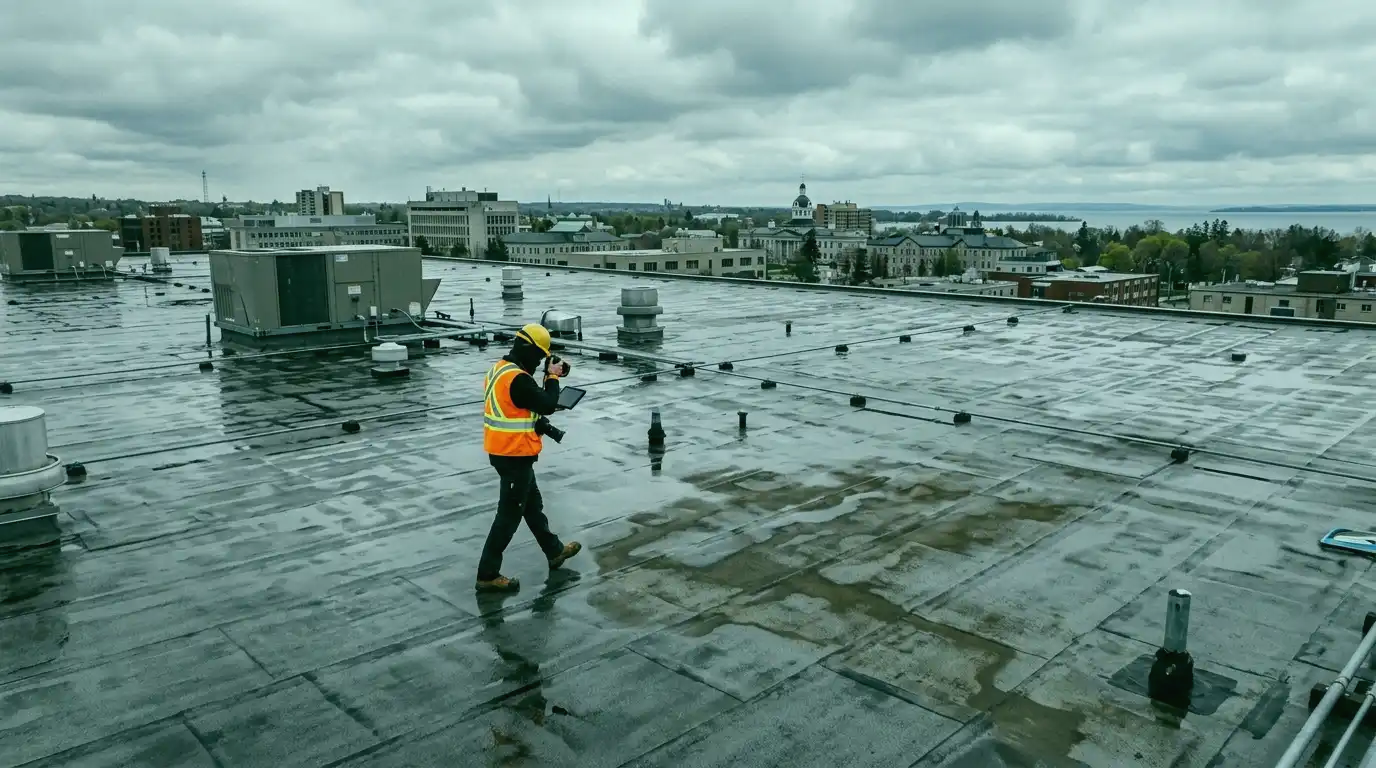
Kingston Commercial Roofing Services
For low-slope roof construction and membrane planning, see our commercial flat roofing guide.
Investigating Kingston Commercial Roof Leaks
Kingston's winters produce significant freeze-thaw cycling, and eastern Ontario weather patterns include ice storms, heavy snow events and spring thaw periods that each stress the roof differently. A leak that appears only during snowmelt points toward drainage restrictions or parapet base conditions. A leak during heavy rain with wind suggests perimeter and wall-interface issues. The diagnostic starting point should match the weather conditions under which the problem was first noticed, not a generic full-roof survey on every call.
Business park additions and roof-section boundaries
Older Kingston industrial buildings frequently have multiple additions built over decades. Where one roof section meets another, flashing conditions at those transitions are often the weakest points and the first place to investigate when leaks appear near the interface.
Downtown parapet and drainage conditions
Many Princess Street and older commercial-core buildings have interior drains that were modified or partially blocked when ground-floor retail was renovated. Confirm the drain path before concluding the membrane is responsible for a leak that appears on an upper floor.
Institutional roof-level mechanical equipment
Healthcare, education and government buildings carry high densities of mechanical equipment, lab exhausts and electrical penetrations that are serviced by multiple trades without roof-flashing awareness. Inspect every penetration in zones with recent mechanical activity before assuming a general membrane failure.
Roof Systems for Kingston Buildings
A correct roof-system specification for a Kingston property starts with the existing assembly, what substrate is under the membrane, whether the current insulation is wet or compromised, and what the attachment method will be. An institutional building may also have specific requirements around interruption of air-handling, containment of construction debris near clinical or research areas, or procurement approval processes for specified products. Those constraints belong in the pre-project planning conversation, not in a site instruction on the first day.
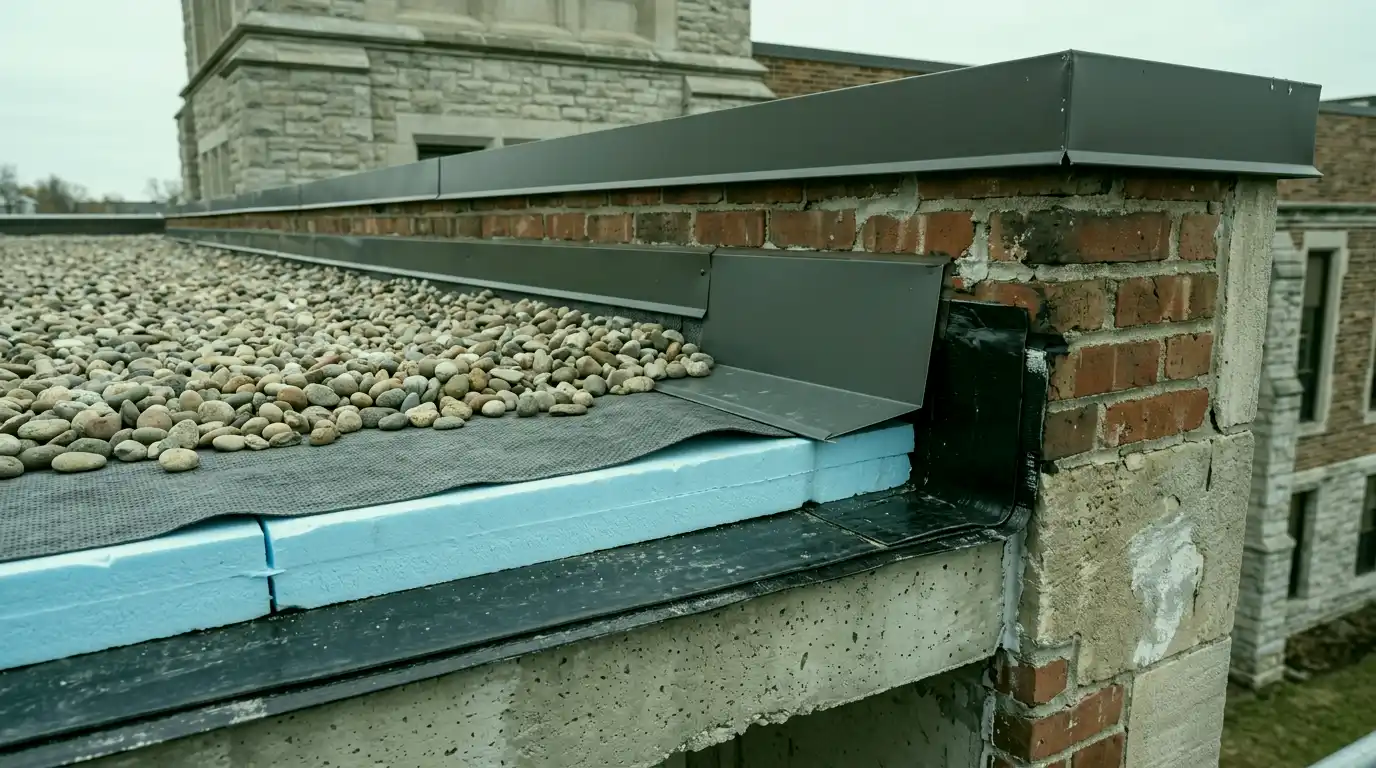
Energy performance is increasingly relevant for Kingston institutional properties, where envelope upgrades may align with broader capital-improvement projects. Increasing insulation levels at time of replacement, specifying reflective membranes where solar gain is a concern, and maintaining a documented air barrier assembly are decisions that benefit from roofing and mechanical input at the planning stage rather than being resolved independently.
Commercial Roofing SystemsPlanning Roofing Work Around Daily Operations
Roof Work Around Tenants and Campuses
A multi-tenant business park building and a hospital campus require very different work-planning approaches. On a business park, the primary concerns are dock access, crane positions, noise and loading impacts. On an institutional campus, the concerns may include protecting clinical air-intake pathways, coordinating with security and access-control procedures, avoiding contamination of sensitive laboratory or research spaces, and managing public-perception concerns around visible construction near building entrances. Both require pre-project planning conversations with the facility operator, not assumptions.
Kingston Roof Maintenance Planning
Spring and fall inspection schedules cover the most common failure triggers in Kingston's climate: winter ice damage to perimeter metal, spring drain blockages from debris and thaw materials, and pre-winter checks on seals and flashings before freeze-up. Institutional buildings benefit from a fixed annual inspection report that can be attached to a capital-planning binder, with consistent reference-point photographs each year so deterioration is documented over time rather than estimated at the point of failure.
A Kingston building manager can log each leak with the weather conditions at the time to spot patterns.
Roof maintenance planningCommercial Roofing Across Kingston
Roofing support in Kingston reaches industrial, institutional and mixed-use properties across the Kingston area, including Cataraqui Estates, Clyde, Alcan and St. The right roofing plan in Kingston depends on the building itself, including drainage, rooftop equipment, access and repair history.
- Employment & commercial districts
- Cataraqui Estates Business Park · Clyde Industrial Park · St. Lawrence Business Park · Alcan Business Park · Highway 401 industrial and commercial corridor · Clogg's Road Area (business and employment lands)
- Neighbourhoods & nearby communities
- Downtown Kingston · Cataraqui
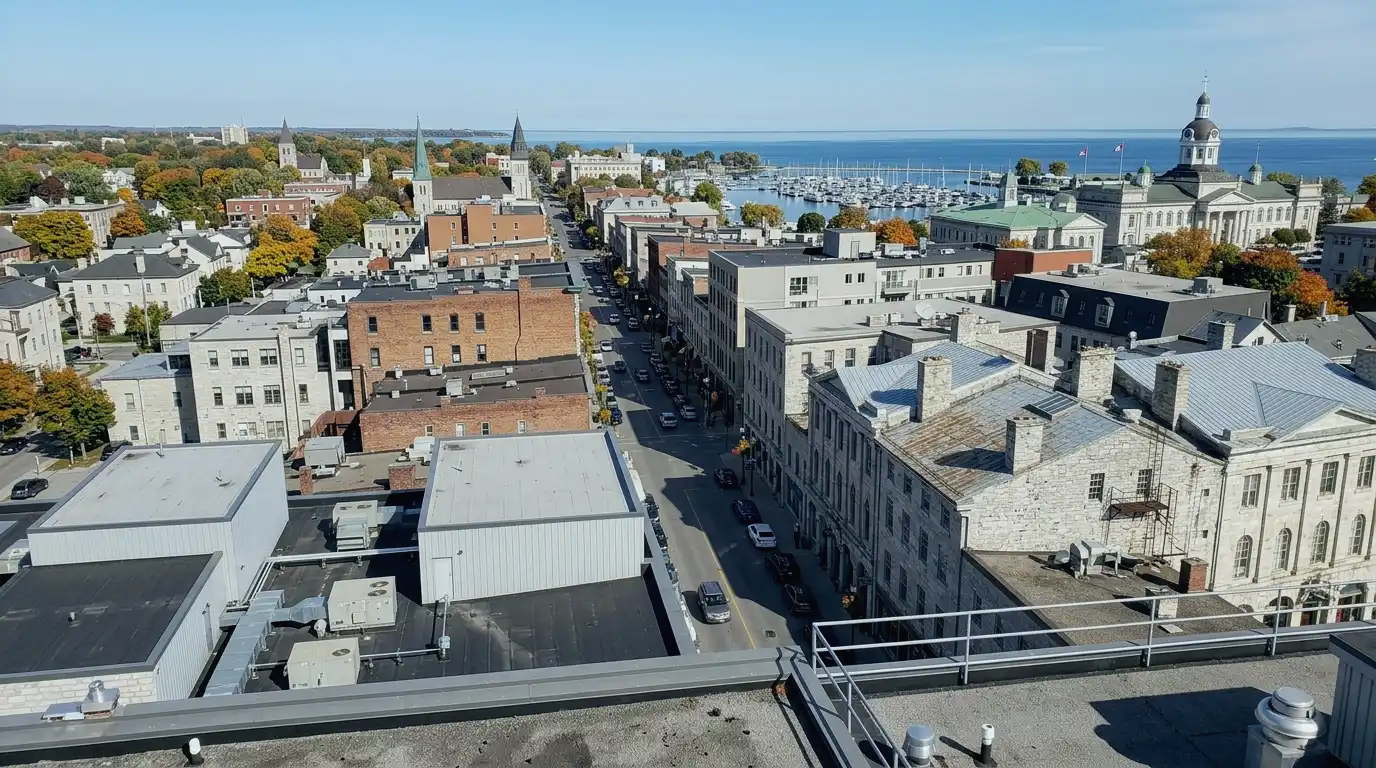
Kingston Roof Questions From Facility and Campus Managers
Can sections of an older Kingston commercial building have completely different roof conditions even though the building looks uniform from the outside?
Yes, and this is one of the most common misunderstandings in commercial roof planning. A building that was constructed in phases over several decades can have three or four distinct roof sections, each with a different membrane type, different insulation depth, different drainage design and different installation quality. A building that looks uniform from the street may have an original 1970s built-up section, a 1990s modified bitumen addition, and a single-ply section added in the 2000s. Each section needs to be assessed independently, and the transitions between sections are usually the most vulnerable areas.
What should a Kingston institutional building manager prepare before requesting a roof assessment?
The most useful information is a drawing or rough sketch of the building footprint showing where roof access hatches and mechanical rooms are, any existing inspection or condition reports from previous years, a list of known leak locations with approximate dates, and a description of any rooftop trades work done in the past two years. If the building has a facilities-management system with work orders, a summary of roof-related repairs in the past five years is valuable. That context allows an inspector to direct attention to the highest-risk areas first rather than starting a general survey with no background.
Should a Kingston commercial building buyer request a roof assessment before closing?
Absolutely. A pre-purchase roof assessment on a Kingston commercial building, particularly an older building in the downtown or established industrial areas, can identify deferred maintenance, trapped moisture in the insulation and structural issues that are not visible in a general building inspection. The assessment should be done by someone who will open the membrane in suspect areas, not just walk the surface. Discovering serious roof deficiencies before the property changes hands helps owners plan the necessary scope and avoid unexpected disruption after closing.
How should a Kingston commercial property plan for reroofing when the building has multiple tenants on different lease terms?
Work with a roofing contractor who can phase the project to minimize the number of tenants affected at any one time, and plan the sequencing before consulting tenants rather than after. Tenants generally respond better to a concrete plan with specific dates and protected access than to an open-ended notice about upcoming roof work. The phasing should be based on roof condition and drainage geometry, not simply on convenience, so that each phase is a complete and self-draining unit that can stand independently if the rest of the project is delayed.
Which causes more long-term roof damage in Kingston: heavy summer rain events or winter freeze-thaw cycling?
Both cause damage, but in different ways. Heavy summer rainfall tests drainage capacity and membrane joint integrity under sustained hydrostatic pressure. Freeze-thaw cycling is more insidious because it works slowly, water that has entered the insulation expands on freezing, compresses and displaces on thawing, and gradually destroys both the insulation and the membrane bond from below. Kingston's winter weather includes multiple freeze-thaw events in a typical season rather than a single sustained freeze, which accelerates that damage cycle on older roofs with any existing moisture entry.
What should Kingston institutional owners know about roof procurement?
Public and institutional owners often need written scopes, comparable quotes and clear documentation. Ask for a detailed specification, a defined warranty and proof of insurance. Early technical review can prevent costly changes after award.
Belleville, Brockville and Ottawa Are Covered as Well
Give Us the Kingston Building and Its Roof History
Kingston owners often juggle institutional and industrial needs. Tell us about your building and we will help narrow the right first step.