
Ingersoll Commercial Roofing for Manufacturing Facilities
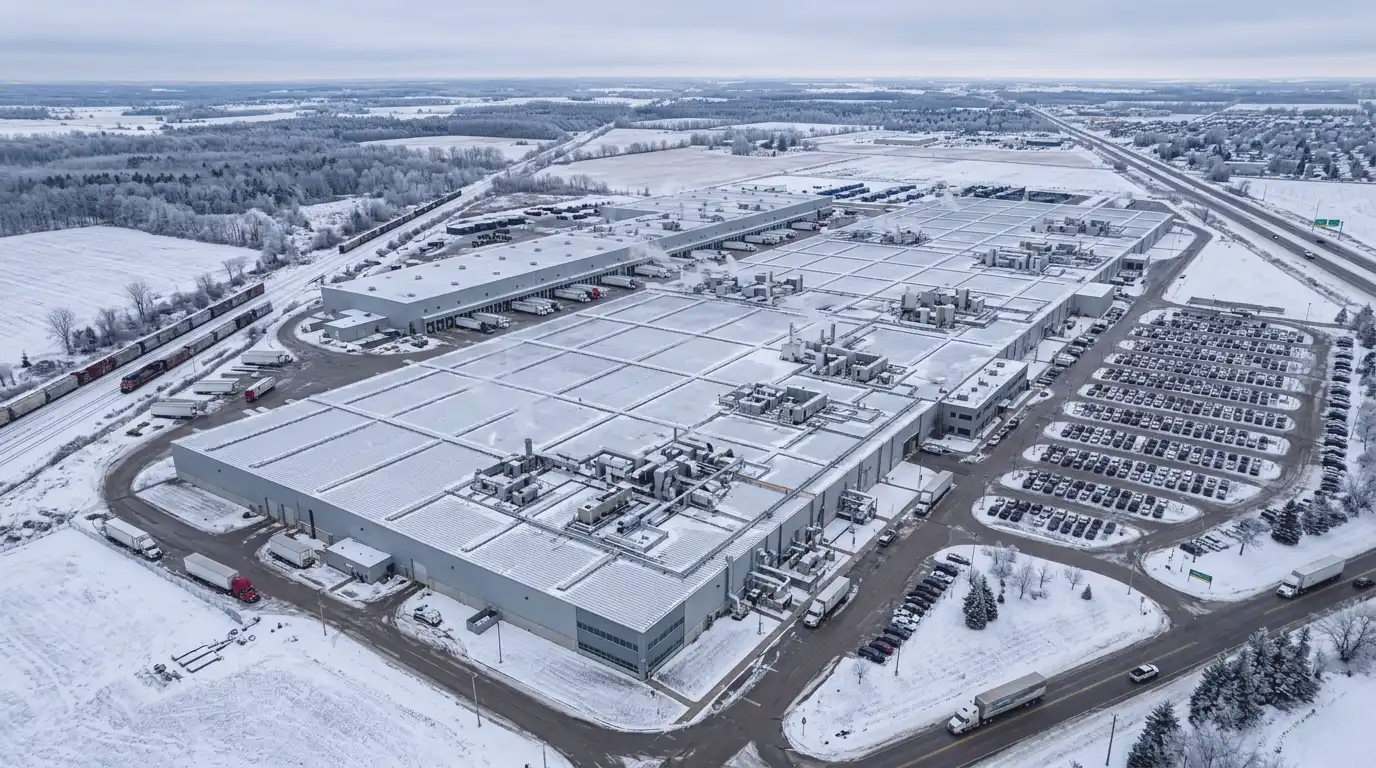
Ingersoll has one of the most manufacturing-dense commercial roof inventories in Oxford County. The Highway 401 corridor has long been the backbone of industrial development here, and newer large-format buildings at West Oxford Industrial Park sit alongside an established base of older plants, warehouses and fabrication facilities.
Roof Age Across Ingersoll Industrial Buildings
The Town's planning work for the South West Ingersoll area describes the Highway 401 lands as a priority for new industrial and business investment, and the newer construction at West Oxford Industrial Park reflects that direction. But even within a single plant, the original roof section, a later addition, and a zone that was reroofed after mechanical upgrades can have completely different membrane types, insulation depths and remaining service lives. An inspection that assigns one age or one condition label to the whole building is not going to be much help when repairs need to be prioritized or a replacement budget is being built.
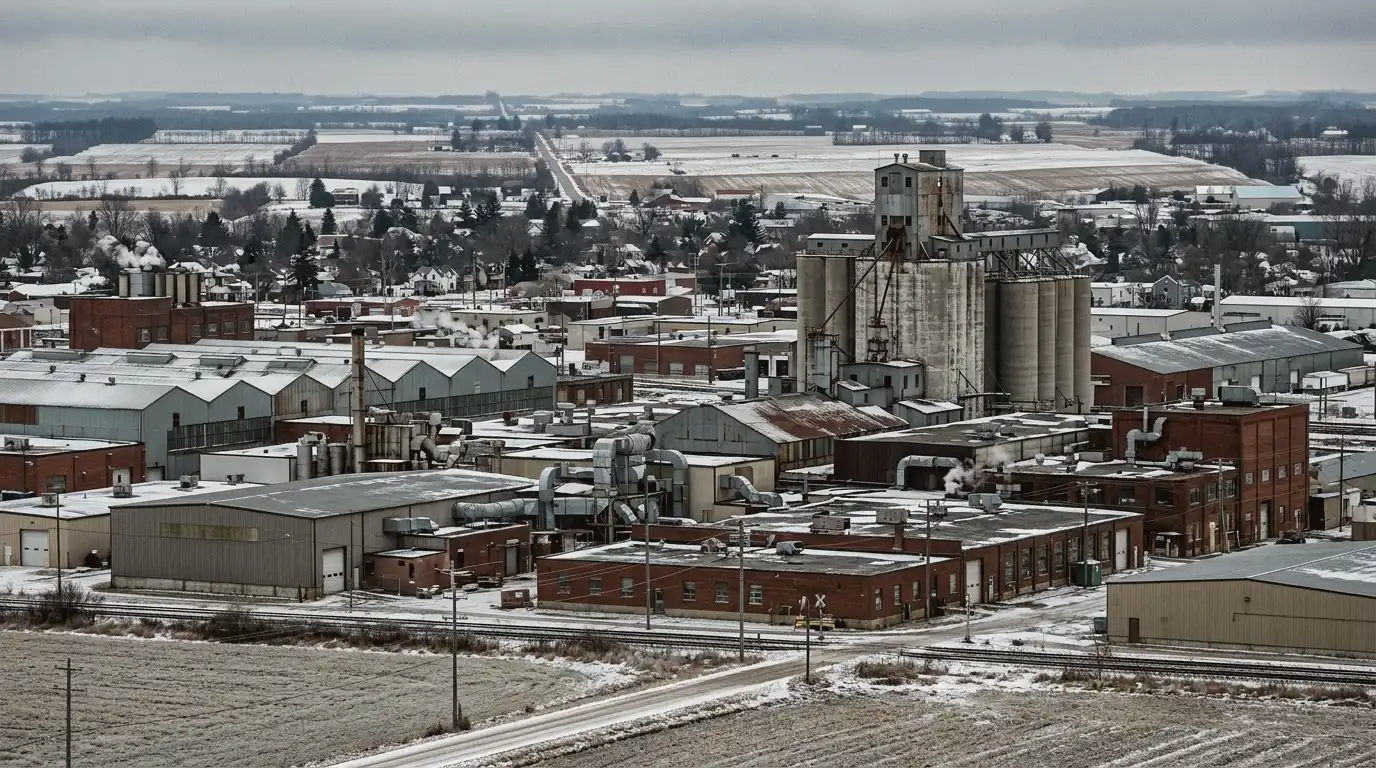
The CN rail line that runs east-west through the centre of town is a reminder that Ingersoll's industrial activity has deep roots. Older buildings in the core industrial areas can carry multiple generations of roofing, sometimes a built-up system buried under a later modified bitumen cap sheet, sometimes a single-ply retrofit that has been patched repeatedly without anyone documenting where the water actually travels when it gets under the membrane. Accurate mapping of what is actually on the roof, rather than relying on old drawings or verbal history, is the starting point for any credible decision.
Local reference: Town of Ingersoll South West Ingersoll and industrial-development planning information
Ingersoll Commercial Roofing Services
For low-slope roof construction and membrane planning, see our commercial flat roofing guide.
Inspect Recent Rooftop Changes First
Manufacturing buildings are active environments. New equipment gets added, exhaust configurations change, tradespeople walk access routes that were never designed for repeated foot traffic, and temporary penetrations become permanent without anyone updating the roof plan. Before opening the membrane to investigate a leak, document what has changed in the past 12 to 18 months, new curbs, new penetrations, new mechanical support pads, changes to drainage paths. That information usually narrows the investigation to two or three candidate zones rather than the entire roof area.
Process equipment curbs and penetrations
New exhausts, fresh-air intakes and condenser supports are the most common source of undocumented membrane breaks on active manufacturing roofs. Inspect every curb and penetration for complete flashing, undisturbed membrane and compatible sealant.
Foot-traffic corridors across large roof fields
Service routes between HVAC units, exhaust stacks and mechanical equipment become points of repeated membrane stress. Inspect for granule loss, membrane cracking, screw-head punctures and unprotected areas that accumulated damage invisibly over time.
Perimeter edges and parapet caps on highway-exposed sides
Prevailing westerly winds and the open exposure near the 401 corridor can lift edge metal, open cap-sheet laps and stress perimeter flashings. After high-wind events, inspect before assuming the problem is a field-membrane failure.
Roof Systems for Ingersoll Industrial Buildings
Oxford County manufacturing roofs in Ingersoll tend to carry steady mechanical loads, so the assembly has to suit the equipment above it as well as the weather. On a plant with high-density mechanical equipment and regular trade access, the durability of flashings and the ease of future penetration work matter just as much as membrane type. A roof that looks correct on a product sheet but becomes difficult to flash competently around unusual equipment configurations is not the right roof for that building.
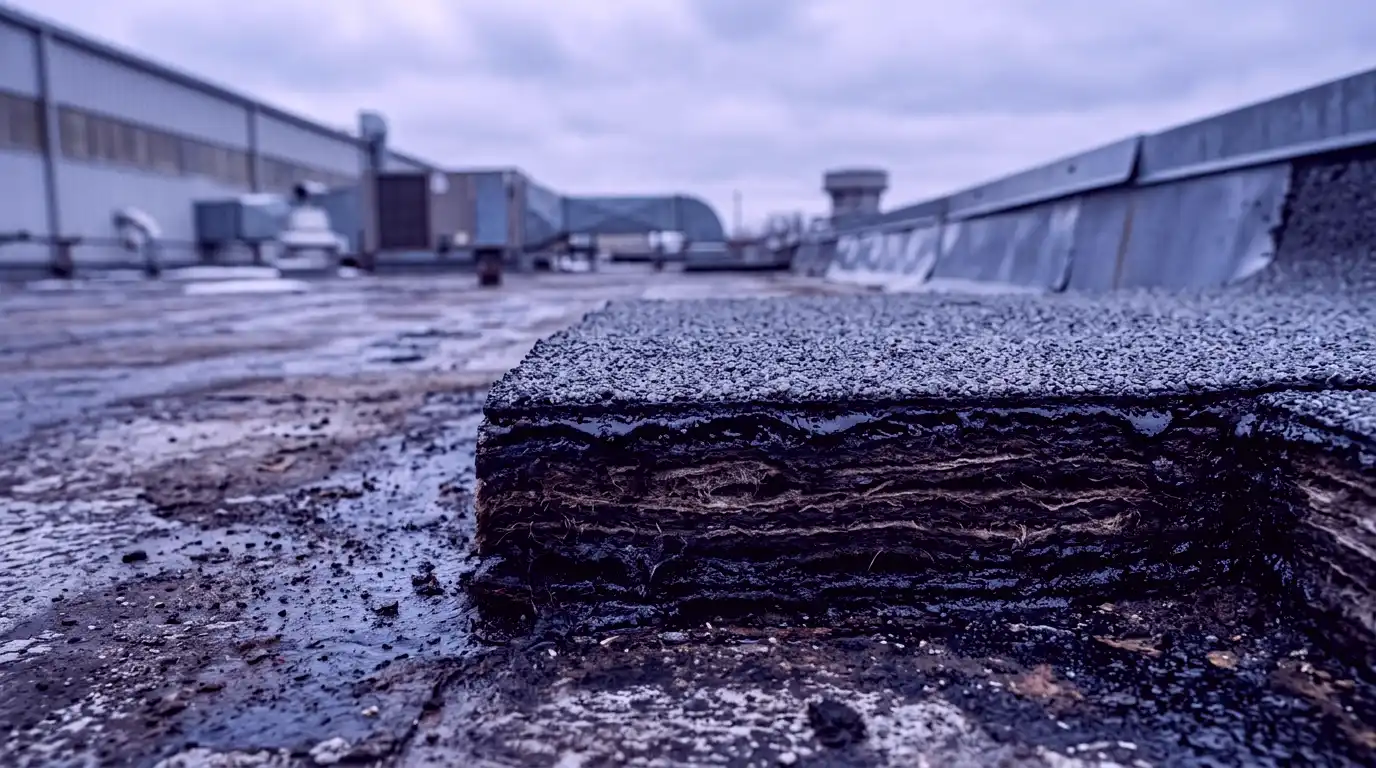
Replacement is the most practical opportunity to address drainage deficiencies, simplify chronic problem areas and document every penetration and curb accurately. Abandoned penetrations should be closed, drain sumps should be confirmed or corrected, and rooftop travel routes should be planned with walkway pads rather than assumed to be self-correcting after the new membrane is down.
Commercial Roofing SystemsPlanning Roofing Work Around Daily Operations
Roof Work Around Plant and Loading Schedules
Large industrial roofs require material-staging areas, crane or hoist positions, and waste removal routes that do not block loading docks, emergency exits or production areas. Shift schedules determine when odorous torch-applied work can occur. High-sensitivity production areas, food processing, precision manufacturing, clean assembly, may restrict open-roof work to low-production windows. Divide the roof into manageable daily zones with secure tie-ins at the end of each shift rather than opening large areas that become vulnerable overnight.
Record Rooftop Equipment Changes
Set a maintenance calendar that includes spring post-thaw reviews, late-summer drainage checks before leaf season, and a pre-winter inspection of drain connections and overflow scuppers. Add a standing instruction that any mechanical or electrical contractor working on the roof documents the location of penetrations opened or added, and that the roof plan is updated. On an active plant where equipment changes regularly, the maintenance log is also a leak-investigation tool, knowing when and where rooftop work occurred is often faster than a full membrane survey.
Ingersoll owners can keep one list of past patches and rooftop work so the next contractor sees what was done.
Roof maintenance planningServing Ingersoll Commercial Areas
Ingersoll roof work takes in manufacturing, warehouse, logistics and institutional properties across the Ingersoll area, including the Highway 401 industrial corridor, West Oxford Industrial Park, established industrial areas along County Road 119, and downtown commercial buildings. For Ingersoll properties, the roof condition, drainage, access and building use still determine what work makes sense.
- Employment & commercial districts
- Highway 401 industrial and commercial corridor · West Oxford Industrial Park
- Neighbourhoods & nearby communities
- Downtown Ingersoll
Ingersoll Roofing Questions From Manufacturing Managers
Does an Ingersoll manufacturing plant need a different roof inspection than a retail building?
Yes, in meaningful ways. A retail building inspection focuses mainly on drainage, seams and penetrations from rooftop HVAC. A manufacturing plant inspection also has to account for process exhausts, condenser supports, steam vents, electrical penetrations, and the foot-traffic corridors between them, all of which get modified more frequently than most people realize. The inspection should include a review of what mechanical work has been done on the roof in the past year or two, because a new penetration or a modified curb is often the entry point for water that then travels to a completely different location before appearing as a problem indoors.
How should a large Ingersoll industrial roof be assessed before a replacement budget is submitted?
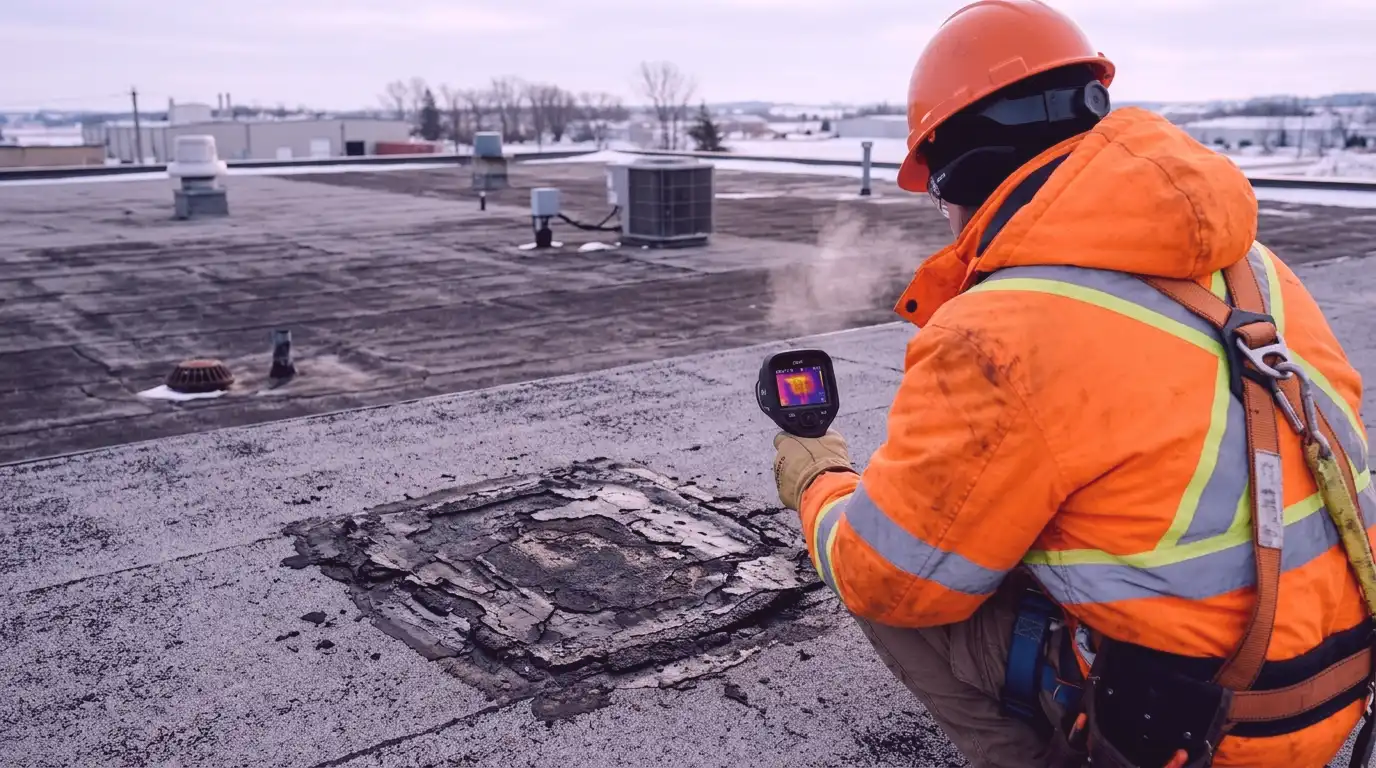
At minimum, the assessment should identify each distinct roof section, its membrane type, approximate installation date, visible condition, drainage geometry, and any areas of known or suspected insulation saturation. Where moisture is suspected across a large area, additional investigation methods can help confirm the extent before a replacement boundary is drawn. That information allows the owner to prioritize sections by risk and remaining life rather than simply replacing the entire roof because one area has failed, which may or may not be the most cost-effective approach for that building.
A mechanical contractor cut new penetrations on our Ingersoll plant roof last year. Should we have the work reviewed?
Yes. Penetration work done by a mechanical contractor is rarely reviewed from a roofing perspective before the roof is closed, and the results vary widely. The flashing around a new curb or pipe penetration may be complete and correctly detailed, or it may have gaps, incompatible materials, or temporary sealants that were never intended to be permanent. A targeted review of those areas, ideally with the original roof plans for comparison, is worth doing before the next rainy season rather than after a ceiling stain tells you something failed.
Can part of an Ingersoll plant be reroofed without shutting down production?
Often it can, and phased reroofing is common on active manufacturing facilities. The key is identifying roof sections that have sensible phase boundaries, expansion joints, elevation changes, drainage divides, and making each phase self-contained and watertight before the crew leaves at the end of the day. Phases that require open-roof conditions over production-sensitive areas can often be scheduled for plant shutdowns or lower-capacity periods. The planning conversation has to happen before the contract is signed, not after mobilization.
What causes recurring leaks near the same area of an Ingersoll industrial flat roof even after repairs?
Recurring leaks in the same zone usually mean the repair addressed a visible symptom without resolving the underlying condition. The most common reasons are: wet insulation that was sealed beneath a surface patch and continues to store and release water; a drainage problem that keeps the area under prolonged ponding; multiple overlapping defects in the same zone where only one was identified; or a repair material that is not compatible with the original membrane and has not bonded correctly. A proper fix begins by confirming the insulation condition around the repair zone and checking that drainage is adequate, not just applying another layer of sealant over the existing patch.
How often should an Ingersoll manufacturing roof be inspected?
At least once a year, and again after severe weather or rooftop equipment work. Inspections should cover seams, flashings, drains and penetrations, with written findings and photographs. Regular reporting builds a record that supports maintenance budgets and warranty claims.
Commercial Roofing Across Oxford County and Beyond
Send Us the Ingersoll Building and the Roof Record
Oxford County manufacturers rely on roofs that quietly protect production. Share the Ingersoll address and a few details, and we will help you choose a starting point.