
London Commercial Roofing for Large, Working Buildings
London has a large and varied commercial roof inventory that spans almost every sector. The City owns and operates multiple serviced industrial parks, Innovation Park, Huron Industrial Park, Trafalgar Industrial Park, River Road Industrial Park, Skyway Industrial Park and Forest City Industrial Park, most of them developed in connection with the Veterans Memorial Parkway and Highway 401 corridor.
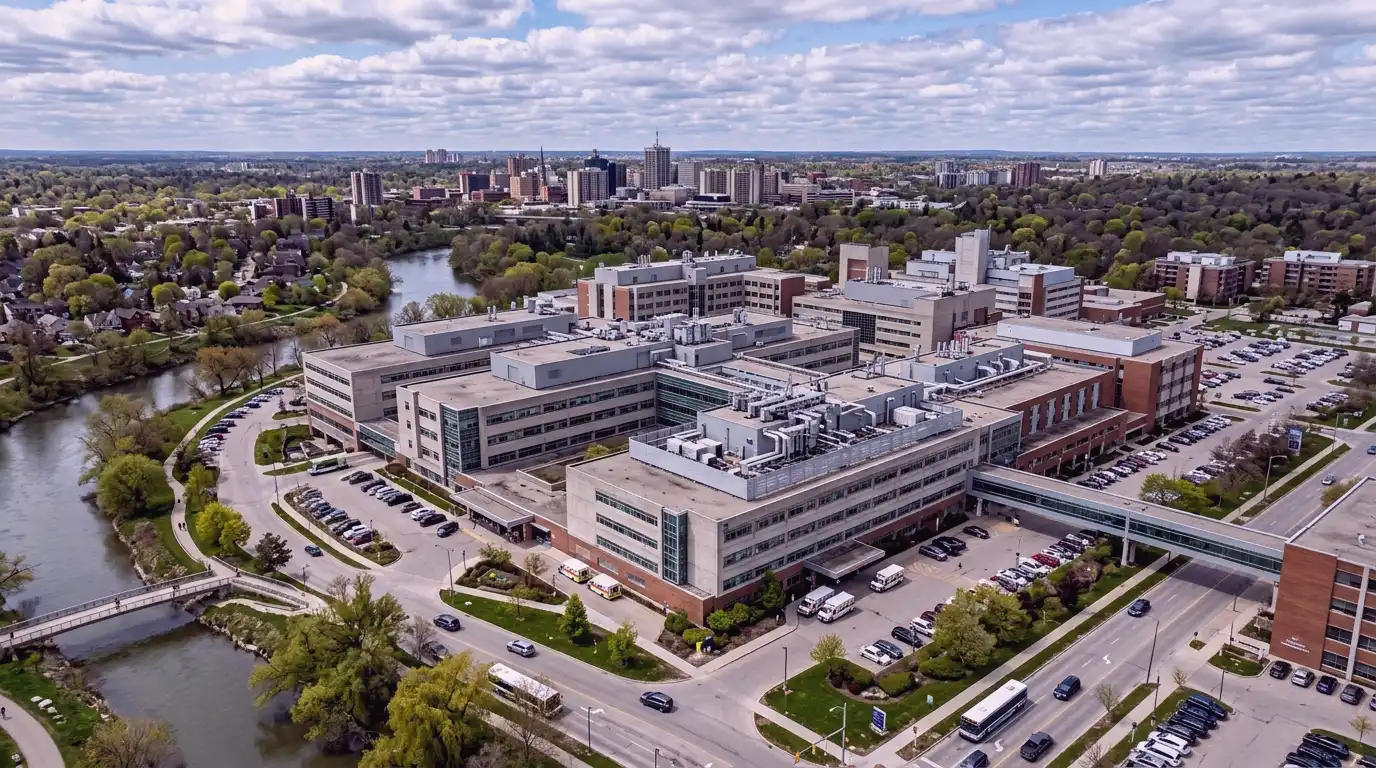
London Industrial and Institutional Roofs
The industrial parks that line the Veterans Memorial Parkway and Highway 401 attract large-format manufacturing, distribution and logistics operations that generate the roofing questions typical of active industrial buildings: rooftop process equipment, large membrane fields, complex drainage basin management, and roof work that has to be sequenced around shift schedules and loading operations. These are substantial, often straightforward properties from a roofing perspective, the challenges are operational rather than technical.
The healthcare and education sector, London Health Sciences Centre, Western University, Fanshawe College and related institutional properties, brings entirely different constraints. These buildings are occupied continuously, often have sensitive clinical or laboratory areas below the roof membrane, require procurement processes that differ from standard commercial contracting, and cannot tolerate unplanned moisture entry regardless of the season. Roof planning for these properties starts with understanding the operational requirements, not the membrane specifications.
Local reference: City of London industrial property and business-park information
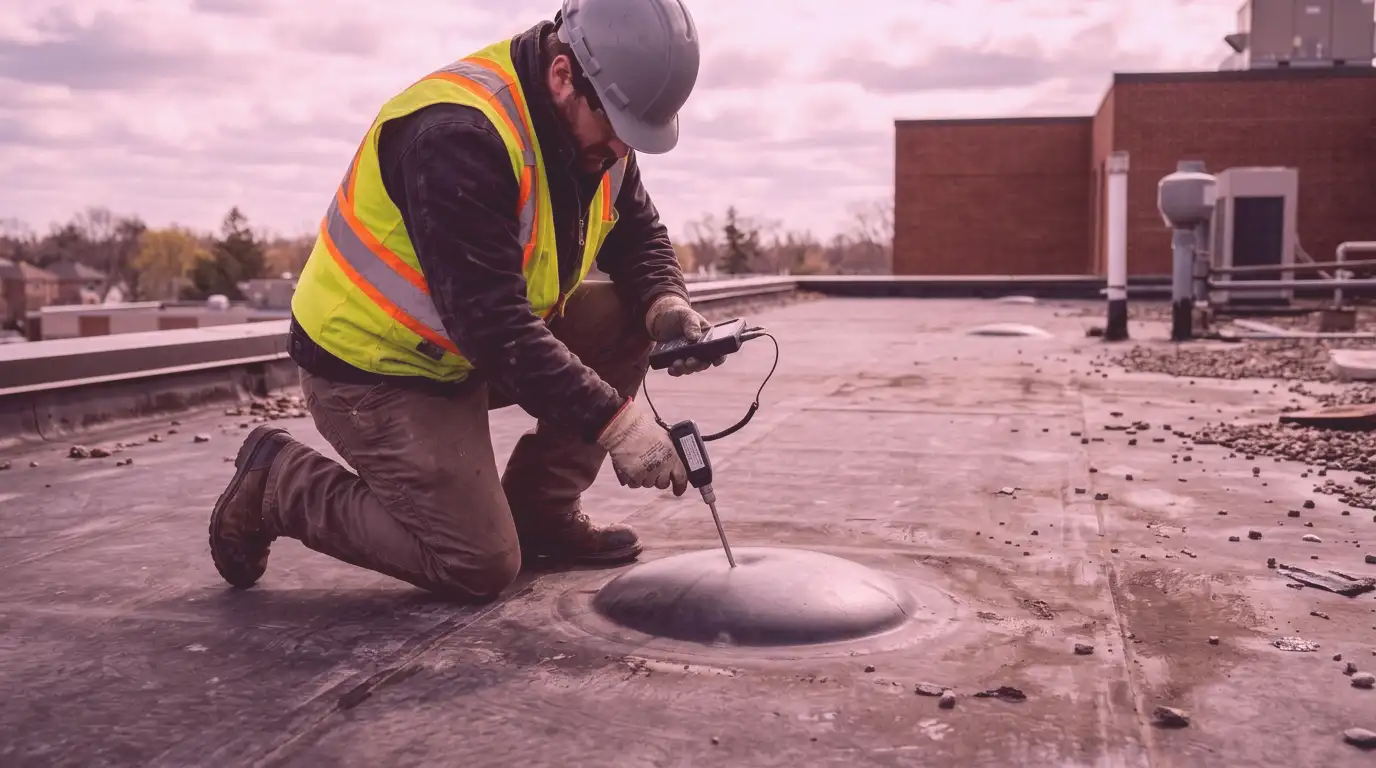
London Commercial Roofing Services
For low-slope roof construction and membrane planning, see our commercial flat roofing guide.
Investigating Commercial Roof Leaks in London
London's flat-roof failures cluster in predictable patterns that are worth understanding before a roof is opened. Industrial buildings leak most often at equipment curbs and access routes. Healthcare buildings accumulate damage at penetration-dense mechanical zones and at expansion joints between building wings. Older retail properties on Richmond Street and Adelaide Street tend to have parapet and interior-drain conditions that reflect decades of undocumented maintenance. The investigation strategy should start with the building type and the weather conditions that triggered the complaint, not with a generic membrane survey.
Veterans Memorial Parkway industrial equipment zones
London industrial buildings along the VMP corridor often carry high-density mechanical equipment added at different times during the building's operating life. Inspect all penetration flashings in zones where equipment changes have occurred in the past two years before assuming a field-membrane failure.
Healthcare and institutional expansion joints
London hospital and institutional campus buildings frequently have expansion joints between wings that are not maintained on the same schedule as the general roof membrane. Expansion joint covers accumulate damage from thermal movement and should be inspected independently from the membrane on each side.
Downtown and older commercial building drainage
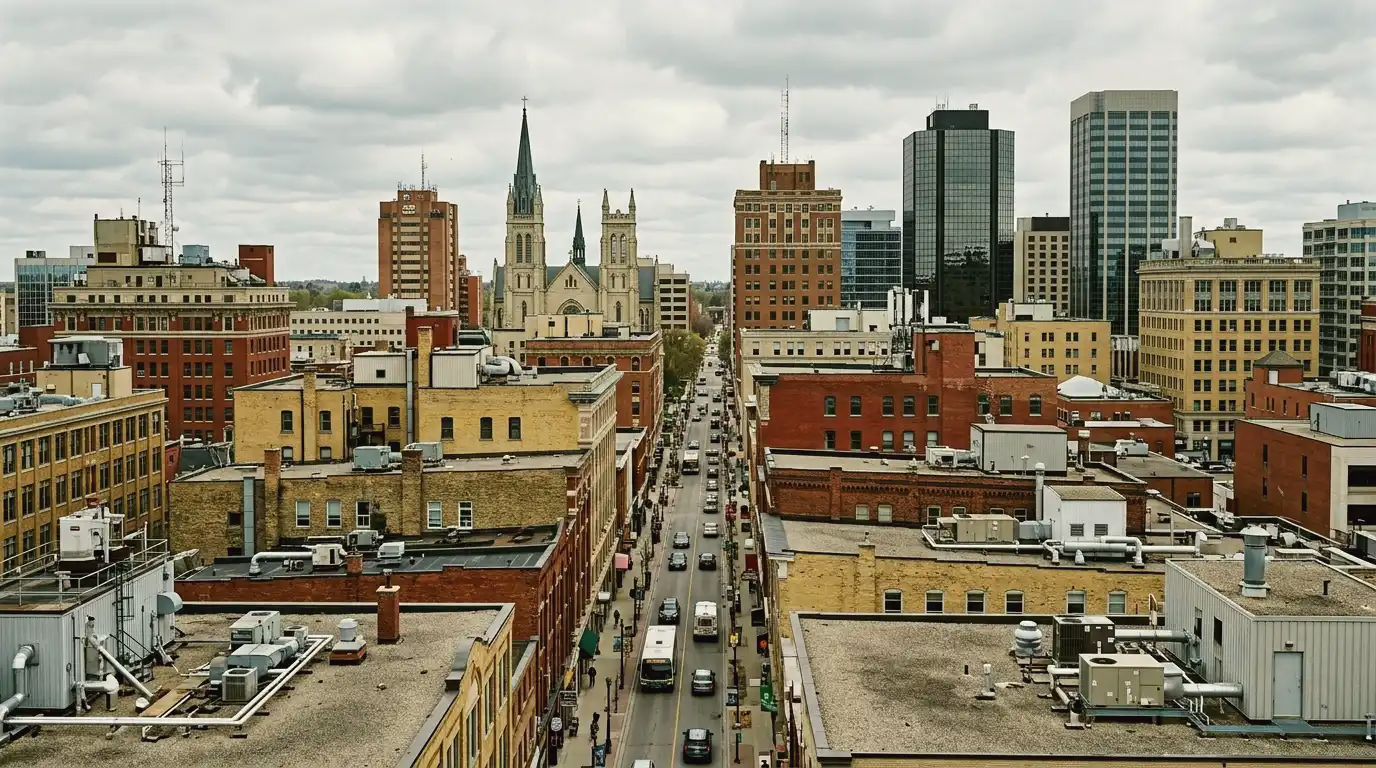
Older London commercial buildings on Richmond Street and Adelaide Street frequently have modified interior drainage from former retail or restaurant configurations. Trace the full drain path before concluding the membrane is responsible for a leak in an older commercial core building.
Roof Systems for London's Building Mix
London's commercial building stock spans construction from the 1950s to the present, and the right roofing system for any given building depends far more on what is underneath the current membrane than on current market preferences. An institutional building that requires certified contractors and documented material approvals as part of a procurement process has different system-selection criteria than an industrial building being reroofed pragmatically to maximize service life at a reasonable cost. Both decisions benefit from a clear understanding of the existing assembly, the structural capacity, and the long-term operational requirements of the building.
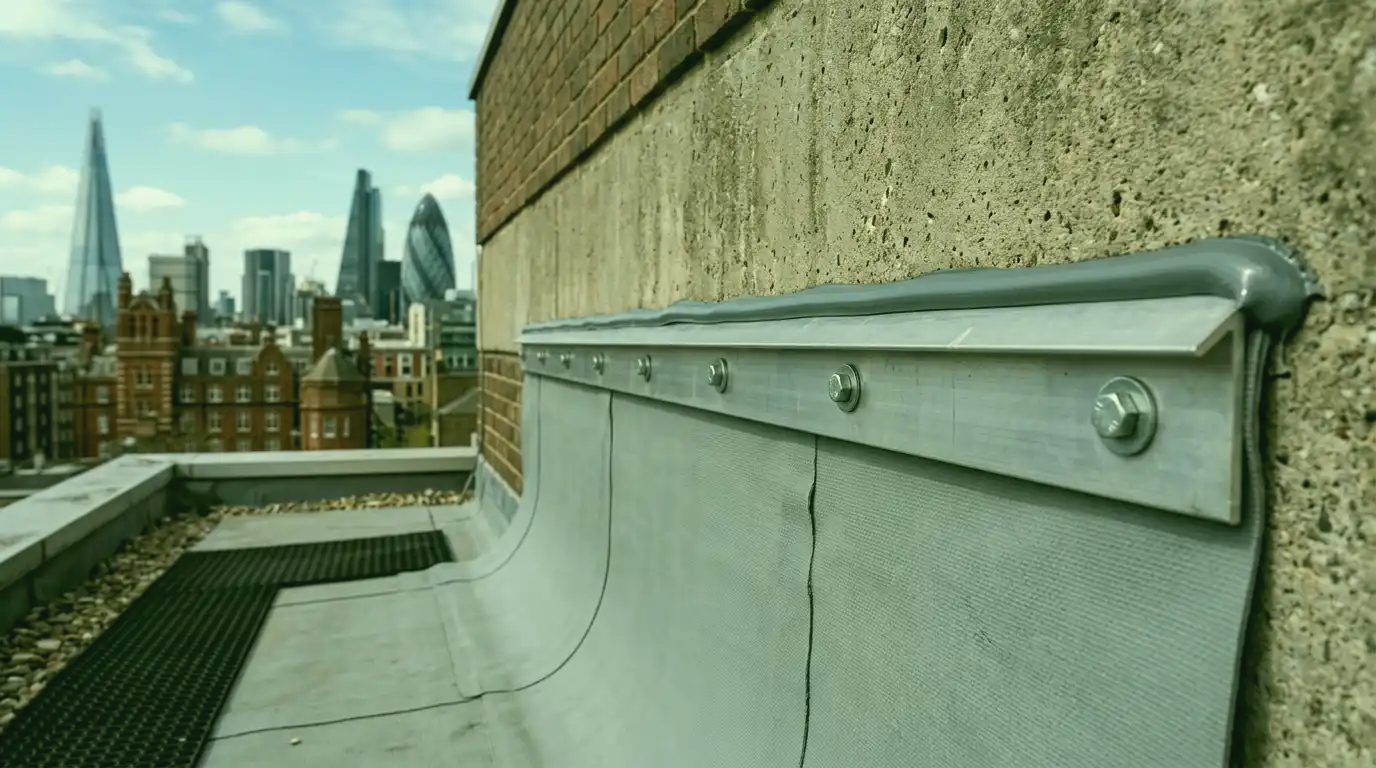
London's Cool Roof and energy-performance context is relevant for some property types. Reflective membranes reduce summer heat gain on large industrial and warehouse roofs, and the City of London's sustainability planning includes commercial building performance. Increasing insulation to current or above-code levels at time of replacement is more cost-effective than adding insulation as a separate retrofit and produces a measurable reduction in heating and cooling energy use for the buildings served.
Commercial Roofing SystemsPlanning Roofing Work Around Daily Operations
Roof Work Around Healthcare and Manufacturing
A London industrial park reroofing and a hospital campus reroofing are similar only in that they both involve a membrane being removed and replaced. The planning requirements are substantially different. On an industrial building, the priority is loading dock access, shift scheduling, crane positions and containment of materials and debris. On a healthcare campus, the priority is protecting air intake pathways, maintaining clinical access routes, co-ordinating with infection-control and patient-safety requirements, and managing construction visibility and public communication. Establish those requirements in a pre-project meeting with the facility operator before submitting a scope.
Roof Maintenance Across Occupied Campuses
Industrial park properties benefit from event-driven maintenance triggers in addition to scheduled inspections: a review after any rooftop trade work, after significant hail or wind events, and before the winter shutdown on properties with seasonal operations. Healthcare and educational campuses benefit from a documented annual inspection that becomes part of the capital facilities record, with consistent photographs from fixed reference points and a prioritized recommendation list that can be used to support budget submissions.
London owners can log work by roof section so history is easy to find for each building.
Roof maintenance planningServing London's Industrial Parks
Our London coverage spans manufacturing, distribution, healthcare, institutional and retail properties across the London area, including Innovation Park, Huron Industrial Park, Trafalgar Industrial Park, River Road Industrial Park, Skyway Industrial Park and Forest City Industrial Park, as well as the downtown commercial core and institutional campuses. Wherever the property sits in London, the next step starts with the roof condition and how the building needs to keep operating.
- Employment & commercial districts
- Innovation Park · Huron Industrial Park · River Road Industrial Park · Trafalgar Industrial Park · Skyway Industrial Park · Forest City Industrial Park
- Neighbourhoods & nearby communities
- Downtown London · East London · White Oaks
London Roofing Questions for Property Teams
What actually drives the cost difference between two commercial flat-roof replacement quotes on a London industrial building?
The most significant variables are whether the existing insulation will be removed or reroofed over, the insulation thickness and type being installed, the attachment method, and how complex the drainage, flashing and penetration work is on that specific building. A quote that reroofs over existing saturated insulation will be less expensive initially and perform significantly worse over time than one that removes the wet material. A quote with minimal flashing scope is less expensive than one that addresses parapet conditions correctly. Comparing total material and labour is less useful than comparing what each quote actually includes in terms of substrate treatment, insulation specification and flashing detail.
How do I decide between a targeted repair and a full replacement on a London industrial roof?
The most useful input is a clear picture of insulation condition across the roof, not just in the leak zone. If the insulation saturation is limited to one section or one drainage basin, repairing the membrane and replacing the wet insulation in that zone may be a defensible decision. If moisture investigation shows widespread saturation across multiple roof zones, or if the repair history shows separate areas of repeated failure, planned replacement may be more cost-effective than continuing to repair individual sections. The repair-versus-replace decision should be based on condition evidence, not on how old the roof is by the calendar.
Can a London factory or distribution centre stay operational during a full roof replacement?
Yes, in most cases, with a properly sequenced plan. The reroofing schedule should identify sections of the building where operations are most sensitive, active production lines, high-value inventory storage, temperature-controlled zones, and protect or sequence around those areas. A daily tie-in protocol keeps every open section watertight before the end of the work day. Material staging, waste removal and crane positions need to be confirmed with the facility manager before mobilization rather than improvised on site. London industrial buildings with active truck traffic through the site need staged access routes agreed in advance.
What rooftop conditions should be checked before a London commercial property is listed for sale or transferred?
The most common surprises in commercial building transactions are wet insulation from undocumented leaks, membrane defects that have been surface-patched without addressing the underlying assembly failure, and drainage designs that cannot handle current occupancy loads. A pre-transaction roof assessment that includes a moisture survey, documentation of the existing assembly, and a repair-versus-replacement timeline gives both parties a documented basis for assigning responsibility for necessary roofing work. Identifying these conditions before closing helps avoid unplanned repairs after the property changes hands.
What should a London commercial roof inspection report cover to be useful for long-term planning?
A useful inspection report identifies each roof section independently with its membrane type, approximate installation date, visible condition, drainage performance and any evidence of moisture in the insulation. It should include annotated photographs from fixed reference points with dates so future inspections can compare the same locations. It should give a prioritized list of recommended actions with a suggested timeline, immediate repairs, items addressable through maintenance in the next one to two years, and roof sections approaching planned replacement in the next three to five years. A report that says 'roof is in fair condition and replacement should be planned in the medium term' is not adequate for a facility manager who needs to submit a capital budget request.
How do I compare roofing systems for a London commercial building?
Match the system to the building's use, roof traffic, drainage and budget, not just to the cheapest quote. Compare expected service life, repairability and warranty terms. Ask the roofer to explain why a given membrane suits your roof and what upkeep it needs.
We Also Serve St. Thomas, Strathroy, Ingersoll and Woodstock
Start a London Roof Conversation
London buildings range from industrial to institutional. Tell us what yours is and what the roof is doing, and we will help you choose a starting point.