
Windsor Commercial Roofing: Long-Term Roof Decisions
Windsor's manufacturing economy is undergoing its most significant transformation in a generation. The NextStar Energy EV battery plant represents one of the largest automotive manufacturing investments in Ontario history. On Walker Road, Lauzon Parkway, E.C. Row and the corridor toward Highway 401, the commercial and industrial roof stock reflects that history: enormous production buildings, logistics facilities supporting cross-border trade, and newer industrial properties generating the next phase of growth.
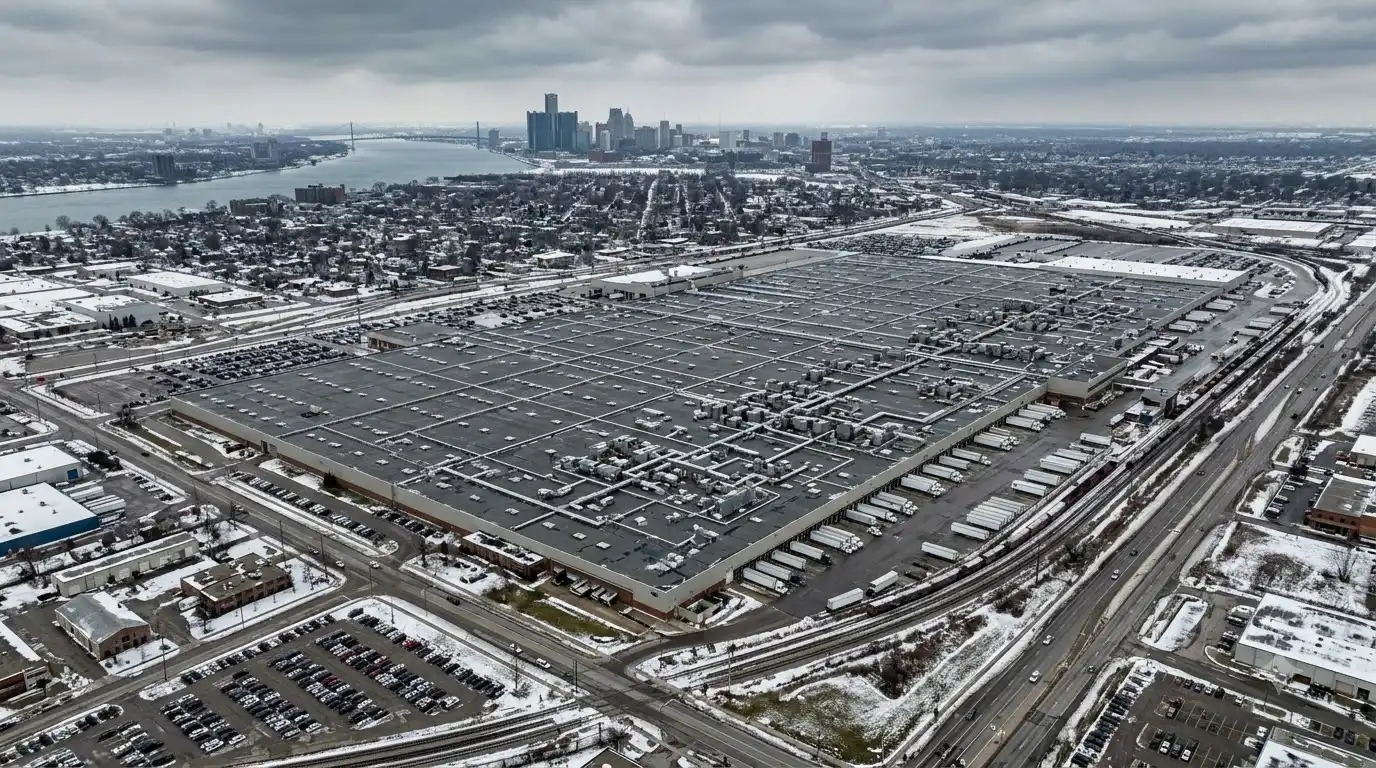
Windsor Roof Strategy Should Reflect Production Schedules, Automotive Change and Industrial Scale
Manufacturing facilities in Windsor often have very large roof fields, dense process exhaust and make-up air equipment, and additions constructed at different times for different operations. The automotive supply chain creates a specific roof reality: retooling for new vehicle programs means rooftop equipment configurations change more often than in other industries, and each change brings new penetrations, new curb flashings and new service traffic on a membrane that was designed before the retooling was announced. A roof plan that does not account for that pattern will fall behind quickly.
Divide large Windsor manufacturing roofs by structural bay, drainage basin and construction era. Map process exhaust stacks, make-up air units, expansion joints, drains and access hatches, and connect each roof zone to the production area or electrical room below. That map is not just a leak-investigation tool, it allows project phases, daily tear-off limits and hoisting zones to be communicated to plant personnel in the same language they already use. Roofing decisions made without reference to the production layout create conflicts that slow projects and increase risk on both sides.
Local reference: City of Windsor economic development and industrial and commercial planning

Windsor Commercial Roofing Services
For low-slope roof construction and membrane planning, see our commercial flat roofing guide.
Windsor Leak Diagnostics Should Account for Process Equipment, Trade Access and Long Water-Travel Paths
On a large Windsor manufacturing roof, the visible drip inside a plant bay may sit far from the entry point. Record the structural bay, the production area involved and the preceding weather, then map that location to the contributing drainage zone. Inspect the full zone: drains, seams, curbs, process exhaust penetrations, expansion joints and any area where recent service traffic crossed the membrane. Process-related exhaust or residue can affect certain roofing materials and flashings near penetrations, so the investigation should treat those conditions as part of the scope rather than focusing only on the open membrane field.
Automotive manufacturing roofs
Map leak symptoms against production bays and drainage zones so repairs can be prioritized by consequence and planned around active line schedules.
Walker Road and Lauzon Parkway logistics
Track broad warehouse roofs by fixed zones while coordinating investigations with active docks, freight movement and continuous operating hours.
Airport South new industrial development
Establish clean roof-condition records on recently constructed facilities before the first major process or tenant change creates undocumented modifications.
Windsor Roof Assemblies Should Handle Industrial Exposure, Process Conditions and Heavy Service Traffic
Windsor's automotive and border-logistics buildings run on tight production calendars, so roof work is scheduled around them. Manufacturing buildings add considerations that logistics roofs generally do not: process exhaust composition and temperature, residues near exhaust penetrations, mechanical vibration transmitted through the structure, and regular traffic from multiple trades. Large logistics roofs may have fewer process exposures but enormous drainage runs and perimeter fastening patterns that demand close attention.
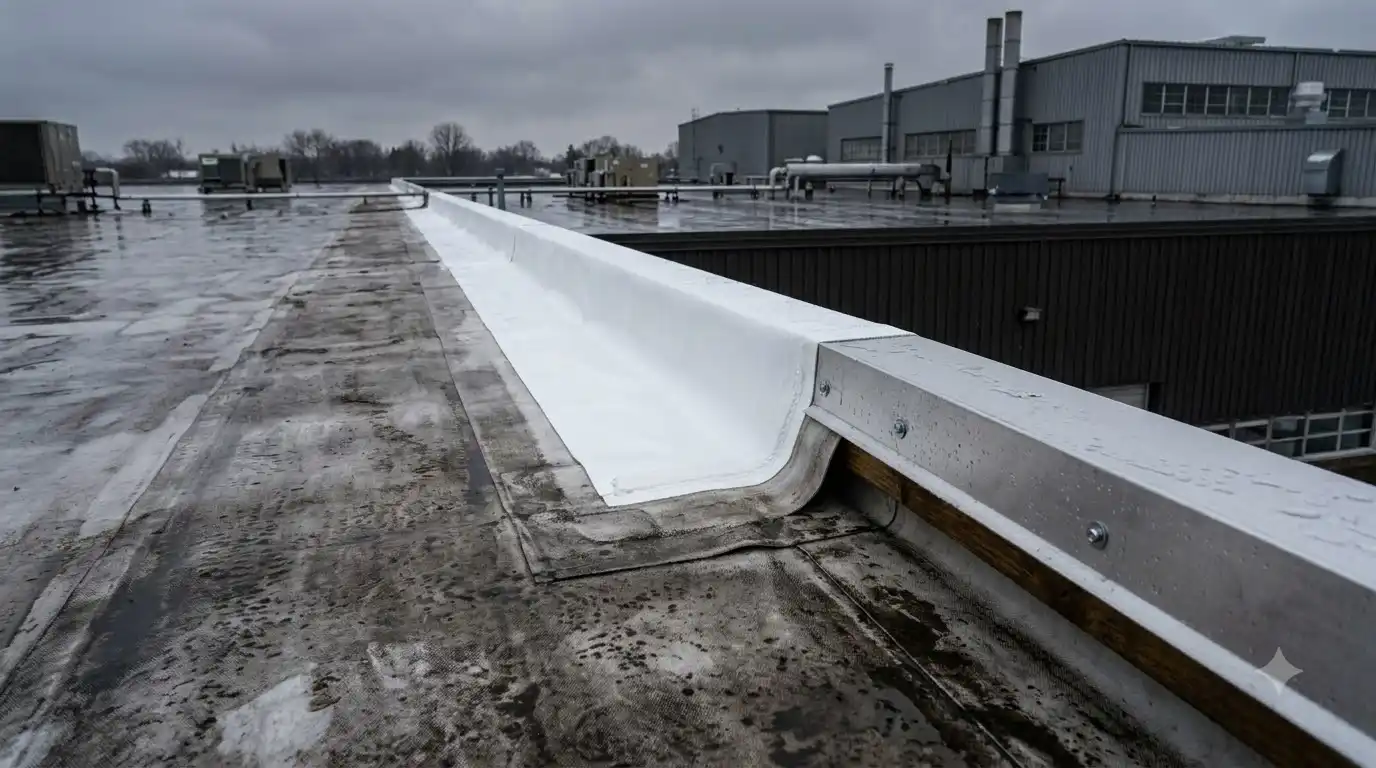
Reroofing is the right time to rationalize the penetration layout, rebuild unreliable curbs, improve drainage in persistent low areas and create protected walkways to equipment zones that trades will continue to use for years. Coordinate with planned production upgrades or retooling before final details are installed. On large plants, close-out documents should identify roof sections and installed systems clearly enough that a facilities team member who joins the company later can connect a repair to the original installation without reverse-engineering the roof.
Commercial Roofing SystemsPlanning Roofing Work Around Daily Operations
Plan Windsor Plant Reroofing Around Shifts, Production Lines, Freight Movement and Emergency Access
Before mobilization on any Windsor manufacturing or logistics property, establish a shared plan between the roofing contractor and the facility's operations team. Map dock locations, truck circulation, shift-change timing, production-sensitive areas below the work, emergency access routes, roof-entry points and the positions where cranes can be placed without interfering with ground-level operations. Set daily tear-off limits and weather contingencies with the operations team before any roof section is opened. On a facility where a production line runs beneath the area being reroofed, those limits may be set by the production schedule rather than by how much the crew can physically complete in a day.
Integrate Windsor Roof Maintenance Into the Plant's Safety and Facility-Management Procedures
Spring and fall inspections should be supplemented by checks after severe weather and after mechanical, electrical or process-equipment contractors work on the roof. Clean drains, review expansion joints, inspect high-traffic zones around process exhaust and make-up air equipment, and revisit documented repair locations. Coordinate roof access with plant safety protocols, on multi-shift operations, that means roof work and inspections are limited to specific approved windows. Use consistent roof-section names in every service report so building teams can identify a basin deteriorating faster than the rest and move it into the long-term replacement plan before failure occurs.
Retooling shutdowns and roof work should share a calendar in a Windsor plant record, so repairs land when the line is down.
Roof maintenance planningWhere We Work in Windsor: Walker Road, the Airport Lands and Sandwich South
In Windsor, we serve commercial and institutional properties across Windsor, including Walker Road and Pillette Road manufacturing areas, the Lauzon Parkway corridor, Windsor Airport and Sandwich South industrial areas, E.C. Across Windsor, we look at the actual roof, drainage and day-to-day building use before recommending repair or replacement.
- Employment & commercial districts
- Walker Road manufacturing and industrial corridor · Windsor Airport and Sandwich South industrial area · Lauzon Parkway business corridor · Ojibway industrial area · Walker Road industrial corridor
- Neighbourhoods & nearby communities
- Downtown Windsor · South Windsor · Riverside · Sandwich

Windsor Roof Questions From Manufacturing and Logistics Teams
What roof protection should be in place above an active Windsor automotive assembly line during a reroof?
Begin by identifying the interior areas where water, dust, vibration or debris could affect production, electrical equipment or stored materials. Work with plant personnel to determine which protection measures are acceptable, temporary sheeting, suspended barriers, work-hour limits, and which production zones might need to be temporarily cleared. The roof sections directly above the most sensitive operations should be planned last, after the crew has worked through less critical areas. Clear communication between the roofing superintendent and the production supervisor is more important than any specific technical protection measure.
How do process exhaust penetrations affect a Windsor manufacturing roof?
They create several overlapping risks. The penetration itself is a membrane disruption that must be carefully detailed and re-inspected each time the equipment is serviced or modified. Some exhaust streams produce heat, oil, chemical residues or condensate that can affect membrane, insulation or flashing materials in the surrounding area. Service traffic accessing the equipment can also damage the membrane or displace walkway protection near the curb. An inspection around process exhaust zones should treat the curb flashing, the surrounding membrane, the service path and the nature of the exhaust as connected elements rather than inspecting only the open membrane surface.
Can a Windsor industrial property prioritize roof section replacement by production risk rather than installation age?
Yes, and in an automotive context this approach often makes more sense than age-based scheduling alone. A section that is somewhat newer but sits above a high-value production line, electrical room or critical inventory can justify earlier renewal than an older section over a storage area where a temporary leak is a maintenance inconvenience rather than a production risk. Use both age and consequence together: the combination of section condition and the cost of water entering that specific interior area gives a more defensible replacement priority than age alone.
What rooftop access policy should a Windsor facility establish before the first retooling project modifies the roof?
Require any contractor working on the roof to document their visit: the work performed, the route used, any new penetrations or supports installed, and photographs of the completed work. Require walkway protection to be used on any route not already equipped with it. Keep a simple access log where roof visits are recorded by date and trade. When a leak appears months after a retooling project, that log quickly determines whether the roof visit is relevant or whether the investigation should look elsewhere. Converting the roof from an anonymous surface into a maintained record takes very little administrative effort.
What roof information should be requested when acquiring a Windsor manufacturing facility near Walker Road or the Airport South industrial area?
Ask for the age and system type of each roof section, any transferable warranty documents, the repair and leak history, drainage drawings, known moisture testing results and documentation of significant rooftop equipment changes. Verify whether the property contains additions built at different times, each may represent a different roof generation. Then compare the records with a physical condition assessment so you understand which sections can remain in service and which are likely to require significant expenditure in the near to medium term. Gaps in documentation on older industrial properties are themselves part of the picture.
How do Windsor manufacturers fit roof work into retooling shutdowns?
Plan roof scopes well ahead of shutdowns and agree on start dates and crew size. Order materials early and have contingency plans for weather. Keep daily communication with plant staff.
Plan the Windsor Roof Around Production, Not the Other Way Round
Automotive and logistics buildings in Windsor operate on tight schedules. Send the address and a few details, and we will help plan.