
Brantford Commercial Roofing: Industry and Roof Life
Brantford's roof inventory spans long-serving industrial and commercial buildings as well as newer facilities around Rest Acres Road. Older roofs can have layered repair histories and moisture issues, while newer industrial buildings call for clear condition records, drainage planning and maintenance around active operations. Both situations require an assessment of the actual roof rather than one standard replacement recommendation.
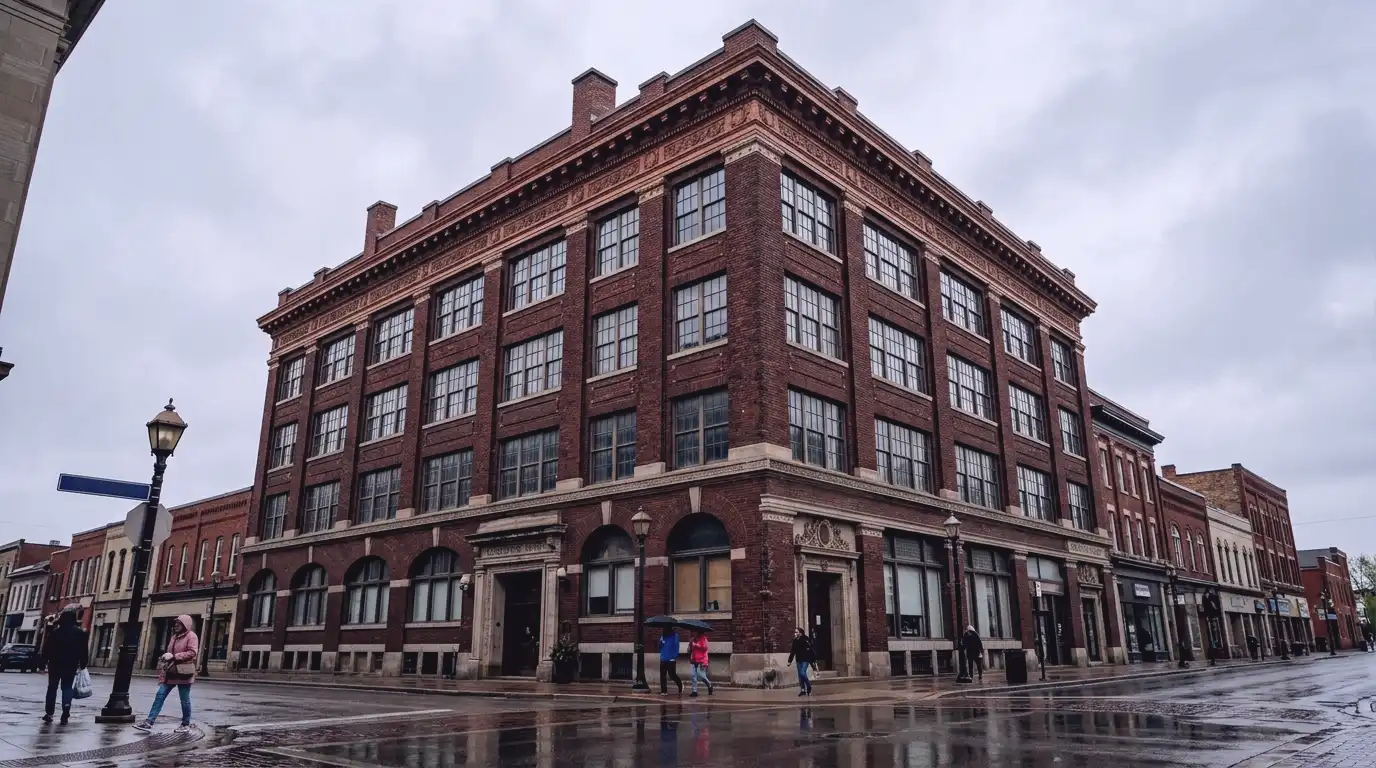
Established and New Brantford Industrial Roofs
That is the zone where decisions become unavoidable: insulation that has held moisture for years, drain bodies that were not designed for contemporary systems, and membranes that have been extended with repairs through multiple ownership cycles. Some of these buildings have been well-maintained; others are showing the accumulated cost of deferred maintenance. The common question is whether another round of repairs still makes economic sense or whether full replacement, and the substrate investigation that goes with it, is the right answer.
The new industrial buildings in Brantford's Northwest Business Park, Rest Acres Road corridor, and Telephone City Logistics Centre are a different situation. At 40-foot clear heights and hundreds of thousands of square feet per building, these are engineered structures with drainage layouts, insulation specifications, and membrane warranties that all require careful management. It starts with the warranty documents and the original system specification, not a patch truck. Brantford's food and EV manufacturing facilities, Barry Callebaut's chocolate production building, Mitsui High-tec's motor core plant at 60 Fen Ridge Court, add industry-specific considerations that a standard commercial roof inspection does not account for.
Local reference: City of Brantford Economic Development, business parks and investment activity
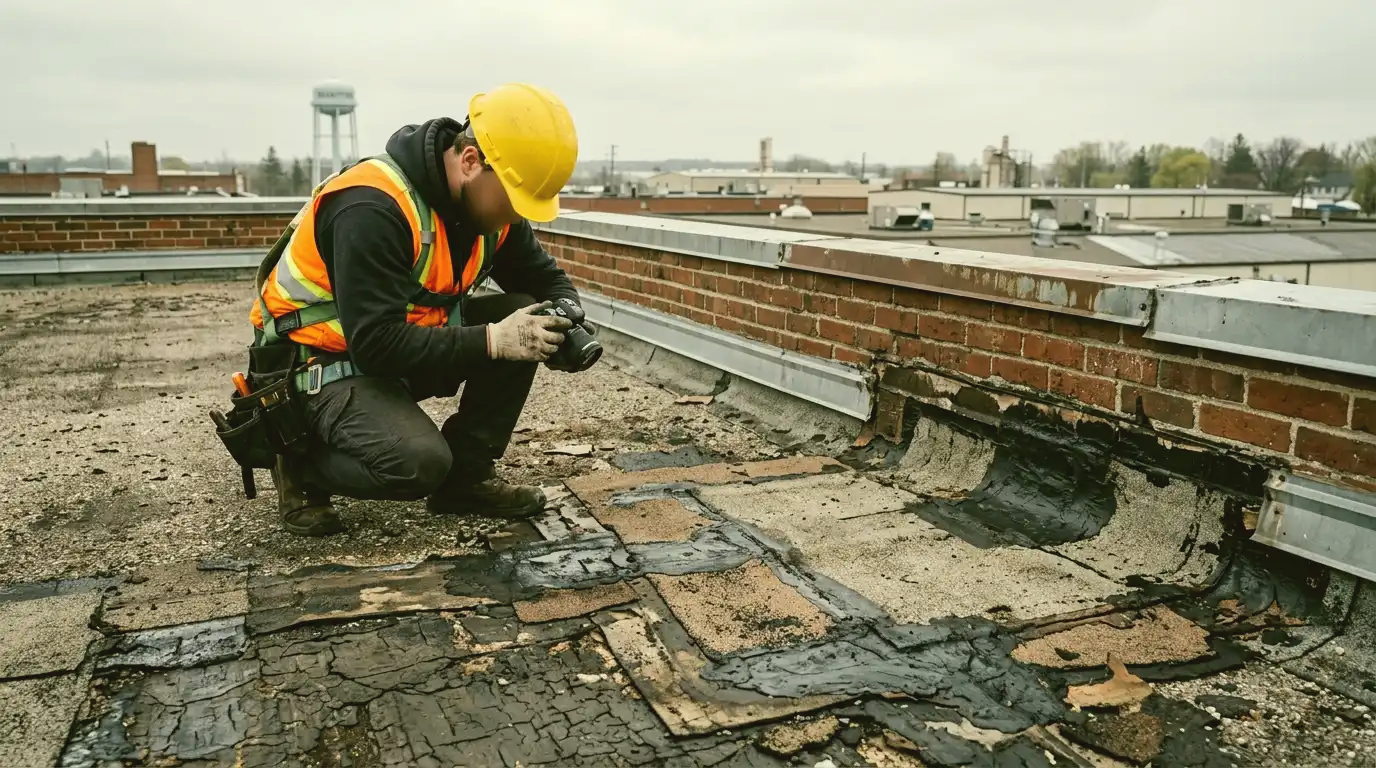
Brantford Commercial Roofing Services
For low-slope roof construction and membrane planning, see our commercial flat roofing guide.
Inspecting Brantford Roofs by Building Age
Brantford sits in the Grand River valley with winters that bring significant snowfall and spring melt that can load flat roofs rapidly. The city's climate is cold enough for repeated freeze-thaw cycles and wet enough in summer to expose any drainage weakness during heavy rain events. Diagnosing a Brantford flat roof correctly starts with knowing which generation of building and which roof system is being inspected.
On Older Braneida Buildings, Substrate Condition Determines the Scope
Before estimating repairs or replacement on a Braneida Business Park building, a moisture scan or core sample of the insulation layer establishes whether the substrate can support further investment. A building where water has been moving through the insulation for years will continue to fail regardless of what is done to the membrane surface above it. That investigation step is not optional on a 30-year-old industrial building, it is what separates a correctly scoped project from one that spends money without solving the problem.
On New Brantford Industrial Buildings, Warranty Documentation Comes First
Most major industrial roofing systems carry manufacturer warranties that specify approved repair contractors, required notification procedures, and approved materials. Making an unauthorized repair, even a small seam patch, can trigger warranty provisions that convert a small repair cost into a large claim denial. Locate the warranty documents before any remedial work begins.
Food and EV Manufacturing Buildings Need Industry-Aware Roof Assessment
At Barry Callebaut's chocolate production facility or Mitsui's motor core plant, roof assessment cannot stop at the membrane. Temperature-controlled manufacturing environments generate condensation and humidity loads that affect roofing system performance differently than a standard warehouse. Roof insulation R-value, vapour retarder placement, and drain design need to be confirmed against the building's internal environment conditions, not just the exterior weather exposure.
Roof Systems for Brantford Buildings
Many newer Brantford logistics and industrial buildings use single-ply systems such as TPO or PVC, with membrane thickness, attachment method and insulation design set by the building specification and warranty requirements. Those systems suit large, low-slope roofs well, but the correct choice still depends on deck type, wind design, rooftop traffic, drainage and the actual operating environment below. On food or process-manufacturing buildings, any confirmed exhaust, grease, cleaning-chemical or vapour exposure should be documented before membrane or flashing materials are selected rather than assumed from the industry label alone.
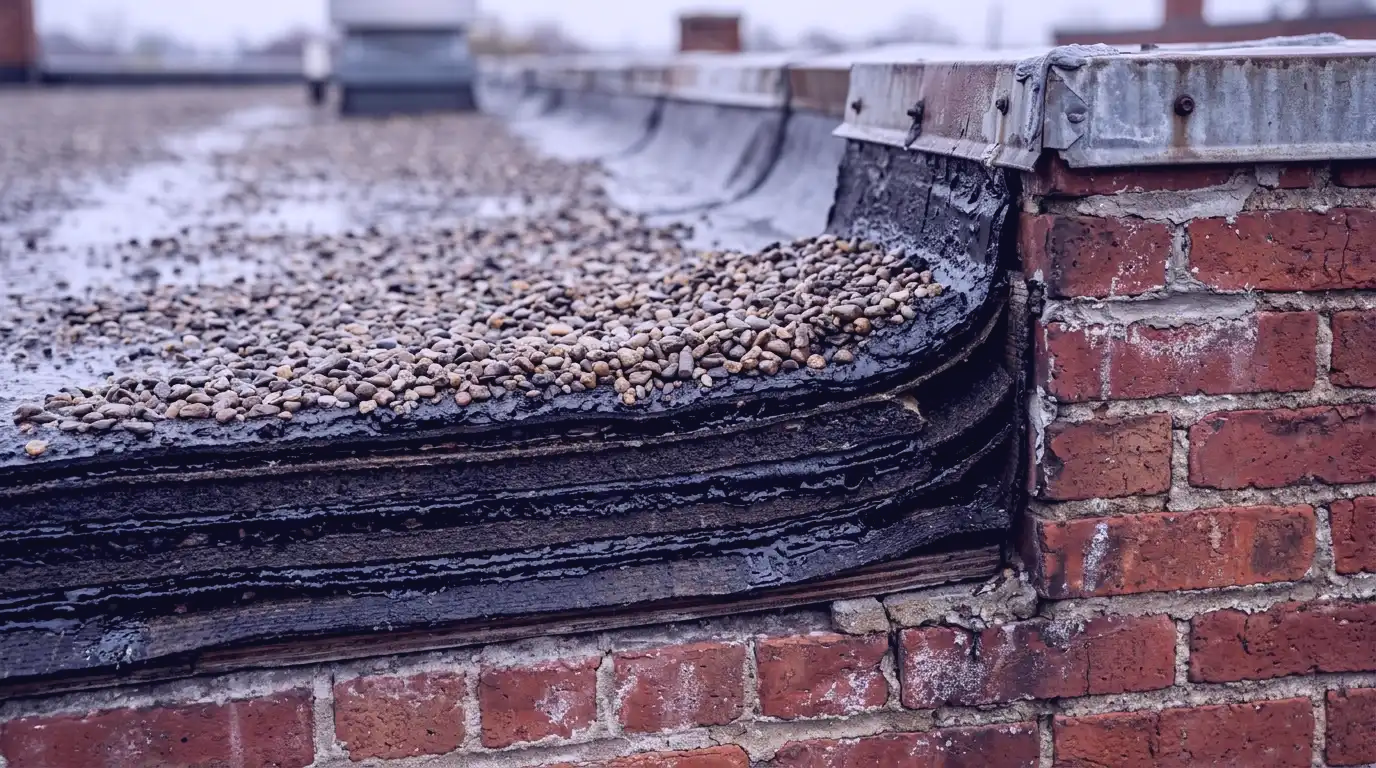
For older Braneida Business Park buildings going through replacement, modified bitumen and hybrid assemblies remain practical and serviceable choices. They tolerate staged replacement in sections, are compatible with most existing drain bodies when properly detailed, and perform reliably through Brantford's freeze-thaw cycling. The replacement decision should include a drain body audit, original drain components from 1980s installations may need to be replaced entirely to accept a new membrane system correctly, and that cost should be in the project scope from the outset.
Commercial Roofing SystemsPlanning Roofing Work Around Daily Operations
Roof Work Around Active Industrial Sites
Brantford's large logistics buildings operate with continuous inbound and outbound freight activity. Staging a replacement on a 400,000-square-foot building at the Brant Business Park means mapping work zones against dock schedules and confirming that hoisting positions do not conflict with active truck lanes. Material delivery timing and daily zone completion boundaries should be established before the project starts. For food manufacturing facilities like those in the Telephone City Logistics Centre, additional coordination with the facility's food safety team is necessary, roofing adhesives, sealants, and membrane materials have off-gassing profiles that need to be evaluated against the food production environment before work begins adjacent to or above production areas.
Brantford Roof Maintenance Planning
For Braneida Business Park property owners and managers, a spring post-melt inspection is the single most important maintenance event of the year. It reveals what winter did to a building that has already been through 20 or 30 Brantford winters. What looks like a minor flashing displacement in April may have been allowing freeze-thaw water entry since November. For newer buildings in Brantford's logistics parks, a maintenance program aligned with the roof warranty terms, documenting drain clearing, service visits, post-storm checks, and any trades that accessed the roof, is the evidence that protects warranty coverage if a claim becomes necessary.
Brantford food and manufacturing owners can use a roof log to record wash-down, steam and equipment changes alongside leaks.
Roof maintenance planningRoofing Across Brantford Business Parks
In Brantford, we serve industrial, institutional, and commercial properties across Brantford, including Braneida Business Park, the Northwest Business Park, the Rest Acres Road and Telephone City Logistics corridor, Downtown Brantford, Colborne Street commercial areas, and surrounding commercial and industrial properties in the city. Across Brantford, we look at the actual roof, drainage and day-to-day building use before recommending repair or replacement.
- Employment & commercial districts
- Braneida Business Park · Northwest Business Park · Rest Acres Road Business Park · Telephone City Logistics Centre · Brant Business Park · Colborne Street commercial corridor · Cainsville Industrial Park
- Neighbourhoods & nearby communities
- Downtown Brantford · Braneida · West Brant · Eagle Place · Holmedale · Cainsville
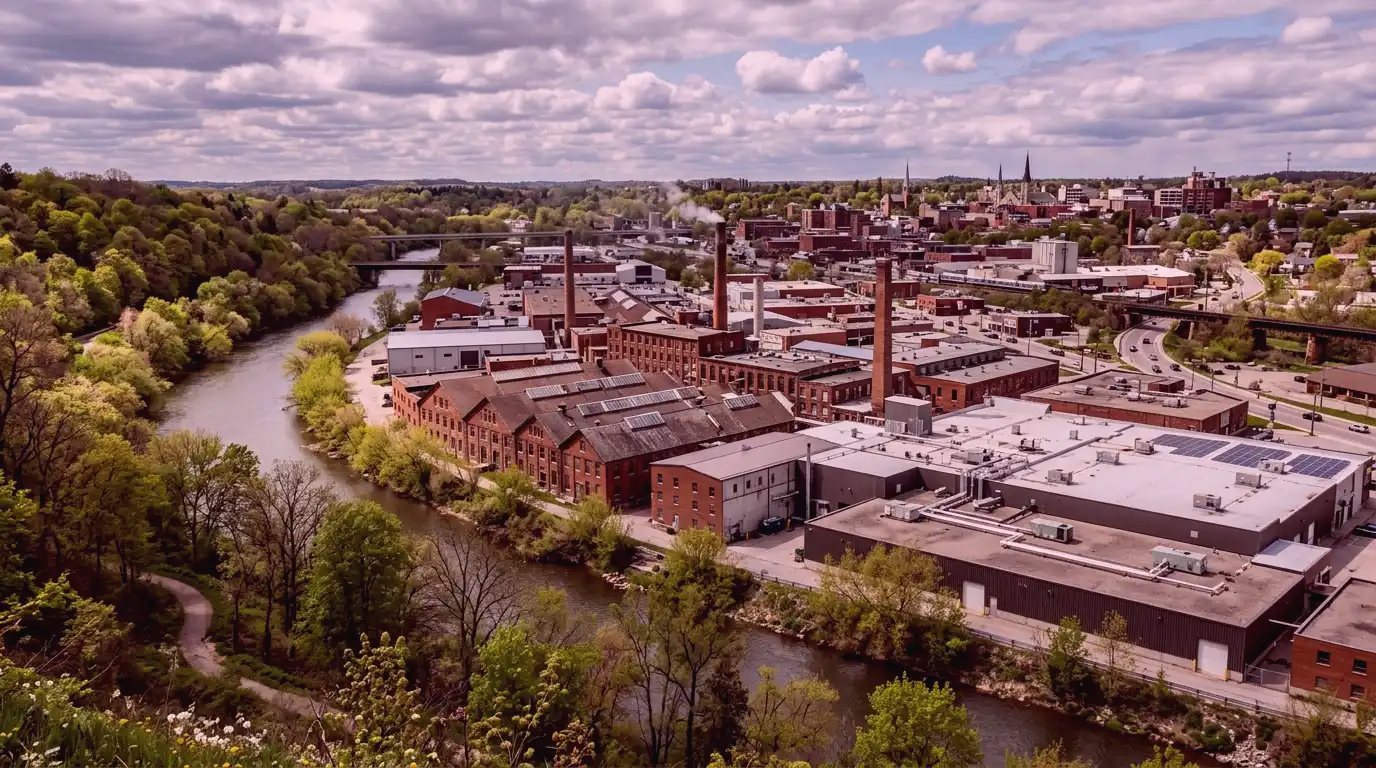
Brantford Manufacturing and Downtown Roof Questions
What should a Braneida Business Park property owner expect when a 1980s or 1990s industrial building reaches its roofing decision point?
The first thing to expect is that the visible membrane condition will not tell the full story. Buildings of that age typically have insulation that has held moisture through multiple winters, drain bodies that may not accept a modern membrane system without modification, and repair histories that have extended an aging assembly well past its original service life. A proper moisture assessment, infrared scan or core samples across representative areas, is the starting point. That investigation determines whether the substrate can support further investment or whether replacement is the only option that will actually resolve the problem.
Barry Callebaut's chocolate facility is a food manufacturing environment. Does that change what a rooftop inspection should look at?
It can. A food manufacturing building may have more process exhausts, steam, wash-down activity and tightly controlled interior conditions than a standard warehouse, but the roof review should document what is actually happening at that facility. Inspect the vapour-control strategy, the flashings around process equipment, condensate discharge points and any membrane areas that receive confirmed exhaust or cleaning-related exposure. Material compatibility should be based on those observed conditions, not on a blanket assumption that every food plant creates the same rooftop environment.
How does Brantford's Grand River valley location affect flat roof drainage planning?
Most of Brantford's commercial and industrial properties are on relatively flat terrain above the river valley, so river proximity is not typically a direct issue. The more relevant factor is the rapid spring snowmelt that the Grand River watershed experiences, large flat roofs that have accumulated significant snow can generate substantial melt volume in a short period when temperatures rise in March or April. Drain systems should be confirmed clear and overflow outlets should be verified functional before the melt season, not during it.
The 40-foot clear height warehouses in Brantford's new business parks have very large flat roofs. Are there specific issues to watch at that scale?
Scale introduces a few considerations that smaller roofs do not share. First, a single failed drain or blocked overflow serving a large roof basin can affect a much larger area than the same failure on a small building. Second, the internal thermal environment of a high-bay warehouse can vary significantly from section to section, affecting how the roof assembly expands and contracts. Third, large roofs accumulate snow load over a broad area, and the distribution of that load, which can concentrate at parapet walls and in low drainage areas, should be understood against the building's structural design rather than assumed to self-manage.
Can roofing work be done on a Brantford building that is also undergoing interior renovations at the same time?
It can, but the sequencing needs to be coordinated. Roofing work typically requires temporary penetrations for drain connections and equipment access that interact with interior finishes and HVAC systems. Dust, noise, and adhesive off-gassing from roofing work can affect interior renovation work directly below, and interior work that modifies HVAC or exhaust placement creates new penetration requirements that the roofer needs to account for before the membrane is installed. Running the two scopes without coordination generally produces delays, cost additions, or damage to newly completed work on one trade or the other.
Why do food-processing roofs in Brantford need extra attention to moisture?
Steam, wash-down water and humidity can push moisture into roof assemblies and shorten service life. Good detailing at exhaust penetrations, strong vapour control and regular inspection of seams reduce the risk. Ask the roofer how they will handle the interior environment and whether a moisture survey is advisable before design.
Commercial Roofing Around Brant and the Grand River
Let's Start With the Brantford Roof's Actual Condition
Send the Brantford address and describe the problem. We will help you work out whether to repair, investigate or plan replacement.