
Stoney Creek Commercial Roofing for Mixed Business Sites
Stoney Creek's industrial corridor runs along Barton Street and the QEW service roads from Fruitland Road east toward Fifty Road, with the Stoney Creek Business Park and Stoney Creek Industrial node concentrating manufacturing, steel processing, aerospace, food production and logistics operations. These properties share a geography but carry very different roof histories and planning needs.
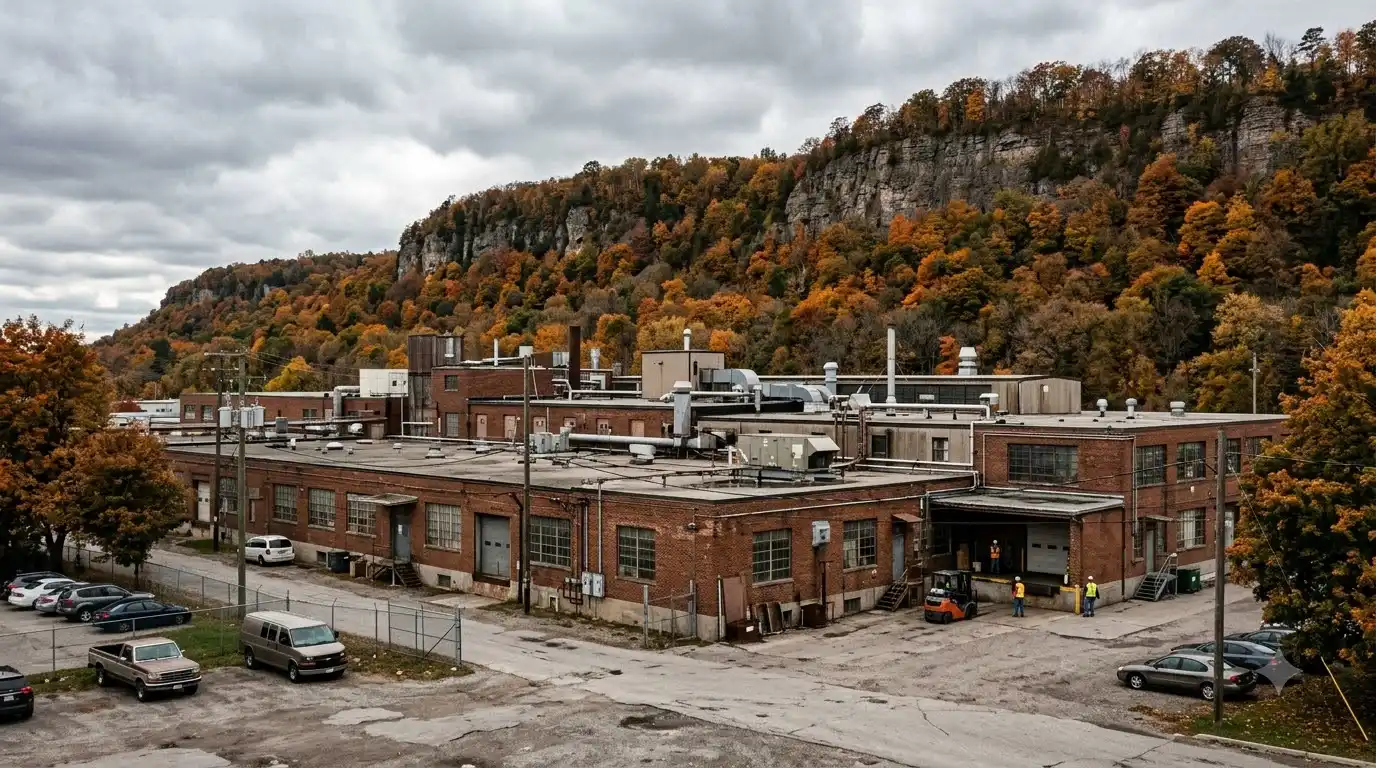
Stoney Creek Industrial Roofs Range From Brand-New to Multiple Reroofing Cycles
The Fruitland Road and QEW access point has been the site of consistent commercial and industrial development for years, with properties ranging from recently completed distribution buildings with modern high-performance assemblies to older Barton Street manufacturing facilities whose original roofs have been patched, layered and partially reroofed across several different decades and ownerships. Both types can leak. The reasons differ, and so do the right responses.
On a newer Stoney Creek facility, the priority is establishing a baseline record before contractor activity starts layering undocumented penetrations onto a clean starting condition. On an older Barton Street or Arvin Avenue manufacturing building, the priority is understanding which roof sections still have viable service life and which are past the point where repair is the better investment. Neither of those assessments can be replaced by a general estimate of the building's age.
Local reference: City of Hamilton Stoney Creek industrial area and employment land information
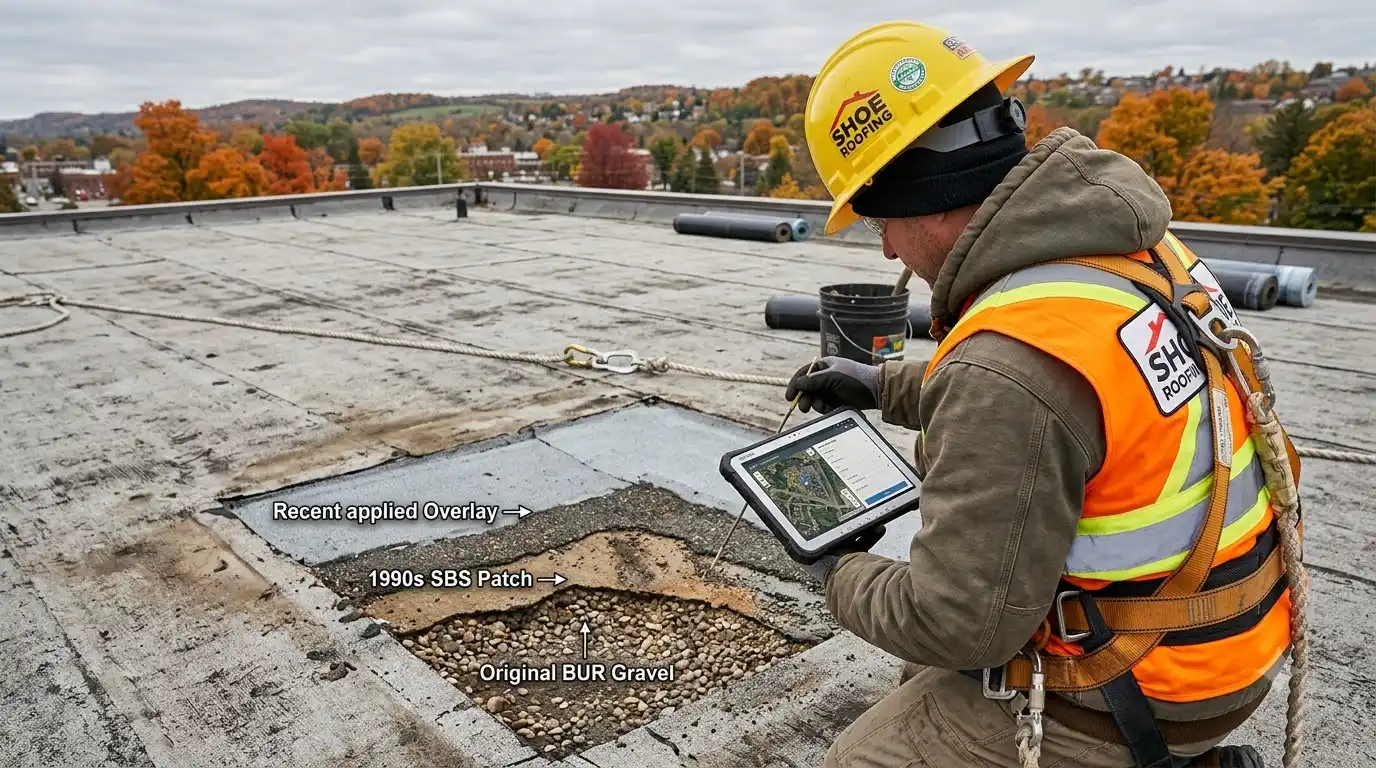
Stoney Creek Commercial Roofing Services
For low-slope roof construction and membrane planning, see our commercial flat roofing guide.
Stoney Creek Industrial Leaks Need to Be Traced by Basin, Not Just by Proximity to the Ceiling Stain
Large manufacturing and logistics buildings in Stoney Creek can have roof areas measured in tens of thousands of square metres. Water entering at a vulnerable detail near the north edge of the building may not appear as a ceiling stain until it has travelled through insulation in the direction of the structural slope and found an exit point near a column or interior wall. Investigating the roof directly above the interior stain is a reasonable first check; stopping there before confirming the drainage basin is usually premature.
Fruitland Road and QEW new industrial buildings
Establish a documented baseline on newer Stoney Creek facilities before production upgrades and tenant equipment changes make the original roof configuration ambiguous.
Barton Street and Arvin Avenue established manufacturers
Map drainage basins and repair history on older Stoney Creek buildings so condition decisions are made section by section rather than across the whole building at once.
Loading dock and shipping roof zones
Pay particular attention to perimeter and curb conditions near dock areas where equipment movement and staging can cause repeated membrane damage between inspections.
Specify Stoney Creek Roof Assemblies for Heavy Industrial Access and Long Service Life
Stoney Creek's industrial corridors put heavy equipment and drainage demands on roofs, so the system has to be chosen with the whole assembly in mind. The right assembly for a Stoney Creek manufacturing or logistics facility depends on deck condition, insulation type and thickness, vapour control, attachment method, drainage geometry, expected foot traffic from service contractors, penetration density and the specific industrial use. Steel processing, food production and aerospace manufacturing all generate different roof-level conditions in terms of heat, humidity and service traffic patterns.
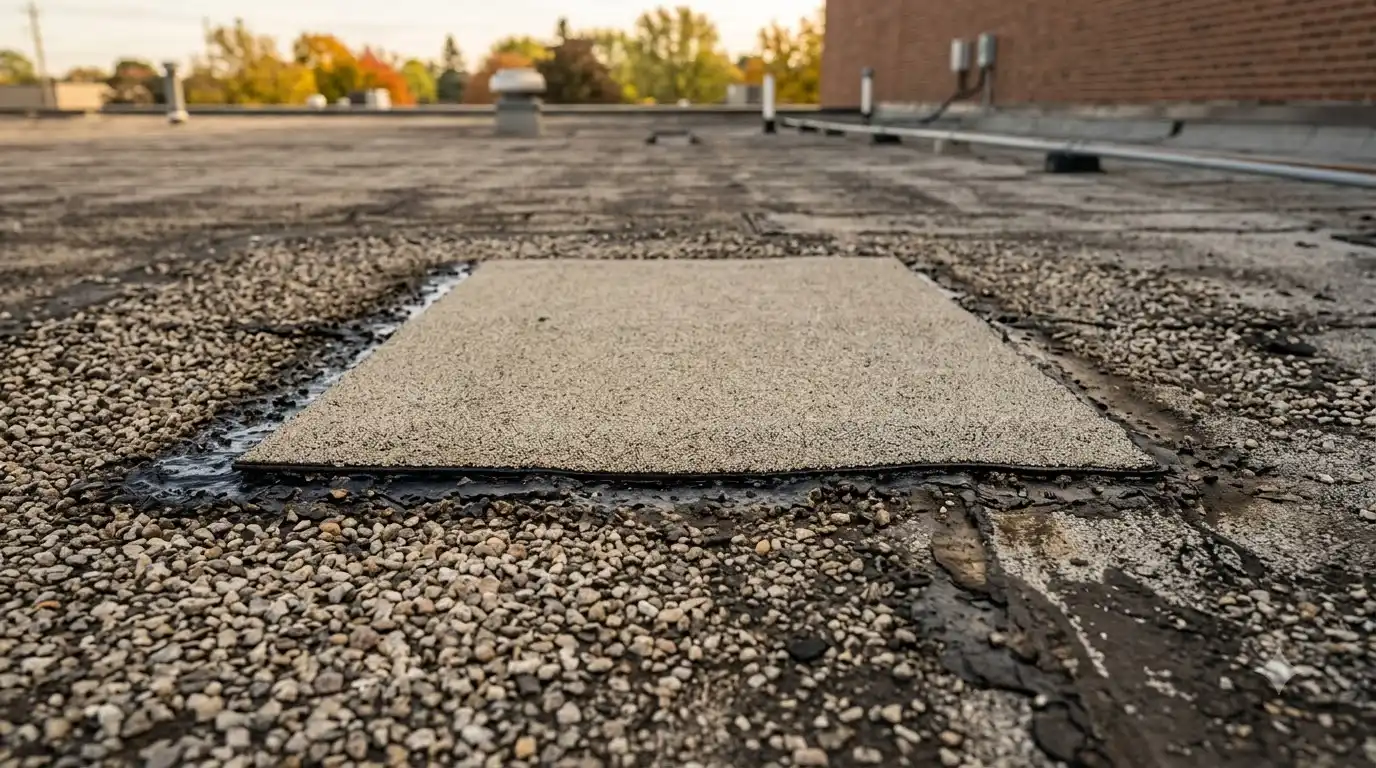
Replacement is the right time to fix what the previous roof documented: remove abandoned penetrations from earlier production layouts, rebuild curbs that were improvised by HVAC or mechanical contractors, correct drain sumps and establish protected walkway routes to equipment that receives regular service. On a Stoney Creek facility where the structural deck has been in service since the 1970s or 1980s, confirm deck condition before committing to a new assembly, a deck deficiency discovered after the new membrane is installed creates an expensive re-do.
Commercial Roofing SystemsPlanning Roofing Work Around Daily Operations
Plan Stoney Creek Roof Projects Around Active Dock Operations and the Building's Production Reality
Stoney Creek industrial buildings often have significant dock activity, truck court constraints and shift schedules that run well into the evening. A roof replacement project that ignores the dock operation is one that will generate conflict every time a delivery truck needs to access the building and finds a roofer's forklift blocking the approach. Establish material delivery timing, crane and hoist positions, staging areas, dock protection and watertight daily limits as part of the project scope, not as a post-award discussion. Communication with dock supervisors and plant management before work begins costs nothing and avoids the kind of friction that turns a straightforward industrial roofing project into a source of operational complaint.
Protected Walkways and Post-Contractor Checks Are the Most Practical Stoney Creek Maintenance Investments
On an equipment-dense Stoney Creek manufacturing roof, the dominant source of membrane damage between inspections is often rooftop service traffic, HVAC technicians, refrigeration contractors, electricians and communications crews who are focused on the equipment they're servicing rather than on the membrane they're walking across. Protected walkway pads on established access routes reduce random traffic across vulnerable areas. A brief post-contractor check, verify the drain is clear, look for debris, confirm no new penetrations were made without notification, catches most contractor-introduced damage before it becomes an interior leak.
Place leak dates next to rooftop-equipment changes in a Stoney Creek log, and the connection (or lack of one) shows quickly.
Roof maintenance planningCommercial Roof Service Around Stoney Creek Business Park, Barton Street and Arvin Avenue industrial corridor and the Stoney Creek Business Community
Stoney Creek projects take in commercial and institutional properties in the Stoney Creek Business Park, Barton Street and Arvin Avenue industrial corridor, Fruitland Road and QEW industrial node, old Stoney Creek commercial core and other business and industrial locations. Wherever the property sits in Stoney Creek, the next step starts with the roof condition and how the building needs to keep operating.
- Employment & commercial districts
- Stoney Creek Business Park · Barton Street and Arvin Avenue industrial corridor · Fruitland Road and QEW industrial node · South Service Road commercial strip · QEW industrial and commercial corridor
- Neighbourhoods & nearby communities
- Old Stoney Creek · Winona · Fruitland
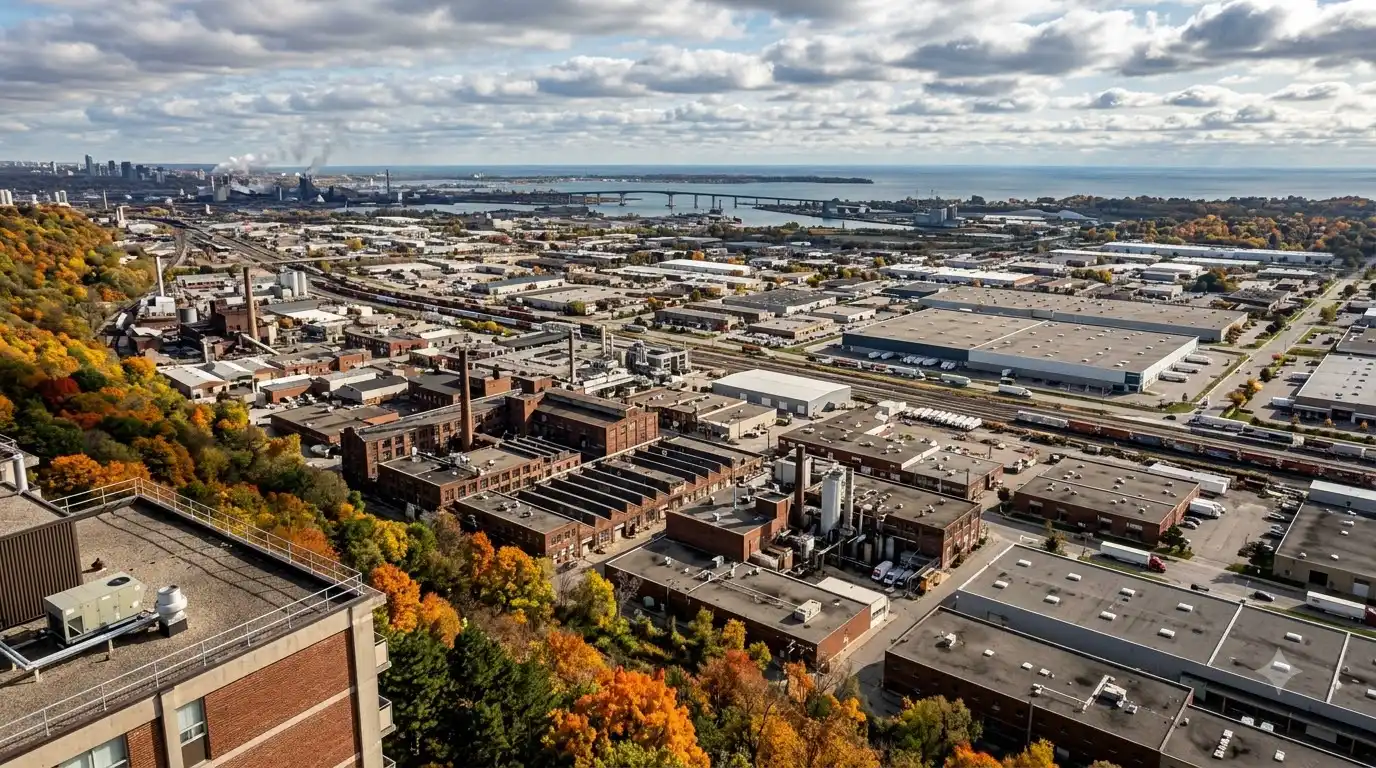
Stoney Creek Roof Questions From Industrial Property Teams
We operate a food-processing facility on Fruitland Road and need to replace the roof without shutting down production. Is that realistic?
Yes, but the planning has to start from your production requirements, not from the roofer's preferred sequencing. The critical items are: air intake locations (membrane work can produce vapours and particulates that cannot enter a food-production environment, so intake positions must be mapped and the work must be sequenced away from them); daily watertight limits (no section of the roof above active production should be left open at shift end); and material staging (delivery and equipment movement must not introduce contaminants to the site). These are manageable constraints with advance planning; they become costly problems when they're left as afterthoughts.
Our Stoney Creek warehouse has protected walkways to the HVAC equipment but contractors still seem to damage the membrane. Why?
Walkways direct traffic on established service routes, but they don't prevent contractors from straying off the intended path when they're carrying equipment to a hard-to-reach unit, looking for an alternative route or simply not paying attention. The walkways are most effective when combined with a brief pre-access reminder of the approved route, a post-access inspection and a clear expectation with all rooftop service contractors that membrane damage caused by their crews is their responsibility. Walkways reduce random traffic; they don't eliminate the need for basic contractor accountability.
Is it worth replacing just one section of an older Stoney Creek industrial building's roof, or should we do everything at once?
It depends on what the other sections actually look like, not on aesthetic tidiness or project scheduling convenience. If the building has three roof sections and one is failing while the other two are in genuinely sound condition with dry insulation and serviceable membranes, replacing only the failing section may be appropriate, provided the transition between the new and retained sections is designed as a durable permanent condition rather than a temporary arrangement. If the other sections are also deteriorating, assess whether a coordinated scope would better match the condition of the complete roof. The condition assessment answers that question specifically for your building.
What should we do after a significant windstorm affects our Stoney Creek commercial property?
If safe access is available, conduct a visual check of perimeter edge metal, coping sections and any previous repairs within 48 hours. Wind failures typically show up at edges and corners first, lifted flashings, displaced coping sections, membrane that has pulled away from an edge strip. Look also for debris accumulation on drain screens, which can prevent normal drainage in subsequent rainfall. If you observe displaced components or suspect membrane damage but can't confirm it safely, schedule a professional inspection rather than attempting to assess or repair it from a ladder. Document what you see with photographs before any work is done.
We're planning to add a refrigeration system to our Stoney Creek food-distribution building that will require new roof penetrations. How should we coordinate with roofing?
Involve a roofing contractor in the penetration planning before the mechanical contractor is committed to a specific layout. The roofing contractor can specify correct curb sizing, flashing requirements and membrane compatibility for the new penetrations, and can confirm that the proposed locations don't conflict with drains, existing seams or areas of the roof that are already in marginal condition. A curb installed by a mechanical contractor without roofing coordination is often flashed improperly or positioned to create a drainage problem. The cost of coordination is negligible compared to the cost of fixing an improperly installed penetration after the refrigeration system is already in service.
What drainage problems commonly affect Stoney Creek industrial roofs?
Clogged drains, low spots that hold water and undersized scuppers are common. Ask for a drainage review that looks at slope, outlet condition and overflow provisions. Tapered insulation or added drains may solve repeat ponding.
Commercial Roofing Across Hamilton and West Niagara
Tell Us About the Stoney Creek Roof and How Exposed It Is
Industrial roofs in Stoney Creek carry real loads. Send the address and what you see, and we will help you pick the next step.